What Types Of Floor Cleaning Machines Are Used In Distribution Centers?
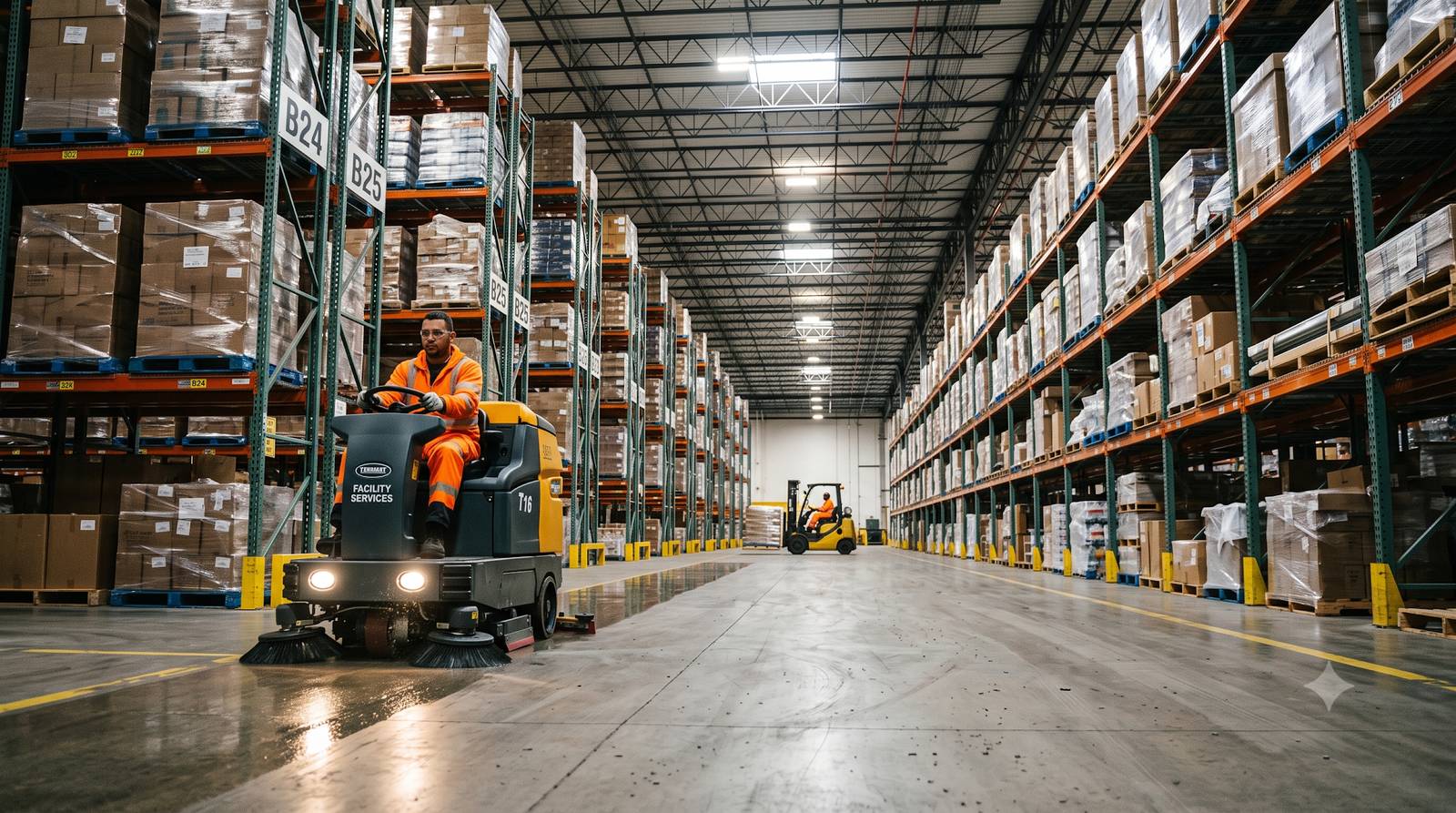
Distribution centers move a high volume of pallets, forklifts, and foot traffic across large concrete floors every day. That constant activity generates dust, tracked in debris, tire marks, and spills that standard mops and brooms cannot keep up with.
Choosing the right combination of floor cleaning machines keeps your facility safe, protects inventory, and supports the pace of daily operations. This guide breaks down the main types of floor cleaning machines used in distribution centers and how to decide which ones fit your facility.
Why Distribution Centers Need Specialized Floor Cleaning Equipment
Your distribution center floor is unlike almost any other commercial surface. You're dealing with large square footage, often hundreds of thousands of square feet under one roof, covered in concrete, resin coatings, or sealed industrial flooring.
Forklifts and pallet jacks run constant routes across the same paths, grinding in dust, tire marks, and small debris that manual cleaning simply cannot keep pace with. Add in packaging materials, dropped product, and the occasional spill, and you have a facility that generates dirt faster than a broom and mop can handle.
Ignoring this reality creates real risk. Slip and fall hazards increase when dust and spills sit on high traffic areas. Grit and debris left on the floor can work into forklift wheels and conveyor systems, leading to premature equipment wear.
Dust migrating into storage rooms can even contaminate sensitive inventory. Distribution centers rely on heavy duty floor care equipment for a reason: the scale and pace of operations demand machines built for volume, not spot cleaning.
Common Types Of Dirt And Debris In Distribution Centers
Before you can pick the right machine, it helps to know what you're actually cleaning up.
Distribution centers typically deal with fine dust from material handling and packaging, torn cardboard and foil fragments, wood splinters from pallets, tire marks left by forklift traffic, and occasional wet spills from leaking containers or weather tracked in through dock doors. Dry debris and loose dirt call for sweeping.
Embedded tire marks and grime call for wet cleaning and scrubbing. Matching the machine to the soil type is the first step in building an effective cleaning process.
Floor Sweepers
Floor sweepers are your first line of defense against dust and loose debris. These machines use rotating brushes paired with a hopper or vacuum system to lift dirt and small debris off the floor without using any water.
Because they operate dry, sweepers are ideal for daily maintenance cleaning between deeper scrubbing sessions, and they're often the fastest way to keep an open warehouse floor looking presentable during business hours.
Walk Behind Sweepers
Walk behind sweepers are compact machines built for smaller distribution centers or tight aisles between racking. Their smaller footprint gives you easy maneuverability in storage rooms and narrow corridors where a larger machine simply won't fit.
For smaller warehouses or facilities with a lot of tight spaces, a walk behind sweeper is often the most practical daily tool.
Ride On Sweepers
For large, open floor plans covering tens of thousands of square feet, ride on sweepers make far more sense. Industrial sweepers of this size let one operator cover large areas quickly, cutting down on labor costs compared to manual cleaning or walk behind equipment.
If your facility spans a significant footprint, a ride on sweeper can dramatically increase productivity during routine dust and debris removal.
Floor Scrubbers
While sweepers handle dry debris, floor scrubbers take on the tougher job: removing embedded dirt, tire marks, and grime that sweeping alone cannot lift. A floor scrubber applies water and cleaning solution to the surface, agitates it with brushes or pads, then extracts the dirty water into a recovery tank in a single pass.
This wet cleaning process is what actually restores hard floors to a clean, safe condition rather than just clearing the surface.
Walk Behind Scrubbers
Walk behind scrubbers are the better choice for smaller storage areas, tight corners, and facilities with obstacles like shelving units or equipment staged close together. They're generally suited to warehouses up to around 20,000 square feet, where aisle width and layout make a larger ride on machine impractical.
What they lack in speed, they make up for in precision and maneuverability in tight spaces.
Ride On Scrubbers
For large distribution centers, ride on scrubbers are the standard choice. These machines are designed for facilities with wide main aisles, typically above 20,000 square feet, and can cover up to 73,000 square feet per hour depending on the model and tank size.
Beyond raw coverage, ride on scrubbers also reduce operator fatigue during long cleaning tasks, which matters when you're running deep cleaning across an entire shift. Larger tanks mean fewer stops to refill or empty recovery water, reducing downtime in large warehouses.
Disc Versus Roller Scrubbers
Not all scrubbers clean the same way. Disc scrubbers use flat, rotating pads or brushes and work best on smooth floors like sealed concrete or resin coatings.
Roller scrubbers use cylindrical brushes that rotate on a horizontal axis, which gives them a built in pre sweeping function and makes them a better fit for coarse or textured flooring where debris tends to collect in surface grooves. Knowing your floor type and condition will point you toward the right technology.
Combination Sweeper Scrubbers
If your facility deals with both heavy dust and embedded grime on a regular basis, a combination sweeper scrubber can save you real time and floor space. These combo machines sweep and scrub in one pass, cutting a two step cleaning task down to a single operation.
For very large warehouses or distribution centers with mixed floor conditions across different zones, a combo machine reduces labor costs and equipment storage needs while keeping large areas consistently clean.
Automated And Robotic Scrubbers
Automated scrubbers use sensors and navigation technology to clean without a dedicated operator standing over the machine. These robotic scrubbers are built to navigate around obstacles, follow programmed cleaning routes, and run consistent passes across an open warehouse floor, which is especially useful for routine maintenance in high traffic areas.
For large scale distribution operations, the labor savings add up quickly since one machine can run scheduled cleaning cycles overnight or during slower shifts. Beyond labor, automated scrubbers also improve cleaning consistency since every pass follows the same route and pressure settings, something that's harder to guarantee with manually operated equipment.
Burnishers
Burnishers serve a different purpose than your daily cleaning machines. Rather than removing dirt, a burnisher uses a high speed pad to bring a high gloss finish to sealed or coated hard floors. In a distribution center, burnishing typically isn't a daily task.
It's part of a periodic maintenance routine that keeps finished floors looking sharp and can extend the life of a floor coating between full recoats.
Vacuums And Wet Dry Vacuums
Not every cleaning task calls for a full scale scrubber. Commercial vacuums are useful for spot cleaning, quick pickups in small storage rooms, or clearing debris from corners and edges that larger machines can't reach.
A wet dry vacuum goes a step further, handling spills or standing water without the need to bring out a full scrubber. Keeping a wet dry vacuum on hand gives your team a fast option for isolated spills between scheduled deep cleaning sessions.
How To Choose The Right Floor Cleaning Machine For Your Distribution Center
With so many machine types available, the right equipment for your facility comes down to a handful of practical decision factors. Weighing these before you purchase will save you from buying equipment that doesn't match your actual cleaning needs.
Size Of The Facility
Facility size is usually the first thing to consider. Square footage determines whether a walk behind or ride on machine makes more sense, but don't rely on theoretical machine specs alone.
Look at the practical coverage rate, meaning how much area a machine can realistically clean per hour once you account for turns, obstacles, and refill stops, since that number matters more than a manufacturer's best case figure.
Floor Type And Condition
Concrete, resin coatings, and sealed floors are all common in distribution centers, and each responds differently to brushes, pads, and rollers. Smooth floors generally pair well with disc technology, while rougher or textured surfaces benefit from roller scrubbers. Matching your machine's cleaning method to your floor type protects both the surface and the equipment.
Type Of Debris And Soil
The dominant soil challenge in your facility should guide the machine type. If dust and loose dirt are the main issue, a sweeper may cover most of your cleaning needs. If tire marks, grime, and wet spills are the bigger concern, a scrubber becomes the priority.
Many larger distribution centers may require a combination of cleaning machines to handle both dry and wet cleaning tasks across different zones.
Power Source Considerations
Battery, propane, and combustion power sources are all available depending on the machine. For indoor use, battery powered machines are typically preferred since they don't produce exhaust fumes, which matters for air quality and fire safety in an enclosed distribution center.
Maneuverability And Layout
Aisle width has a direct effect on whether a walk behind or ride on scrubber is the better fit. Wide main aisles and open floor plans favor ride on machines, while narrow aisles and racking heavy layouts call for the tighter turning radius of walk behind equipment. Walk through your facility with these dimensions in mind before deciding.
Budget And Maintenance
Upfront cost is only part of the picture. Long term durability, parts availability, and access to reliable service support all factor into whether a machine ends up being cost effective over its working life.
A slightly higher initial investment in a well built commercial floor scrubber often pays off in fewer breakdowns and lower maintenance costs down the road.
Recommended Floor Cleaning Machines For Distribution Centers
At PS Janitorial, we carry ride on scrubbers, walk behind scrubbers, industrial sweepers, and combo machines built to handle the demands outlined above.
Whether you're running a smaller facility with tight aisles or a large distribution center with wide open floor plans, our lineup covers the full range of cleaning tasks, from daily dust removal to deep scrubbing and automated maintenance.
Reach out to our team to match the right equipment to your facility size, floor type, and cleaning frequency.
Frequently Asked Questions
What is the best floor cleaning machine for a large distribution center?
For large facilities, ride on scrubbers or combo sweeper scrubbers are usually the best fit since they cover large areas quickly and reduce labor costs compared to walk behind equipment.
How often should distribution center floors be cleaned?
Most distribution centers benefit from daily sweeping to remove dust and loose dirt, paired with periodic deep scrubbing scheduled around traffic volume and soil buildup.
Can distribution centers rent floor cleaning equipment?
Yes, rental options are often available for short term or seasonal cleaning needs, giving you access to ride on or walk behind equipment without a full purchase.
Are automated scrubbers worth the investment for warehouses?
For high volume facilities, automated scrubbers can be worth it. They reduce the need for manual labor and provide more consistent cleaning results across large warehouses.
Matching Your Machine Lineup To Your Facility
The right mix of sweepers, scrubbers, and combo machines depends on your facility size, floor type, and traffic patterns. A smaller warehouse with tight aisles will lean on walk behind equipment, while a large distribution center with wide open floors benefits from ride on and automated machines that cover more ground with less labor.
If you're not sure which combination fits your operation, PS Janitorial can help you match the right equipment to your specific cleaning needs.