Small Forklifts: Best Compact Options for Tight Spaces and Light Loads
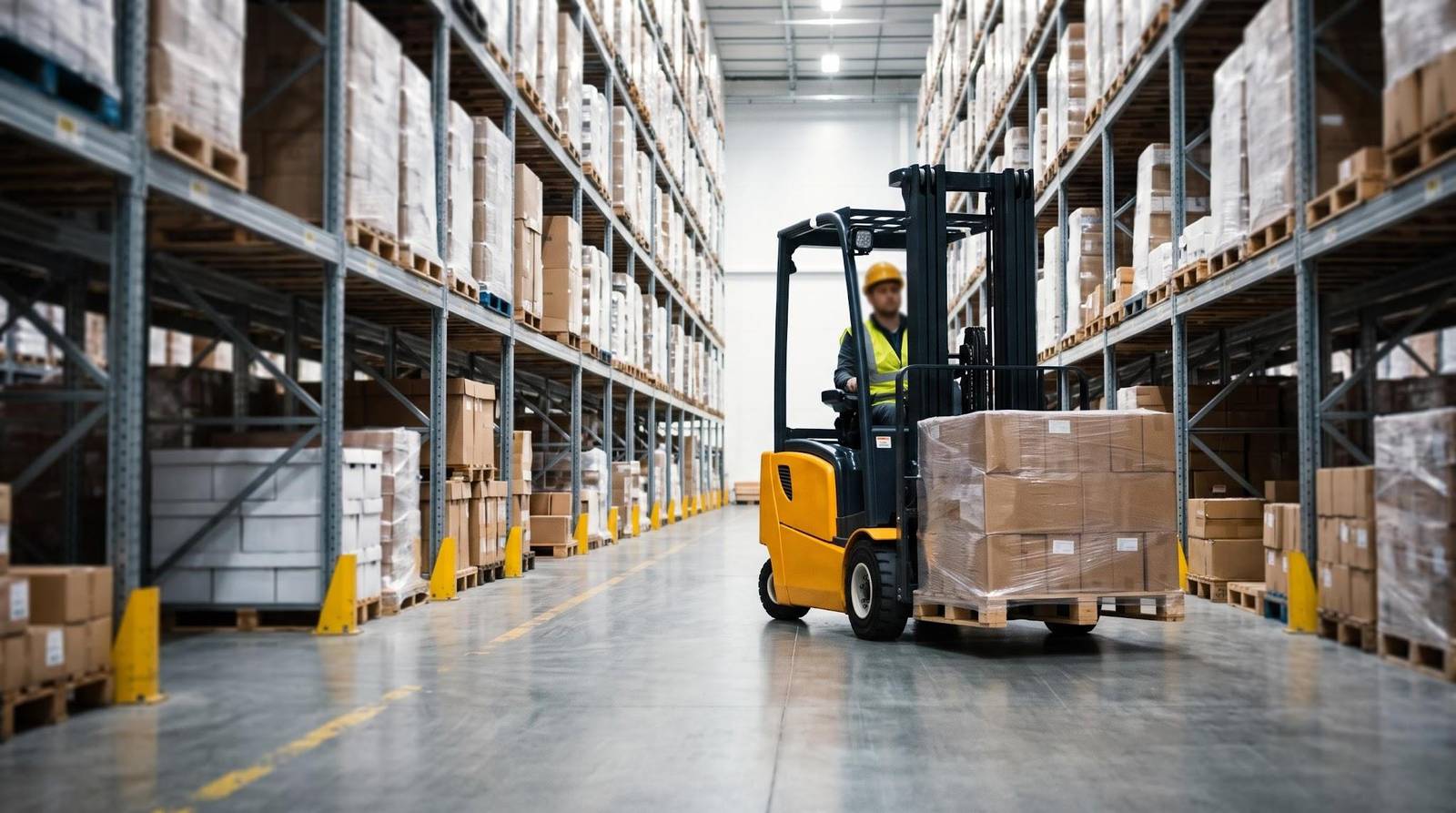
Small forklifts solve a problem every cramped facility knows: pallets need to move, but the aisles, doorways and mezzanines were never built for a full size truck. If your loads are light and your floor space is limited, a compact lift truck can do the work without the footprint.
This guide explains what makes a forklift small, walks through the main forklift types for tight spaces, compares them in one table and gives you a step by step buying guide. When you are ready to compare real trucks, browse our forklifts category.
What Is a Small Forklift?
A small forklift is a compact lift truck built to move pallets where a full size truck will not fit. Three things make it small: footprint, weight and rated capacity. Compared with traditional forklifts and standard forklifts, compact trucks are shorter, narrower and lighter, and they are rated for light loads instead of heavy loads.
They are versatile machines that show up in small warehouses, retail back rooms and workshops, anywhere space matters more than raw lifting power.
Typical Size and Capacity Range
Compact forklifts typically have capacities ranging from 750 lbs to 4,500 lbs. Forklifts in general can lift loads ranging from 3,000 to 5,000 lbs, so compact models cover the lighter part of that span and below. Manufacturer figures show how the range looks in practice.
The NOBLELIFT PSR30 3,000 lb lithium walkie reach truck is rated for 3,000 lbs and measures 91 inches long and 34.3 inches wide. Hangcha X Series forklifts are designed for light loads in tight spaces.
Length, width and turning radius change from model to model, so confirm them on the manufacturer spec sheet before you decide. Very compact forklifts fit through standard doorways for indoor use, which opens up rooms that larger trucks cannot enter at all.
Why Compact Trucks Fit Tight Spaces and Light Loads
A smaller truck turns in less room, and that is the main reason it works in confined warehouse spaces. Less weight also means you put less stress on your floors, and in many buildings it makes elevators and mezzanines easier to work with. Always check the posted floor and elevator limits first.
Compact trucks also tend to cost less than full size trucks, so you are not paying for lifting power you will never use. When your heaviest pallet is light, a compact design gives you the best balance of cost, maneuverability and operational efficiency.
Types of Small Forklifts for Tight Spaces
Not every compact truck solves the same problem. The forklift options below cover the main choices for tight spots, from sit down riders to pedestrian operated stackers.
Compact Electric Counterbalance Forklifts
A compact electric counterbalance forklift is the best all round small option. You sit down, steer much like a car and carry the load on forks out front while the weight of the truck balances the pallet. Counterbalance forklifts are versatile for general material handling, and the electric versions are ideal for indoor warehouses.
Electric forklifts produce zero emissions during operation and offer quiet operation compared with internal combustion models, so they suit enclosed rooms where people work nearby. Compact electric forklifts utilize lithium ion power for zero emissions, and electric forklifts have lower maintenance costs than gas powered forklifts.
Three Wheel Electric Forklifts
Three wheel electric forklifts provide excellent maneuverability in narrow aisles. With a single rear steering wheel, they pivot in a smaller circle than most four wheel trucks, which helps on crowded floors, around racking and on mezzanines where every foot counts.
Narrow aisle forklifts feature tighter turning radii for maneuverability, and the three wheel layout is a common way to get there. Choose one when you make frequent turns between racks, benches and doorways, and confirm the floor rating before you drive onto any mezzanine.
Stand Up Rider and Reach Trucks
Stand up reach trucks are designed for narrow aisles and elevated pallet storage. The operator stands in a compartment and the mast or forks reach out to place the pallet, so the truck itself stays in the aisle. Reach trucks maximize vertical storage in narrow aisles and are ideal for narrow aisle operations.
A good example is the NOBLELIFT RT33SP 3,300 lb lithium stand up pantograph reach truck. You will find trucks like this in retail stockrooms, warehouses with tall racking and cold storage, where a stand up position with easy on and off access suits frequent stops.
Walkie Stackers and Pallet Jacks
Walkie stackers are suitable for tight spaces and light loads, and they are the simplest place to start. You walk with the truck and steer by hand, so there is no operator compartment to fit around. Operator controlled stackers save space and offer high maneuverability in tight areas.
Electric pallet stackers are economical for handling light to medium loads in small areas, and the NOBLELIFT PS35TSL 3,500 lb electric stacker is one option in that class. An electric pallet jack or a standard pallet jack moves pallets across a floor without lifting them to height.
These are usually the lowest cost choices, which makes them a strong match for very light loads and small rooms.
Narrow Aisle and Very Narrow Aisle Trucks
Sometimes a standard compact truck is not enough, and a purpose built narrow aisle truck is the better choice. Narrow aisle forklifts can operate in aisles as narrow as 8 feet and maximize storage capacity in tight spaces.
Very narrow aisle forklifts can operate in aisles between 5 and 7 feet, and articulated forklifts operate in very narrow aisles down to 5 to 6 feet wide. The TAILIFT 17N 3,300 lb articulated VNA forklift is a current example, with a 40 inch overall width.
VNA forklifts and turret trucks are built for high density storage, where you trade aisle width for more rack space. They are specialized machines, so they make the most sense when your layout is designed around them.
Small Forklift Comparison at a Glance
| Type | Best Aisle Fit | Typical Load Range | Indoor or Outdoor | Best For |
|---|---|---|---|---|
| Compact electric counterbalance | Standard and narrow aisles | Within the compact range of 750 lbs to 4,500 lbs, varies by model | Indoor | General material handling in small warehouses |
| Three wheel electric | Narrow aisles and crowded floors | Light to medium, varies by model | Indoor | Tight turns, racking areas and mezzanines |
| Stand up rider and reach truck | Narrow aisles | Light to medium, varies by model | Mostly indoor | Elevated pallet storage, stockrooms and cold storage |
| Walkie stacker and pallet jack | Small rooms and tight spaces | Light to medium loads | Indoor | Very light loads and the lowest cost |
| Narrow aisle and VNA truck | As narrow as 8 feet for narrow aisle, 5 to 7 feet for VNA | Varies by model | Indoor | High density storage with purpose built racking |
The takeaway is simple. Walkie stackers and pallet jacks win on cost for very light loads, compact electric counterbalance trucks win on all round flexibility, and three wheel and reach trucks win when aisles get tighter or racks get taller.
Once your aisle drops toward the narrow aisle and very narrow aisle range, a purpose built truck usually beats a general compact model.
How to Choose the Best Small Forklift
Measure Your Aisles, Doorways and Turning Space
Before buying a forklift, check aisle width and maximum lift height requirements. Aisle widths fall into three classes: standard, narrow and very narrow. Narrow aisle trucks can work in aisles as narrow as 8 feet, and very narrow aisle trucks work in aisles between 5 and 7 feet.
Next, find the right angle stacking aisle width on the spec sheet. This is the aisle space the truck needs to turn and place a pallet into a rack, and it is usually wider than the truck itself.
Finally, measure every doorway and elevator on your route and compare them to the truck width with the load on the forks.
Match Capacity and Load Center to Your Loads
Weigh your heaviest pallet, not your average one. Then check the rated load capacity at the stated load center, which is the distance from the face of the forks to the center of gravity of the load. A tall or oddly shaped pallet can sit farther out than the rating assumes.
Oversizing wastes both space and money, because a larger truck needs wider aisles and costs more to buy and run. Pick the smallest truck that handles your heaviest pallet with margin to spare.
Check Lift Height and Overhead Clearance
Lift height decides whether a truck can reach your top rack, and lowered mast height decides whether it can get under your door headers. Mast options come in different stages, so compare both numbers.
Measure the highest shelf or beam you must reach, then measure the lowest overhead point on your route, including sprinklers, lights and trailer openings. A truck that clears your racking but not your doorway is no use to you.
Choose the Right Power Source
For small spaces, electric usually wins. Lead acid batteries are the traditional choice and need a dedicated charging area and regular upkeep. Lithium ion is a newer option on compact electric trucks, with zero emissions during operation and typically simpler upkeep.
Propane offers an internal combustion alternative, but indoor air quality and ventilation become real concerns in small rooms, and engine noise adds to the problem. If your team works close to the truck all day, quiet operation and clean air matter.
Consider Tires and Floor Surface
Cushion tires suit smooth indoor floors and give a tight turning footprint. Pneumatic tires handle uneven surfaces and outdoor ground better, and solid pneumatic tires give you a puncture resistant middle ground for mixed surfaces.
If you need a truck that moves between a warehouse and a yard, pneumatic tire forklifts are worth a closer look. If every inch of your floor is smooth concrete, cushion tires are the cost effective choice.
Look at Visibility, Comfort and Safety Features
You will spend long shifts on this truck, so operator comfort matters. Look for comfortable seating, ergonomic controls and a mast design that gives better visibility through the uprights. Warning lights, alarms and other advanced safety features help everyone on foot around the truck, which matters in crowded rooms.
When you compare top models, rank the key features that protect people first and the extras second.
Where Small Forklifts Work Best
Small forklifts earn their keep wherever space is limited. Small warehouses and retail backrooms use them to restock shelves without blocking aisles. Loading docks use them to move light pallets from trailer to staging.
Mezzanines and workshops benefit from their smaller footprint, and school and facility maintenance rooms use them to move supplies without damaging floors. They are also a smart fit for cleaning equipment storage, where you may need to shift pallets of floor scrubbers, batteries and supplies in a crowded back room.
New vs Used Small Forklifts
New trucks give you the latest features and a full warranty, while used trucks lower your upfront cost. Used inventory can include electric stand up trucks such as the Crown RC5530C 30 3,000 lb electric stand up forklift. If you buy used, inspect four things closely.
Test the battery for strong charge and hold time. Check the mast for smooth travel and worn rollers or chains. Look over the hydraulics for leaks and slow lifting.
Finally, read the hour meter and compare it to the wear you can see. Ask what warranty comes with the truck and what it covers, and request service records if they exist. A lower price only helps when the truck stays on the job.
Small Forklift Safety and Operator Training
OSHA requires employers to train and evaluate powered industrial truck operators before they work without supervision, and the rule applies to small trucks as well as large ones. Training covers the truck, your workplace and safe operation. Beyond training, respect the stability and load limits on the data plate.
Never exceed rated capacity, and remember that floor load limits matter as much as truck capacity. In tight areas, travel with the forks low, slow down at blind corners and sound the horn where pedestrians may appear. Keep clear paths marked so people and trucks do not share the same narrow space.
Battery, Charging and Maintenance Basics
Your battery type sets your routine. Lead acid batteries need a ventilated charging space and regular checks, while lithium ion batteries ask for less hands on care. Plan your charging area before the truck arrives so it does not take up valuable floor space.
Build a daily check into every shift: forks, mast and chains, tires, brakes, horn, lights and any hydraulic leaks. Then follow the manufacturer service schedule for the routine work that keeps a small truck reliable. Catching a small problem early is far cheaper than a day of downtime.
Shop Small Forklifts at PS Janitorial
Ready to see what is available? Explore our new, used and refurbished trucks, including reach trucks, stackers and pallet trucks, to compare options for your site. If you are not sure which truck fits your aisle width and your heaviest pallet, contact our team.
Tell us your measurements and your loads, and we will help you match a truck to your space.
Small Forklift FAQs
What is the smallest forklift available?
The smallest lift trucks are walkie stackers and pallet jacks, which you steer on foot. Among sit down trucks, ultra compact electric models are the smallest. Walkie reach trucks stay compact too, with some models measuring about 34 inches wide. Very compact forklifts can fit through standard doorways for indoor use.
How much can a small forklift lift?
Compact forklifts typically have capacities from 750 lbs to 4,500 lbs. Capacities vary by model and type, so match the rating to your heaviest pallet. Forklifts in general can lift loads ranging from 3,000 to 5,000 lbs. Always check the load center and the data plate before you lift.
What is the best forklift for narrow aisles?
Reach trucks are designed for narrow aisles and elevated pallet storage. For very narrow aisles, articulated forklifts work in aisles down to 5 to 6 feet wide, and very narrow aisle trucks operate in aisles between 5 and 7 feet. The best choice depends on your aisle width and lift height.
Can a small forklift be used outdoors?
Most compact electric trucks with cushion tires are built for smooth indoor floors. Outdoor use calls for pneumatic or solid pneumatic tires and a truck rated for rough or wet ground. If your work moves between inside and outside, choose tires and a power source that suit both before you buy.
Are electric small forklifts better than propane?
For indoor use, electric forklifts are usually the better fit. They produce zero emissions during operation, run quieter than internal combustion models and have lower maintenance costs than gas powered forklifts. Propane can suit outdoor work where ventilation is not a concern.
Do I need certification to operate a small forklift?
Yes. OSHA requires employers to train and evaluate every powered industrial truck operator before they work without supervision, and that includes small stand up and sit down trucks. Training covers the truck, your workplace and safe operation. Check current OSHA rules for details on certification and refresher evaluations.
Final Thoughts on Choosing a Small Forklift
Three factors decide most small forklift purchases. First, aisle width: measure it, along with doorways and turning space, before you look at any spec sheet. Second, load weight: size the truck to your heaviest pallet and its load center, and no larger.
Third, floor and power: match your tires to your surface and choose electric when air quality and noise matter. Get those three right and the rest of the decision gets easy.
When you want a second opinion on the right truck for your space, contact the PS Janitorial team and we will help you find it.