5 Advanced Floor Scrubbing Techniques for Stubborn Grease and Oil Buildup
Grease and oil buildup isn’t just an eyesore—it’s a genuine hazard in industrial, commercial, and high-traffic environments. Slick, greasy floors lead to costly slip-and-fall accidents, accelerate surface wear, and can even compromise the integrity of expensive flooring. Whether you manage a warehouse, commercial kitchen, or manufacturing plant, tackling heavy grease means more than daily cleaning routines and wet mopping. In this article, we'll dive deep into five advanced floor scrubbing techniques designed to cut through stubborn grease and oil buildup—so you can protect your floors, improve safety, and maintain a pristine, professional appearance.
The Challenge of Grease and Oil Buildup
It’s nearly impossible to avoid grease in industrial settings. Machinery leaks, forklift and pallet jack tracks, spills in food prep areas, and simply the day-to-day movement of vehicles and equipment all contribute to a steady accumulation of greasy buildup. Traditional wet mopping or basic floor cleaning does little more than smear the problem, as mops can’t break the chemical bonds of oil-based residues. Without specialized equipment and the right cleaning agents, these layers gradually harden, trapping even more dirt and dust. Over time, grimy buildup can eat away at floor surfaces and create persistent safety and maintenance headaches.
Why Proper Floor Scrubbing Matters
While wet mopping might lift light dirt or spills, it’s agitation and emulsification—the physical breakup of grease with scrubbing action and chemicals—that’s truly effective. This is why advanced floor scrubbing methods matter so much for industrial floor cleaning. Scrubbing with the right cleaning solution and industrial floor scrubbers allows you to lift and remove grease, not just spread it around. By utilizing agitation, scrubbing pads, specialized degreasers, and even heat or pressure, you can thoroughly deep clean even the most stubborn greasy floors. Simply put, advanced cleaning techniques get results that manual methods simply can’t match.
Advanced Floor Scrubbing Techniques
1. Pre-Treatment with Industrial-Grade Degreasers
Start strong: select a degreaser specifically formulated for industrial facilities and heavy grease. Not all cleaning chemicals are created equal—ensure your degreaser targets oil-based soils and suits your floor type, whether concrete, tile, epoxy, or sealed surfaces. Document and follow manufacturer dilution guidelines to maximize effectiveness while protecting the floor surface. After applying the cleaning solution, allow it to dwell (typically 5–15 minutes) but do not let it dry. Proper dwell time allows degreasers to break bonds without damaging the floor. Pre-treatment loosens tough residues so your scrubber can efficiently remove dirt and grease instead of just displacing it. Always test any new product on a small area first to ensure compatibility.
2. Auto-Scrubber Use with Targeted Brushes and Pads
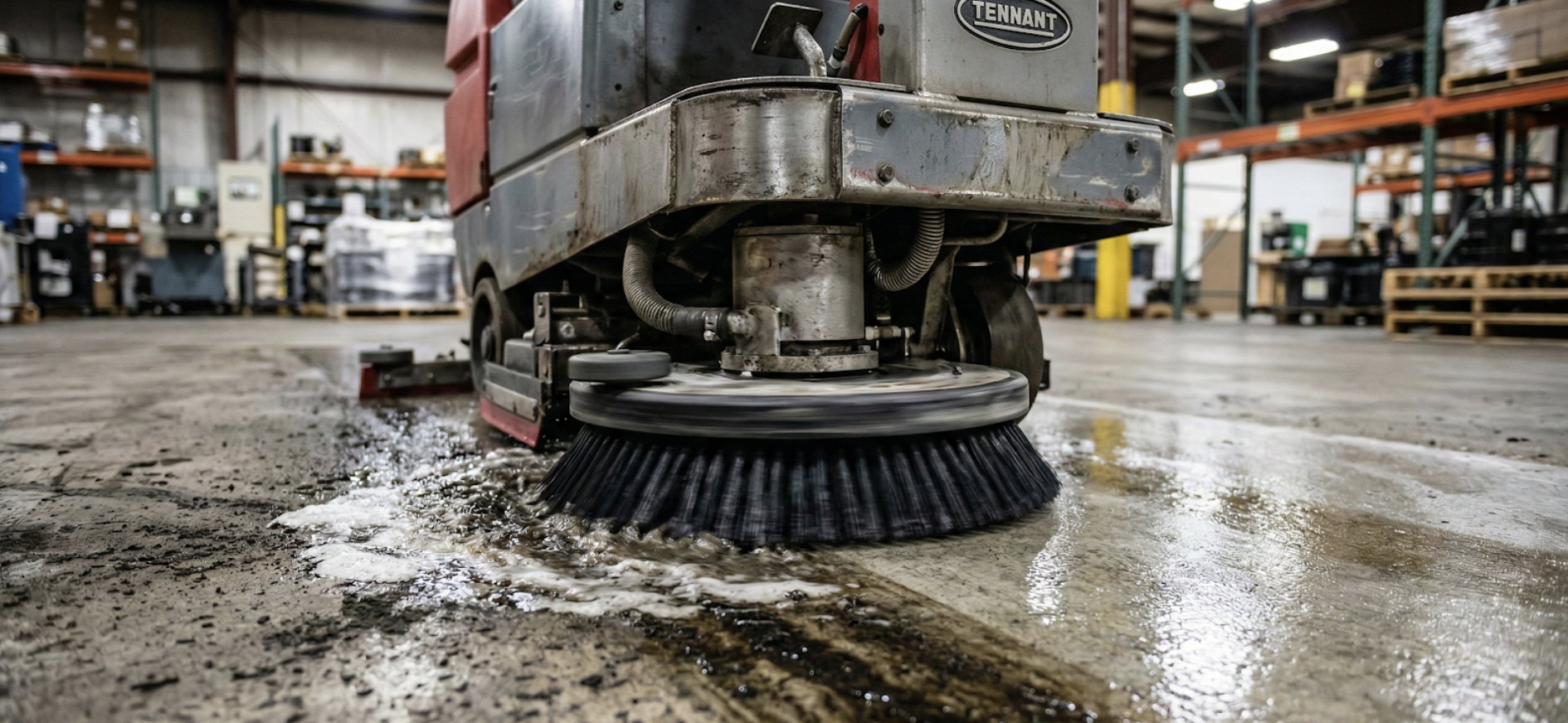
Industrial floor scrubbers are essential for efficient, thorough results on greasy floors. Quality scrubbers work on an inject-scrub-extract principle: injecting the cleaning solution and water, agitating the grime with pads or brushes, then extracting dirty water in one pass. The success of your process hinges on pad and brush selection. For concrete, you may need aggressive brushes; for tile, medium pads; for sealed floors, soft brushes to avoid abrasion.
Control your overlap passes—each sweep should slightly cover the previous track to ensure no residue remains. Adjust speed and pressure based on the specific floor surface and level of buildup. Proper settings allow you to break up and lift grease without harming the finish. Compared to hand scrubbing or mopping, auto-scrubbers are faster, more consistent, and allow for improved recovery of dirty water, meaning less slip risk and faster drying.
3. Two-Stage Scrubbing: Aggressive Then Fine
For deeply embedded oil and grease, consider a two-stage scrub. Begin with an aggressive pad or high-pressure setting, breaking the bonds that anchor grease to the floor. This first pass removes most of the heavy material. Switch to a finer pad or brush for a follow-up pass, collecting remaining residues and finishing with a polished look. This dual approach means fewer repeat passes, preserves floor quality, and addresses both thick buildup and fine residues in a single workflow.
4. Steam Scrubbing for Grease Emulsification
Steam cleaning is an advanced weapon against sticky, cooked-on grease. High-temperature steam (above 212°F) breaks down grease molecules, emulsifying them so they can be lifted away by scrubbing. This is especially effective on tile, grout, or textured surfaces where conventional machines may struggle. Steam-assisted scrubbers combine heat and mechanical agitation, creating enhanced cleaning power with minimal chemical use. For sensitive areas, pair steam with an environmentally friendly solution to strike the right balance between power and surface safety.
5. Hot Water / Pressure-Assisted Scrubbing
Wherever possible, opt for hot water—heat is a powerful ally in dissolving oily, greasy buildup. Many industrial floor scrubbers can be equipped with hot water capability, but for very tough cases, pressure washers or hot water jets may be necessary. Pressure loosens stuck-on residue so that your cleaning solution can penetrate further. For concrete surfaces and unfinished tile, higher pressure can be used safely, but softer floors may need a delicate approach. Always follow up with a clean water rinse and extraction to ensure no soapy, slippery residues are left behind.
Techniques for Different Flooring Types
Every floor type demands a tailored approach. For bare concrete, aggressive brushes, hot water, and alkaline degreasers are highly effective. Epoxy-coated floors require softer pads and a neutral pH cleaner to avoid damaging the finish. Tiles—especially those in kitchens—often benefit from steam-assisted scrubbing and narrow grout brushes, tackling both the flat surface and grime in the joints.
Sealed or finished surfaces (like hardwood or vinyl composition tile) mandate gentle methods, such as soft brushes and mildly alkaline cleaning agents, to avoid stripping the protective surface. Always check your equipment settings and adapt your cleaning chemicals to suit the floor type and the environment.
Step-by-Step Grease Removal Workflow
- Inspection & Hazard Control: Block off the work area, set up clear signage, and identify electrical or trip hazards.
- Dry Prep: Sweep or vacuum loose dust and dirt to keep particles from clogging equipment and to enhance cleaning efficacy.
- Pre-treat with Degreaser: Apply the chosen solution, following dilution and dwell time guidelines, focusing on high-traffic, high-risk spots.
- Machine Scrubbing: Select the optimal brush or pad, use the auto-scrubber or steam scrubber, and ensure full coverage with overlap.
- Hot Water Rinse & Extraction: Follow with a hot water rinse to flush out suspended dirt and grease. Extract standing fluids with a wet vacuum or the scrubber’s recovery system.
- Drying and Final Inspection: Speed up drying with fans when possible, and inspect for missed spots or residual slick areas before re-opening the floor.
Essential Safety Precautions
Protecting your team and facility is just as important as removing grease. Require gloves, goggles, and slip-resistant footwear whenever cleaning chemicals and wet floors are present. Always follow chemical handling instructions—mix in well-ventilated areas and never blend different cleaning agents. Block off wet areas with visible signage to prevent accidents. Ensure the workspace has adequate ventilation, especially when using concentrated degreasers or hot water, to avoid harmful vapors. Throughout the process, continually check for slip risks and remove standing water as quickly as possible.
Choosing the Right Products and Equipment
Your cleaning results depend on the choices you make: from the floor scrubber itself to the smallest pad. For large, open areas, invest in industrial floor scrubbers capable of handling your square footage. Select pads or brushes suited for your floor surface and soil load. Heavy-duty degreasers are often necessary for industrial facilities, but consider eco-friendly products for less severe applications or in spaces where people and sensitive equipment are present.
Look for cleaning solutions that balance efficiency with safety, and never substitute household formulas (like baking soda) in place of industrial-grade cleaning chemicals on tough, greasy floors. When in doubt, contact specialists for advice on matching equipment, cleaning agents, and procedures to your specific environment and floor type.
When to Call Professional Cleaning Services
While regular cleaning and maintenance can handle daily dirt and light grease, certain situations require professional cleaning services. Deeply baked-in grease, extensive manufacturing plant floors, complex surface layouts, or recurring issues with oil and residue might be beyond your in-house team’s capabilities. Professional services provide advanced equipment, expert knowledge, and comprehensive solutions—not just for one-time deep cleans, but also for ongoing maintenance programs. Bringing in outside help ensures you maintain compliance, protect your investment, and keep operations running safely and smoothly.
Achieving Long-Lasting Results: The Path to Cleaner, Safer Floors
Dealing with stubborn grease and oil doesn’t have to be a battle of frustration and wasted labor. By embracing advanced floor scrubbing techniques—pre-treatment with specialized degreasers, machine-assisted scrubbing, two-stage cleaning, the use of steam, and hot water or pressure—you can remove grease efficiently while protecting your floors and facility. Remember, the right cleaning solution, chosen for your floor type and task, makes all the difference. For expert advice, the best floor cleaning machines, and unbeatable results, reach out to the PS Janitorial. We’re here to help you create a safer, cleaner, and more efficient environment—every day.