Carpet Cleaner vs Carpet Extractor: What’s the Difference?
Whether you’re maintaining a home or managing a commercial facility, keeping carpets clean is essential for both hygiene and appearance. However, the right cleaning equipment makes all the difference between pristine results and lackluster outcomes. Understanding the difference between a carpet cleaner vs carpet extractor is key to choosing the right tools for your needs. While both are valuable for carpet care, selecting the right equipment ensures you remove embedded dirt, tackle tough stains, and prolong your carpet’s life, whether you’re facing surface dirt in residential settings or deep set dirt in commercial environments.
What Is a Carpet Cleaner?
How a Carpet Cleaner Works
A carpet cleaner is designed for surface cleaning using a straightforward three-step process: applying water and cleaning solution, agitating with a brush, and extracting dirty water with a vacuum. The machine sprays a mixture of water and cleaning solution onto the carpet surface, the brush rollers gently loosen dirt and light stains, and finally, a vacuum mechanism lifts the moisture and visible dirt into a recovery tank. This process works well on everyday spills, dust mites, and to maintain clean carpets between deeper cleans.
Common Uses for Carpet Cleaners
Carpet cleaners are ideal for regular maintenance, managing light soiling, and quick spot cleaning tasks. They’re the go-to for routine care in bedrooms, living rooms, or offices that don’t see heavy traffic. These machines help prevent the buildup of grime and are effective for removing surface dirt before it becomes embedded.
Types of Carpet Cleaners
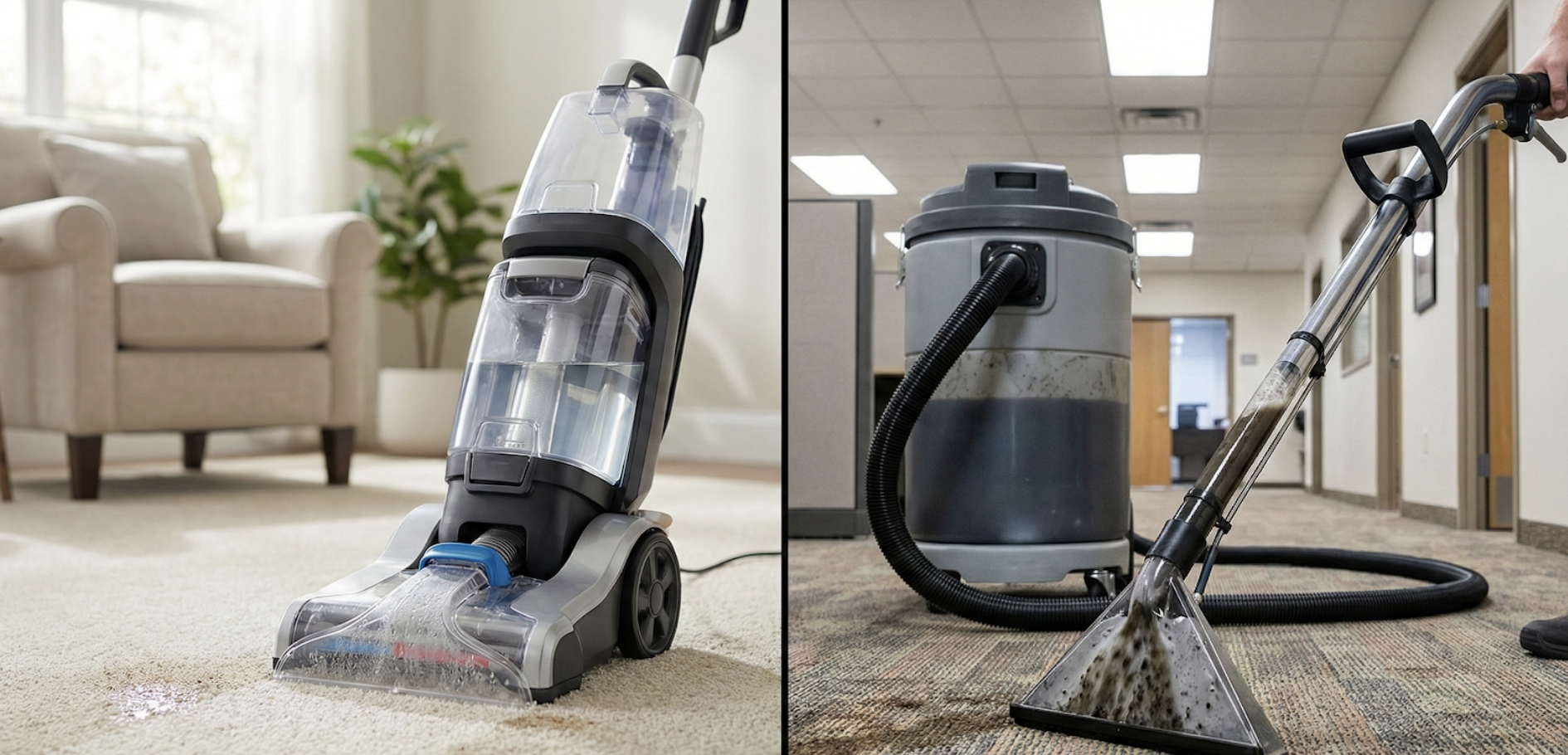
There is a range of carpet cleaners tailored to different needs. Residential models are compact and budget-friendly, making them suitable for homeowners. Upright machines resemble vacuum cleaners, making them easy to maneuver in smaller spaces. Light commercial units offer enhanced performance without the bulkiness of commercial carpet extractors, striking a balance for small offices or apartments.
What Is a Carpet Extractor?
How a Carpet Extractor Works
A carpet extractor steps beyond surface level cleaning by delivering a more thorough, deep cleaning process. These machines inject water, often heated, and specialized cleaning solution at high pressure deep into carpet fibers. Powerful suction then pulls dirty water, stains, and embedded dirt into a separate recovery tank. This method is highly effective for removing tough stains and deep set dirt that regular carpet cleaners can’t reach.
Common Uses for Carpet Extractors
Carpet extractors are invaluable for heavy soil removal, deep cleaning, and professional carpet maintenance. When faced with carpets harboring ground-in dirt, stubborn stains, or high traffic areas in commercial spaces, a carpet extractor vs regular cleaner delivers superior results. These are the machines you turn to when your carpets need a true deep clean.
Types of Carpet Extractors
Variety in carpet extractors allows for customization based on cleaning needs. Portable carpet extractors are favored for their versatility and ability to reach small or awkward areas. Walk-behind models are suited to larger surfaces and provide faster results in office buildings or industrial settings. Truck-mounted systems are the ultimate professional grade machines, offering maximum cleaning power, separate tanks for clean and dirty water, and efficiency in covering expansive areas.
Carpet Cleaner vs Carpet Extractor: Key Differences
Cleaning Depth and Performance
The primary difference between a carpet cleaner and a carpet extractor lies in cleaning depth. Carpet cleaners focus on surface dirt and light stains, making them suitable for routine maintenance and visible dirt removal. In contrast, extractors deliver a deep clean, targeting dirt, debris, and allergens lodged within carpet fibers, trapping and removing dust mites and odors.
Suction Power
A vital distinction in the carpet cleaner vs carpet extractor debate is suction capacity. Extractors provide significantly more powerful suction, ensuring effective moisture and residue extraction. This capability leaves carpets drier and cleaner, helping to prevent mold and mildew compared to the lighter vacuum action in standard carpet cleaners.
Water Temperature and Pressure
Water temperature and pressure used in cleaning methods further differentiate the two. Many carpet cleaners rely on room-temperature or cold water, while commercial carpet extractors often use hot water to loosen dirt and enhance stain removal. Higher pressure in extractors also allows deeper penetration into carpet fibers, tackling more resilient stains.
Drying Time
Expect longer drying times with carpet cleaners due to their limited suction and higher moisture residue. Carpet extractors, particularly professional grade machines, remove more water for quicker drying, reducing downtime in high traffic areas and minimizing disruption in commercial spaces.
Ease of Use
Carpet cleaners offer simplicity, easy to fill, operate, and maneuver, ideal for homeowners and light cleaning tasks. Carpet extractors, especially commercial extractors and truck-mounts, may require more setup, training, and post-use cleaning. There’s often a learning curve, but the results justify the effort for deep cleaning or heavily soiled areas.
Machine Size and Portability
Portability is another factor. Carpet cleaners feature compact designs, making storage and transport effortless. Extractors, especially those engineered for industrial settings, are larger, heavier, and sometimes require additional transport considerations, though portable extractors exist for convenience in smaller or hard-to-reach spaces.
Cost and Investment
When choosing between a carpet cleaner and a carpet extractor, cost is a key consideration. Carpet cleaners typically offer affordable upfront costs and suit smaller budgets, particularly for residential or low-traffic use. Carpet extractors, while a higher initial investment, deliver long-term value with robust performance, reduced need for repeat cleaning, and are indispensable in commercial settings requiring frequent deep cleaning.
Comparison Table: Carpet Cleaner vs Carpet Extractor
| Feature | Carpet Cleaner | Carpet Extractor |
|---|---|---|
| Cleaning Depth | Surface level cleaning | Deep clean carpets, removes embedded dirt |
| Suction Power | Moderate | High, powerful suction |
| Water Temperature | Cold/Room temp | Hot water extraction optional |
| Water Pressure | Low | High |
| Drying Time | Longer, more moisture left | Shorter, less moisture retained |
| Portability | Compact, lightweight | Larger, varies by model |
| Typical Applications | Routine/Light cleaning, stains | Deep cleaning, high traffic, heavy soil |
When Should You Use a Carpet Cleaner?
A carpet cleaner is best chosen for regular maintenance, managing light soiling, and handling small spaces or spot cleaning needs, such as fresh spills, light debris, or visible dirt on carpet surface areas. If you want to extend the life of your carpet, address minor messes, and keep flooring looking fresh between professional or deep cleanings, the ease and convenience of a household carpet cleaner make it the right equipment for the job.
When Should You Use a Carpet Extractor?
Carpet extractors shine in scenarios demanding a deep cleaning: commercial settings, industrial spaces, and anywhere carpets are heavily soiled or see persistent foot traffic. Extractors excel in removing tough stains, embedded dirt, and deep set odors. Choose an extractor when you need a thorough clean, after events, move-outs, or when routine maintenance isn’t enough.
Residential vs Commercial Carpet Cleaning Needs
The decision between a carpet cleaner and carpet extractor hinges on your setting’s demands. Residential cleaning typically involves smaller areas, less frequent deep cleaning, and light soiling, making a carpet cleaner a practical choice. For commercial spaces with high usage, frequent spills, or industrial settings, a commercial carpet extractor offers the robust cleaning power essential for managing tough messes, embedded soil, and maintaining a healthy indoor environment.
Tips for Getting the Best Carpet Cleaning Results
Pre-Treating Stains
To maximize cleaning effectiveness and prolong the life of carpets, always pre-treat deep stains and heavily soiled areas before using either a carpet cleaner or extractor. Stain removal products break down tough residues, ensuring that machines can fully extract dirt and restore carpet appearance.
Proper Machine Technique
Whether using a carpet cleaner or a carpet extractor, take time to move the machine slowly with deliberate passes, maintaining some overlap between each row. This guarantees thorough coverage and effective recovery of dirty water and cleaning solution, instead of simply moving surface dirt around.
Regular Maintenance vs Deep Cleaning
Aim to balance daily or weekly upkeep, using a carpet cleaner to address dust, pet hair, and crumbs, with periodic deep carpet cleaning via extractor. Regular maintenance prevents buildup, while scheduled deep cleans remove embedded dirt, traps odors, and extend carpet health.
Choosing the Right Carpet Cleaning Equipment
There’s a significant difference between a carpet cleaner and a carpet extractor in terms of cleaning depth, power, and application. Choosing between the two comes down to your cleaning goals, carpet type, frequency of use, and budget. For homes and light maintenance, a carpet cleaner offers affordable upfront value, ease of use, and effective surface cleaning. For deep cleaning, removing tough stains, managing heavily soiled areas, or tackling high traffic in commercial environments, a carpet extractor, especially a commercial carpet extractor or professional grade machine, is the superior choice. Invest in the right equipment based on the unique demands of your space, and you’ll enjoy clean carpets, improved air quality, and a carpeted space that always looks its best.