Cleaning Tips for High Traffic Areas In Commercial Spaces
Why High Traffic Areas Demand a Different Cleaning Approach
Not every part of a commercial building carries the same cleaning burden, and treating high traffic areas with the same routine you apply to a quiet back office is one of the most common mistakes facility managers make. In spaces like lobbies, hallways, restrooms, break rooms, and retail floors, the constant flow of people accelerates dirt buildup, spreads bacteria across surfaces, and degrades flooring materials at a rate that standard cleaning schedules simply cannot keep up with.
The consequences of falling behind are not just cosmetic. Dirty floors become slip hazards. Restrooms with inadequate sanitation create health risks for employees and visitors alike. Grimy entrances and worn floors communicate neglect to every client or customer who walks through the door. Beyond the immediate impression, deferred maintenance compounds into real replacement costs as floors, surfaces, and materials deteriorate faster than they should.
This guide is written for facility managers and cleaning staff who want a more structured, effective approach to maintaining commercial spaces under constant foot traffic. The sections below cover how to identify your highest-risk zones, how to match cleaning techniques to different surfaces, how to build a schedule that reflects actual usage, and how to choose the right equipment and products for the job.
Identifying the High Traffic Zones in Your Commercial Space
Before you can build a cleaning plan that works, you need a clear picture of which areas in your building see the most use. Allocating resources evenly across every square foot wastes time and budget. Directing attention toward the zones that generate the most wear and soil is what makes a cleaning program both effective and cost efficient.
Entrances and Lobbies
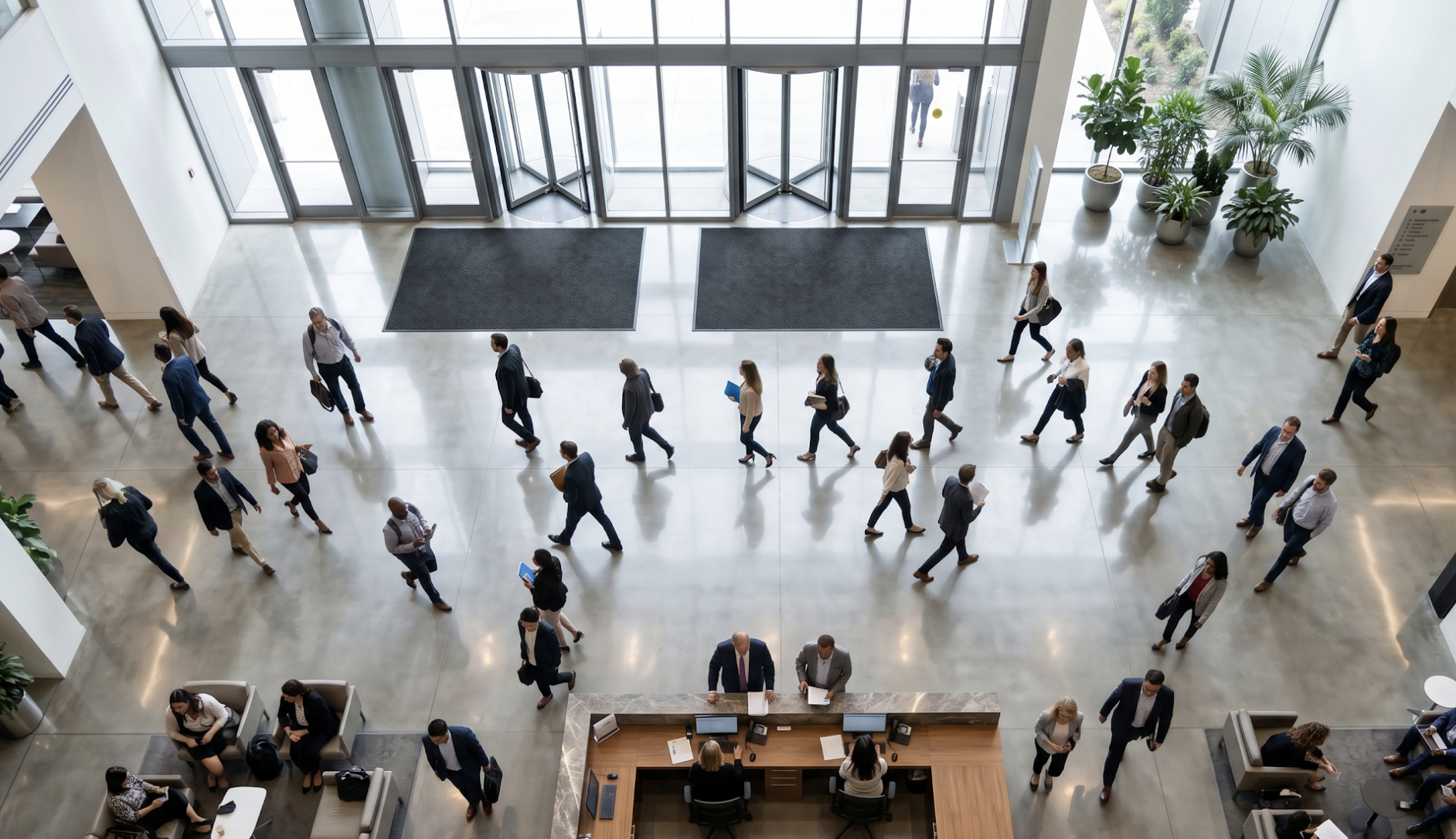
Your entrance is where the outside world meets your interior environment. Every person who walks in brings with them a significant amount of dirt, moisture, pollen, and debris tracked in from the parking lot, sidewalk, or public transit. Floor mats at entry points help reduce what gets spread further into the building, but they are not a substitute for frequent sweeping, mopping, and floor scrubbing. Lobbies also serve as the first impression your facility makes on every visitor, which means their condition reflects directly on your business.
Hallways and Corridors
Hallways function as the connective tissue of a commercial building, routing foot traffic between every other zone throughout the day. That means they accumulate dirt from multiple directions simultaneously. Hard floors in corridors show scuff marks and embedded grime quickly, while carpeted hallways trap dust and allergens deep in the fibers. Surface cleaning alone is not enough here. These spaces need both daily attention and regular deep cleaning to prevent buildup from compounding over time.
Restrooms
Restrooms combine heavy use with moisture, bacteria, and frequent contact with high touch surfaces, making them one of the highest-risk zones in any commercial facility. They require a more frequent cleaning schedule than most other areas, including daily sanitization of all surfaces, consistent restocking of paper towels and supplies, and periodic deep scrubbing of tile and grout. A poorly maintained restroom is one of the fastest ways to damage the impression your facility makes on both employees and guests.
Break Rooms and Common Areas
Break rooms and shared common spaces see consistent daily use by a rotating mix of people, which means food waste, spills, and bacteria accumulate quickly. Countertops, appliance surfaces, and shared equipment all need daily wiping. Trash bins fill faster here than almost anywhere else in the building and should be emptied on a regular schedule rather than reactively. These areas are also hotspots for cross-contamination when cleaning protocols are not followed consistently, making them a priority in any commercial cleaning program.
Cleaning Techniques for Different Floor Surfaces
Using the wrong cleaning approach for a given floor type can damage the surface, leave behind residue that attracts more soil, or simply fail to remove embedded dirt. The technique that works on sealed VCT tile will not produce the same result on carpet, and vice versa. Here is how to match your method to the surface.
Hard Floors: Scrubbing, Mopping, and Buffing
Hard floor maintenance starts with dry sweeping or dust mopping to clear loose debris before any wet cleaning begins. Applying water or solution to a floor that still has loose grit on it just moves the dirt around rather than removing it. Wet mopping with an appropriate cleaning solution handles daily surface soil, but in high traffic zones, a floor scrubber is what actually removes embedded dirt that a mop cannot reach.
Floor scrubbers agitate the surface with rotating brushes or pads while simultaneously vacuuming up the soiled water, leaving floors cleaner and drying significantly faster than traditional mop-and-bucket methods. Faster drying means reduced slip hazards and less interruption to foot traffic during cleaning hours.
After scrubbing, floor buffers and burnishers restore shine and protect the floor's finish. Burnishers operate at higher speeds than standard buffers and are used to achieve a high-gloss result on VCT and polished concrete surfaces. Regular buffing between strip-and-wax cycles extends the life of the floor coating and reduces how often the more labor-intensive stripping process needs to be performed.
Carpeted Areas: Vacuuming and Deep Extraction
Carpeted floors in high traffic zones require daily vacuuming to keep dirt and debris from being ground deeper into the fibers with every pass of foot traffic. Standard vacuuming addresses surface-level soil, but periodic deep cleaning with a carpet extractor or steam cleaner is necessary to remove allergens and embedded grime that vacuuming cannot reach. Increase the frequency of deep extraction in lobbies, carpeted hallways, and other heavily used zones compared to areas with lighter use. Consistent carpet maintenance improves air quality, extends the lifespan of the carpet, and keeps the space looking presentable between major cleaning cycles.
High Touch Surfaces: Glass, Door Handles, and Countertops
Floors are not the only surfaces that require a structured cleaning approach in busy areas. Glass doors and windows accumulate fingerprints and smudges throughout the day and should be wiped down with a glass cleaner daily to maintain a professional appearance. Door handles, push plates, light switches, elevator buttons, and reception countertops are among the most frequently touched surfaces in any commercial space and should be disinfected at least once per day, with more frequent attention in facilities with especially high occupancy or health-sensitive environments.
Microfiber cloths are the preferred tool for these tasks because they trap and remove bacteria rather than redistributing it from one surface to another.
Building a Cleaning Schedule That Matches Foot Traffic
A schedule designed for a low-occupancy office will not hold up in a high-traffic commercial space. You need a tiered approach that addresses immediate issues daily, sustains cleanliness weekly, and preserves surfaces over time through monthly or seasonal deep cleaning. Treat your schedule as a living document, adjusting it when traffic levels shift due to seasonal patterns, business growth, or special events.
Daily Cleaning Tasks
Daily tasks are about controlling buildup before it becomes a larger problem. In high traffic zones, this means sweeping and auto-scrubbing hard floors, vacuuming carpeted areas, emptying all trash bins and recycling containers, cleaning and restocking restrooms, wiping down all high touch surfaces with a disinfectant, spot-cleaning spills as they occur, and maintaining entrance mats and lobby furniture. Staying consistent with these tasks is what keeps a facility clean on the surface while preventing deeper problems from developing.
Weekly Cleaning Tasks
Weekly tasks address what daily routines cannot fully resolve. These include thorough floor scrubbing with a walk-behind or ride-on scrubber depending on the size and layout of the space, detailed dusting of surfaces including furniture, windowsills, and light fixtures, scrubbing restroom tile and grout, vacuuming upholstered furniture in waiting areas and break rooms, cleaning the interiors of appliances in common spaces, and sweeping and mopping stairwells and storage areas that may be overlooked in daily rounds.
Monthly and Seasonal Deep Cleaning
Monthly and seasonal cleaning is what protects the long-term condition of your surfaces and materials. This includes floor stripping and reapplication of wax or sealant on hard floors, deep carpet extraction or shampooing, cleaning HVAC vents and air ducts to maintain a healthier environment, cleaning windows inside and out, washing walls and baseboards where dust and scuffs accumulate, and inspecting floor mats and replacing them when they are no longer able to trap dirt effectively. Skipping these cycles accelerates surface deterioration and increases long-term replacement costs.
Choosing the Right Equipment for High Traffic Floor Care
Consumer-grade equipment is not built for the demands of high traffic commercial environments. The machines you use make a direct difference in the quality of the result and the time it takes to achieve it. Here is a breakdown of the primary categories of professional floor care equipment and when each is the right choice.
Floor Scrubbers for Large Commercial Areas
A floor scrubber is the most effective tool for maintaining hard floors in heavy foot traffic environments. Walk-behind scrubbers are suited for medium-sized spaces, tighter aisles, and more complex layouts where maneuverability matters. Ride-on scrubbers are designed for large open floor areas, such as warehouse floors, shopping centers, and wide commercial corridors, where covering maximum square footage quickly is the priority. Not sure which type fits your facility? The walk-behind vs. ride-on comparison guide breaks down the decision by space size, layout, and budget.
Both types simultaneously scrub and vacuum up dirty water, eliminating the separate mop-and-bucket step and significantly reducing drying time, which is important for safety in active commercial spaces.
Floor Buffers and Burnishers for Hard Floor Maintenance
After a floor has been scrubbed clean, buffing restores the surface shine and helps protect the finish from wear. Burnishers operate at higher speeds than standard buffers and are used to produce a high-gloss result on VCT and other hard floor materials. Regular buffing between refinishing cycles extends the life of the floor coating and reduces how often the more labor-intensive stripping process needs to be done. For a deeper look at how these two machine types differ in practice, see the floor buffers vs. floor scrubbers breakdown.
Wet and Dry Vacuums and Commercial Grade Vacuums
Industrial vacuums with large tank capacities and high suction power are necessary for keeping up with the volume of debris in busy commercial zones. HEPA-filtered models are particularly important in facilities where air quality directly affects occupant health, such as healthcare settings, schools, and office buildings where allergen exposure is a concern. Wet and dry vacuum options add flexibility for handling liquid spills and standing water in addition to dry debris pickup. For large-area debris removal before scrubbing begins, commercial floor sweepers are also worth considering as part of your maintenance routine.
Selecting the Right Cleaning Products for Commercial Spaces
Equipment alone does not produce a clean facility. The solutions you use alongside that equipment need to be matched to the surface type, the level of soil, and the health and safety standards of the space. Using the wrong product can leave residue that attracts more dirt, strip protective coatings, or fail to disinfect surfaces that genuinely need it.
pH-Neutral Cleaners for Everyday Floor Care
pH-neutral cleaners are the standard choice for routine hard floor maintenance in commercial spaces. These formulas clean effectively without stripping wax or sealant from the floor surface, which preserves the protective finish between refinishing cycles. They are safe across a wide range of floor materials including tile, VCT, hardwood, and polished concrete, making them a practical all-around option for facilities with mixed flooring types.
Disinfectants and Sanitizers for High Touch Zones
There is an important distinction between cleaning and disinfecting, and high traffic areas require both. Disinfectants need adequate dwell time on a surface to kill pathogens. Wiping a surface immediately after application limits the product's ability to do its job. Focus disinfectant use on restrooms, break room surfaces, reception counters, door handles, and any surface that sees direct hand contact throughout the day.
Eco-Friendly and Green Certified Products
Plant-based and low-VOC cleaning formulas reduce chemical exposure for cleaning staff and building occupants, improve indoor air quality, and help facilities meet sustainability or compliance goals. Green certified products have improved significantly and many perform on par with traditional chemical-heavy options for routine tasks. When evaluating products, look for third-party certifications rather than relying on self-reported marketing claims.
Waste Management in High Traffic Commercial Spaces
High traffic facilities generate waste at a much faster rate than low-occupancy buildings, and a neglected waste management system creates sanitation issues, unpleasant odors, and a negative impression on anyone who uses the space. Position trash bins in high traffic zones where they are easy to access and clearly visible, and check and empty them on a scheduled basis rather than only when they overflow. Clearly labeled recycling stations help manage waste streams effectively and contribute to a more organized environment. Waste handling should be a scheduled task built into your cleaning program, not a reactive one.
How to Evaluate Whether Your Cleaning Program Is Working
A cleaning schedule is only as effective as the results it produces. You need a structured way to measure whether your program is keeping high traffic areas in acceptable condition, or whether adjustments are needed.
Regular Inspections and Checklists
Structured spot inspections tied to your cleaning schedule give you a consistent way to track cleanliness standards over time. Use checklists both as a verification tool and as an accountability measure for cleaning staff. Inspections should cover not just visual cleanliness but also supply levels in restrooms, the condition of floor surfaces, and whether any maintenance issues have developed that fall outside the regular cleaning scope.
Getting Feedback from Staff and Visitors
People who use a space daily will notice problems that a scheduled inspection can miss, such as a restroom that runs out of supplies by mid-morning or a hallway that stays wet too long after mopping. Creating a simple channel for staff to report cleanliness concerns and treating that input as useful operational data rather than complaints gives you a more complete picture of how your cleaning program is performing.
Frequently Asked Questions
How often should high traffic areas be cleaned in a commercial space?
The right frequency depends on the volume of foot traffic, the surface type, and the nature of the business. The general baseline is daily cleaning for floors and high touch surfaces in heavily used zones, weekly deep cleaning for sustained cleanliness, and monthly or seasonal maintenance for surfaces that accumulate wear over time rather than on a daily basis.
What type of floor scrubber is best for commercial buildings?
The answer depends primarily on the size and layout of the space. Walk-behind scrubbers work well in facilities with tighter spaces, multiple rooms, or areas where maneuverability is important. Ride-on scrubbers are the better choice for large open floor areas such as warehouses, retail floors, or wide commercial corridors where covering maximum square footage quickly is the priority.
What is the difference between a floor buffer and a floor scrubber?
A floor scrubber is designed to agitate and remove dirt and grime from the floor surface using water and cleaning solution, then vacuum up the soiled liquid. A floor buffer is used after cleaning to restore shine and protect the floor's finish. Both machines serve distinct purposes in a complete floor care program and are not interchangeable. For a side-by-side explanation, see the floor buffers vs. floor scrubbers guide.
How do I prevent floors from deteriorating in high traffic zones?
The key preventive measures are: using floor mats at entry points to reduce the volume of dirt tracked onto the floor, maintaining a consistent cleaning schedule that includes both daily scrubbing and periodic refinishing, using cleaning products that do not strip floor coatings, and investing in appropriate equipment so floors are cleaned thoroughly rather than just surface-wiped. Consistent maintenance is substantially less expensive than floor replacement. Browse the full selection of commercial floor cleaning machines to find the right fit for your facility's needs.