What's The Recommended Cleaning Routine For Hard Floors In A Large Warehouse Using A Ride On Scrubber
Why a Structured Cleaning Routine Matters for Large Warehouses
Running a large warehouse without a structured cleaning routine is a gamble you don't need to take. Slips and falls remain one of the leading causes of workplace injury, and a warehouse floor covered in dust, oil residue, or standing water is exactly the kind of environment that produces them. OSHA style walking and working surface expectations put the responsibility squarely on facility operators to keep floors clean, dry, and free of hazards, and an ad hoc approach to cleaning makes that standard nearly impossible to meet consistently. Beyond safety, there's a real financial argument here too. Concrete and epoxy floors are expensive to resurface, and grit, oil, and chemical spills that sit too long grind into the surface and shorten its life. A facility that waits until a floor looks visibly dirty before scrubbing it is often already past the point where damage has started. There's also a quieter cost that's easy to overlook: a clean facility affects how your team feels about coming to work every day. A productive work environment starts with a floor that looks and feels maintained, not one that's sticky underfoot or coated in dust. This article lays out a clear daily, weekly, and monthly routine built specifically around ride on scrubber use, so you can protect your floor investment, keep your team safe, and make cleaning a predictable part of warehouse operation rather than a reactive scramble.
Understanding Your Warehouse Floor Type Before You Build a Routine
Before you lock in any cleaning schedule, you need to know exactly what your warehouse floor is made of. Floor type determines which cleaning chemicals are safe to use and how much brush pressure your ride on scrubber should apply, and skipping this step is one of the fastest ways to damage a floor you're trying to protect. A cleaning process that works perfectly on sealed concrete can etch or discolor raw concrete, and a degreaser strong enough for a loading dock can dull the finish on polished floors. Matching your routine to your floor type isn't an optional extra step. It's the foundation everything else in this guide is built on.
Sealed and Polished Concrete
Polished concrete floors need pH neutral cleaning solutions and softer pads. Harsh alkaline or acidic chemicals strip the sheen off polished concrete over time, and aggressive brushes create fine scratches that dull the surface long before the floor is structurally worn out. If your warehouse floor has that glossy, reflective look, treat gentleness as a feature of your routine, not a limitation.
Epoxy Coated Floors
Epoxy coatings are known for being highly chemical resistant and durable, which makes them a popular choice for industrial floors. That durability doesn't mean the coating is indestructible, though. Harsh degreasers used daily, or brush pressure set too aggressively, will wear down an epoxy coating over years of repeated scrubbing. Epoxy can handle more than polished concrete, but it still benefits from cleaning products chosen with the coating in mind.
Unsealed or Raw Concrete
Raw, unsealed concrete is porous. It absorbs spills faster than sealed or coated floors, which means oil, chemicals, and dirt can work their way below the surface if they aren't addressed quickly. Warehouses with unsealed concrete generally need more frequent scrubbing and a stronger degreasing approach to prevent permanent staining, since a stain that sets into porous concrete is far harder to remove than one sitting on a sealed surface.
The Recommended Daily Cleaning Routine
Daily cleaning is the foundation the rest of your routine depends on. Skip one of these steps and every task that follows takes longer, works less effectively, or fails outright. Building daily maintenance into your team's shift habits is what keeps a warehouse floor consistently clean rather than clean only right after a big push.
Step 1: Dry Sweep or Pre Sweep Before Scrubbing
Sweeping before you scrub isn't a formality. Loose debris, grit, and packaging scraps get ground directly into the floor by a scrubber's brushes if they aren't cleared first, and that grinding action scratches the floor while wearing down brush life at the same time. Dry sweeping, whether with a push broom or an industrial sweeper, removes large debris before it ever has a chance to become an abrasive under your machine.
Step 2: Run the Ride On Scrubber Over High Traffic Zones
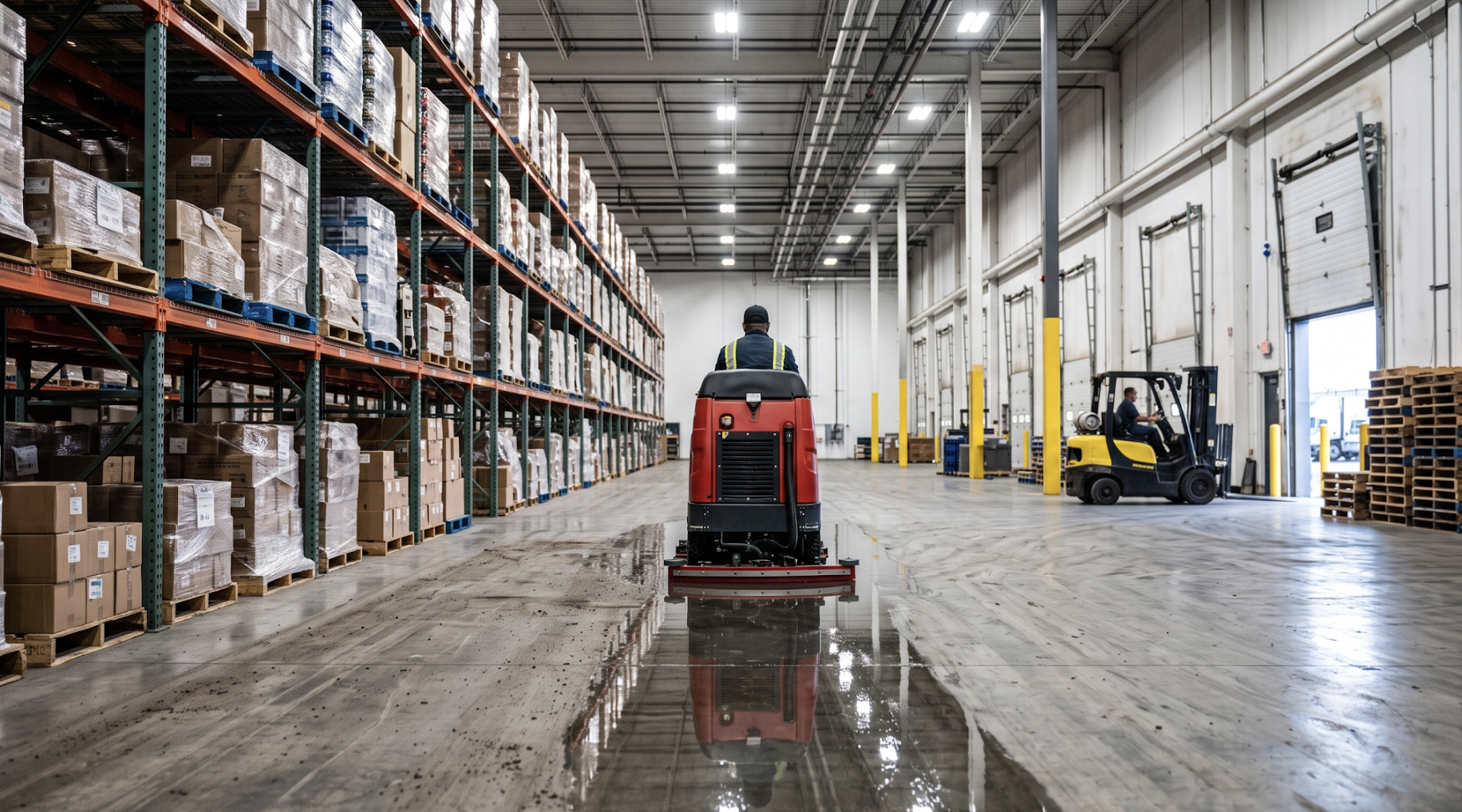
Once the floor is swept, start your ride on scrubber pass in the areas that see the most punishment: forklift lanes, dock doors, and main aisles. These zones accumulate oil, dust, and tire marks faster than anywhere else in the building, and cleaning them first means your machine's solution and recovery tank capacity go toward the dirtiest sections while they're at full strength.
Step 3: Immediate Spill and Spot Response
Spills should never sit and wait for the next scheduled scrub. A puddle of oil or liquid left on a warehouse floor for even a short time is a slip hazard and a stain risk. Keep spill kits stationed near common problem areas like loading docks and forklift charging stations so spot cleaning can happen the moment something hits the floor, not hours later.
Step 4: End of Shift Water Recovery and Tank Rinse
Leaving dirty water sitting in the recovery tank overnight is one of the most common mistakes warehouses make. Standing solution builds odor and gives bacteria a place to grow, and that bacteria gets redistributed right back onto the floor the next time the machine runs. A quick end of shift rinse of the recovery tank and solution tank keeps the machine, and by extension the floor, genuinely clean rather than just visibly clean.
The Recommended Weekly Cleaning Routine
Weekly tasks sit above daily maintenance. These are jobs and machine components that don't need attention every single day, but that can't be ignored for a month either without consequences to floor condition or machine reliability.
Full Facility Pass With the Ride On Scrubber
Even with high traffic zones covered daily, every part of the warehouse deserves a full pass at least once a week. Lower traffic storage areas often get nothing more than a light daily sweep, and a weekly scrub with your ride on scrubber ensures dust and grime don't quietly build up in the corners of the facility while attention stays focused on the busiest aisles.
Degreasing Loading Docks and Equipment Staging Areas
Loading docks and staging areas around equipment collect oil drips, hydraulic fluid, and tire residue faster than almost any other part of the warehouse. These zones need a stronger degreasing solution applied on a weekly basis to keep tough stains and oil spills from building into a permanent problem that daily cleaning alone can't touch.
Checking Brush Wear and Squeegee Blades
Worn brushes and squeegee blades quietly reduce your cleaning performance without always being obvious at a glance. A squeegee that isn't sealing properly leaves streaks of water behind, and that leftover moisture becomes its own slip hazard. A weekly inspection catches wear before it turns into a safety issue or a drop in cleaning quality.
The Recommended Monthly and Deep Cleaning Routine
Monthly deep cleaning protects your floor's long term condition and your machine's long term reliability. This is the layer of the routine that goes beyond daily appearance and addresses the kind of wear and buildup that only shows up over time.
Two Pass Scrubbing for Ground In Grime
For polished or unsealed concrete carrying ground in grime, a two pass method is considered the gold standard. The first pass lays down cleaning solution and agitates the dirt that's worked its way into the floor's surface. The second pass scrubs and picks up the loosened grime with a fresh application, giving you a genuinely deep clean rather than a surface level pass that leaves residue behind.
Stripping and Resealing Schedule If Applicable
Sealed or coated floors eventually need stripping and resealing, but a consistent scrubbing routine actually extends how long you can go between these more expensive treatments. Watch for dulling that doesn't respond to normal cleaning, visible wear patterns in high traffic lanes, or a coating that no longer beads water the way it should. Those are signs it's time to plan for stripping rather than waiting for the floor to fail.
Full Machine Teardown and Sanitation
The tank, brush deck, squeegee assembly, and wheels on a ride on scrubber can all harbor bacteria and residue if the machine only ever gets a rinse and never a full breakdown. A monthly teardown and sanitation pass matters for every warehouse, but it's especially important for facilities operating under food safety or GMP style requirements, where equipment sanitation is part of the compliance picture, not just good practice.
How to Set a Cleaning Frequency Based on Warehouse Traffic
Not every zone in your warehouse needs the same cleaning frequency. Mapping traffic patterns across the facility helps you prioritize labor hours and machine time where they matter most, instead of spreading the same effort evenly across areas that don't see the same wear.
High Traffic Zones Daily
Main aisles, dock doors, and forklift charging stations typically qualify as high traffic zones. These areas need daily sweeping and spot cleaning at minimum, since dirt accumulation happens fastest wherever people, forklifts, and deliveries move through most often.
Medium Traffic Zones Two to Three Times Per Week
Secondary aisles and staging zones near production areas generally fall into the medium traffic category. Two to three passes a week is usually enough to keep dirt from accumulating without dedicating daily labor to areas that don't see constant movement.
Low Traffic or Storage Only Zones Weekly
Deep storage sections and rarely accessed racking rows can typically be handled with a weekly pass. These zones still need regular maintenance to prevent dust buildup, but they don't demand the same frequency as your busiest aisles.
Choosing the Right Ride On Scrubber for Your Routine
Even the best routine falls apart if the machine behind it isn't sized correctly for your facility. A scrubber that's too small for your square footage forces more passes and more labor hours than necessary, cutting into the efficiency the whole routine is supposed to deliver. Walk behind floor scrubbers still have a place in smaller rooms and tight corridors branching off your warehouse floor, but for the open square footage of a large warehouse, a ride on scrubber is almost always the more efficient choice.
Tank Size and Run Time Versus Warehouse Square Footage
Larger ride on scrubbers typically carry solution and recovery tanks in the range of 50 to 70 gallons, and run on deep cycle batteries rated for about 4 to 6 hours per shift, translating to roughly 2,000 to 5,000 square meters of coverage per single charge depending on the model. Estimate your tank size and run time needs against your total square footage so operators aren't stopping mid shift to refill or empty tanks, which quietly eats into your cleaning window every single day.
Scrub Width and Coverage Per Hour
A wider scrub path directly reduces the number of passes needed to cover a large facility. A quality ride on scrubber should clean over 30,000 square feet per hour, and some models are capable of covering up to 60,000 square feet per hour. Compare coverage per hour across models against your total square footage to estimate realistic cleaning windows before you commit to a machine.
Maneuverability for Racking, Aisles, and Dock Doors
Raw power and tank capacity matter, but tight turning radius and clear operator visibility matter just as much, especially in warehouses with narrow aisles or dense racking. A machine that can't comfortably turn in your tightest aisles will leave gaps in coverage no matter how strong its scrubbing performance is on paper. If your facility runs tight aisles between racking, prioritize maneuverability alongside raw cleaning capacity.
Take a look at PS Janitorial's ride on floor scrubbers to compare tank size, scrub width, and maneuverability across available models.
Choosing the Right Cleaning Solution for Each Floor Type
Pairing the wrong cleaning chemical with your floor type undoes the benefit of an otherwise solid routine, no matter how disciplined your daily and weekly schedule is.
pH Neutral Cleaners for Sealed and Polished Floors
A pH neutral cleaning solution preserves the shine on polished or coated floors and prevents the etching that harsher chemicals can cause. If your floor is sealed or polished, treat neutral pH cleaning products as the default, not the exception.
Degreasers for Loading Docks and Oil Prone Areas
Stronger degreasing agents have a place in your cleaning products lineup, but they belong in oil prone areas like loading docks rather than across the entire facility. Used sparingly and only where needed, degreasers handle stubborn stains without damaging the surrounding flooring that doesn't need that level of chemical strength.
Avoiding Chemicals That Etch or Discolor Concrete
Acidic or overly harsh cleaners are a common source of accidental damage on raw or polished concrete. Before applying a new product across a large area, test it on a small, inconspicuous section first. That small step can save you from discoloring or etching a floor that took years to look right.
Operator Training and Standard Operating Procedures
This is a section a lot of competing guides skip entirely, but it deserves real attention. A ride on scrubber is powered equipment, and treating it casually creates both a safety risk and, in facilities handling regulated products, a food safety risk as well.
Why a Ride On Scrubber Needs Documented Training, Not Just a Walkthrough
Operators need to understand warehouse traffic rules, emergency stop procedures, and proper chemical mixing, not just which buttons start the machine. Even facilities without a formal powered industrial truck classification still benefit from documented training, both for day to day safety and for liability and audit purposes down the line.
What to Include in a Ride On Scrubber SOP
A solid SOP for ride on scrubber operation should include a pre operation inspection checklist, chemical mixing and dilution instructions, emergency stop and collision procedures, end of shift breakdown and cleaning steps, and documentation with sign off requirements. Inspecting the scrubber before use to confirm proper operation is a simple habit that prevents a surprising number of downstream problems, from chemical mixing errors to mid shift breakdowns.
Safety Best Practices While Scrubbing Warehouse Floors
Beyond training and SOPs, a few general floor level safety practices apply regardless of floor type or cleaning frequency.
Wet Floor Signage and Zone Isolation
Signal in progress cleaning clearly to forklift drivers and foot traffic. Wet floor signage and temporary zone isolation prevent accidents and give everyone in the facility a clear signal to slow down or reroute around an active cleaning zone.
Operating Around Forklifts and Racking
Right of way expectations should be clear before a shift starts. Operators need blind spot awareness when scrubbing near active forklifts and racking to ensure safety for everyone moving through the warehouse at the same time.
PPE Requirements for Operators
Non slip footwear is essential for anyone operating a ride on scrubber on a wet floor, and gloves should be standard when handling concentrated cleaning chemicals. Basic PPE requirements are a small investment that protect operators from avoidable injury.
Common Mistakes That Shorten Floor and Machine Life
Here's a quick reference summarizing the most frequent errors covered above, framed as what to avoid.
- Scrubbing before sweeping
- Using the wrong chemical for the floor type
- Skipping tank and brush sanitation
- Overwetting concrete floors
- Ignoring spills until end of shift
Sample Weekly Cleaning Routine Template
Here's a day by day breakdown showing which daily, weekly, and monthly tasks apply on which days. Print this or adapt it directly for your facility.
| Day | Tasks |
|---|---|
| Monday | Dry sweep, scrub high traffic zones, spot clean spills, rinse tank, full facility pass |
| Tuesday | Dry sweep, scrub high traffic zones, spot clean spills, rinse tank |
| Wednesday | Dry sweep, scrub high traffic zones, medium traffic zone pass, spot clean spills, rinse tank |
| Thursday | Dry sweep, scrub high traffic zones, degrease loading dock, spot clean spills, rinse tank |
| Friday | Dry sweep, scrub high traffic zones, medium traffic zone pass, check brushes and squeegee, rinse tank |
| Saturday | Low traffic and storage zone pass, spot clean spills as needed |
| Sunday | Light maintenance only, or full machine teardown and sanitation on scheduled deep clean weeks |
Frequently Asked Questions
How Often Should a Ride On Scrubber Be Used in a Large Warehouse?
High traffic zones should be scrubbed daily, medium traffic zones two to three times a week, and low traffic or storage areas about once a week, with a full facility pass every week regardless of zone.
Can One Ride On Scrubber Cover an Entire Warehouse in a Single Shift?
It depends on the machine's scrub width and coverage per hour compared to your total square footage. A quality ride on scrubber can clean over 30,000 square feet per hour, with some models reaching up to 60,000 square feet per hour, so check those numbers against your facility size before assuming one machine and one shift will be enough.
What Cleaning Solution Is Safest for Sealed Concrete Floors?
A pH neutral cleaning solution is the safest choice for sealed or polished concrete, since it won't etch the surface or dull the finish the way harsher alkaline or acidic products can.
Does a Ride On Scrubber Need a Formal SOP?
While a formal SOP may not be legally mandatory in every facility, it's strongly recommended for operator safety, consistent chemical mixing, and audit readiness, especially in facilities operating under stricter regulatory requirements.
How Do You Prevent Bacteria Buildup in the Scrubber Tank?
Rinse the recovery tank and solution tank at the end of every shift, and schedule a full machine teardown and sanitation of the tank, brush deck, squeegee assembly, and wheels on a monthly basis.
Your Next Steps to a Cleaner, Safer Warehouse Floor
A clean, safe warehouse floor doesn't happen by accident. It comes from a daily routine that handles sweeping, high traffic zones, spills, and tank maintenance, a weekly layer that covers the whole facility and checks machine wear, and a monthly deep clean that protects the floor's long term condition. Match your cleaning chemicals and brush pressure to your specific floor type, train your operators properly, and choose a ride on scrubber sized correctly for your square footage, and the rest of this routine falls into place. If you're ready to find the right machine for your facility, explore PS Janitorial's ride on scrubber lineup or reach out to our team for a personalized recommendation.