When Does It Make Sense to Upgrade to a Ride-On Scrubber?
What Is a Ride On Floor Scrubber?
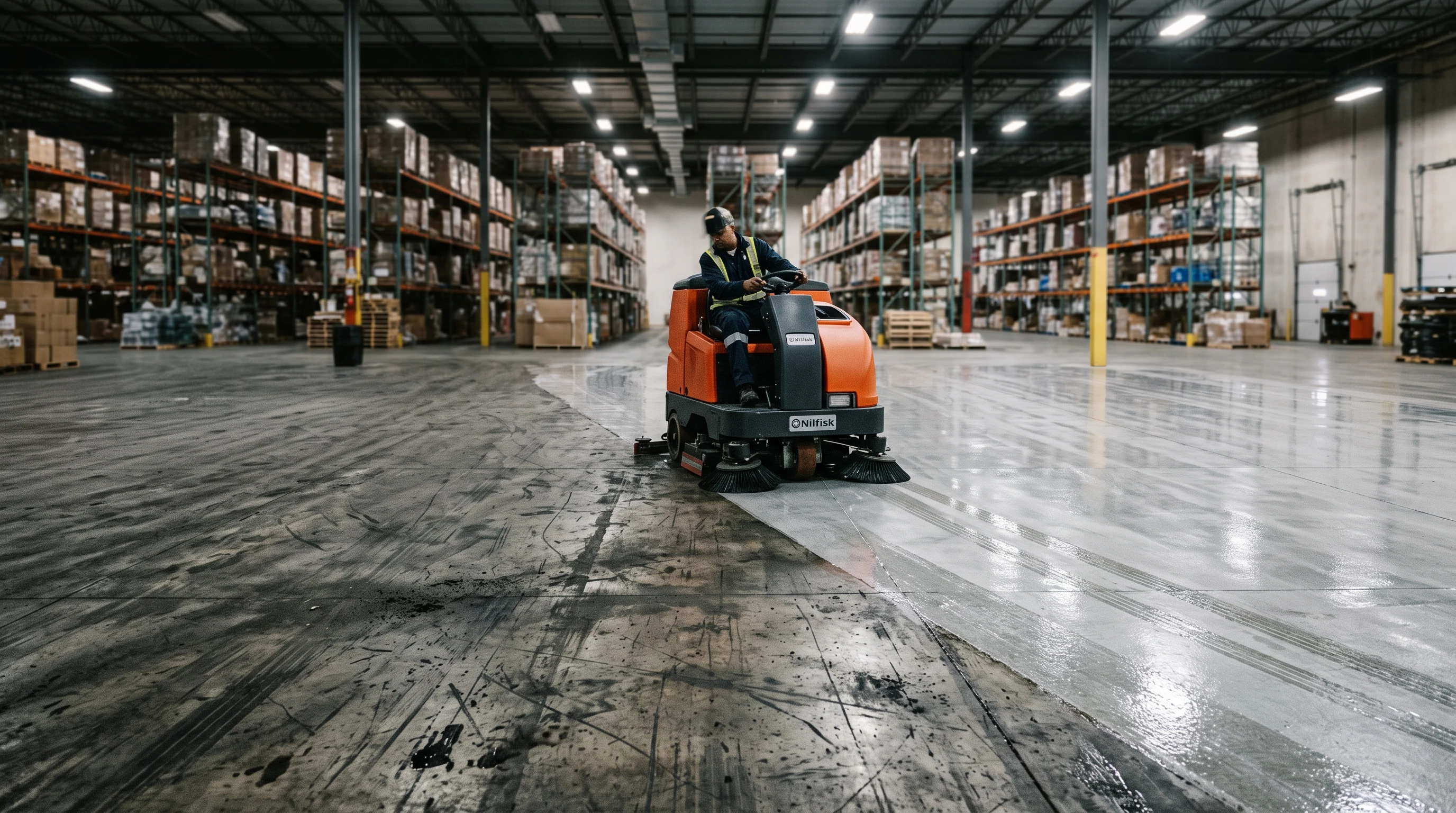
A ride on floor scrubber is a large, vehicle style cleaning machine where the operator sits and drives rather than walks and pushes. As it moves, it dispenses cleaning solution onto the floor, scrubs with rotating brushes, and vacuums up the dirty water, all in a single pass, leaving floors clean and nearly dry within seconds. That's the fundamental difference from a walk behind scrubber, which requires an operator to push the machine on foot. Both do the same job, but ride ons are built for a completely different scale of operation.
Signs It's Time to Upgrade Your Current Floor Cleaning Setup
Not every facility needs a ride on scrubber, but some clearly do and just haven't made the switch yet. Here are the most common signals that your current equipment is holding you back.
Your Cleaning Times Are Too Long
If your cleaning crew is spending hours on floors that should take far less time, the equipment is the bottleneck. Walk behind units and mops simply can't cover large square footage at any meaningful speed. When floor cleaning cuts into operational hours or requires staff to come in early or stay late, that's a capacity problem a ride on is designed to solve.
Labor Costs Are Eating Into Your Budget
Large floor areas cleaned manually often require multiple people working simultaneously. A single ride on operator can cover the same ground, reducing the headcount needed for each cleaning cycle. If you're paying overtime or scheduling extra staff just to keep floors clean, the math may already work in favor of a ride on investment.
Operators Are Physically Worn Out
Pushing a walk behind floor scrubber or pulling a mop across thousands of square feet takes a real physical toll. Back strain, arm fatigue, and repetitive stress injuries are common in facilities that rely on manual methods for large areas. High turnover in cleaning staff is often a downstream effect. Ride on machines eliminate most of that burden, since the operator sits, steers, and lets the machine do the work.
Your Facility Has Grown
Equipment that worked fine for a 10,000 sq ft space may be completely inadequate after an expansion to 40,000 sq ft. If your facility has grown but your floor cleaning machine hasn't kept pace, efficiency has likely already suffered, and you may just be used to it by now.
Frequent Repairs on Aging Equipment
When repair bills start stacking up and downtime becomes routine, the calculus on replacement changes quickly. An older walk behind that's constantly in the shop is costing you money twice, once in parts and labor, and again in lost cleaning productivity. At that point, upgrading often makes more financial sense than continuing to patch aging equipment.
How Much Space Do You Actually Need to Justify a Ride On?
Square footage is the most straightforward way to think about this decision. Walk behind models are well suited for facilities under roughly 20,000 to 30,000 square feet, especially where layouts include tight corners, doorways, and obstacles. Ride on scrubbers start making clear operational and financial sense above 50,000 square feet of open floor space, though facilities in the 30,000 to 50,000 range often benefit as well, depending on cleaning frequency and layout.
The speed difference is significant. Ride on scrubbers can clean 30,000 to 50,000+ square feet per hour, compared to a fraction of that for a walk behind. For a large warehouse, distribution center, or manufacturing floor, that's the difference between cleaning taking one hour versus half a shift.
If you're not sure where your facility falls, calculate your total cleanable floor area and divide it by how many hours you have available to clean. If a walk behind floor scrubber can't realistically cover the ground in that window, a ride on likely can.
The Real Benefits of Upgrading to a Ride On Scrubber
Once the decision to upgrade makes operational sense, here's what you actually gain.
Faster Cleaning Coverage
Ride on scrubbers feature wide cleaning paths, typically 20 to 48 inches or more, and move faster than any walk behind. Large tanks mean fewer stops to refill solution or dump dirty water. The result is dramatically shorter cleaning cycles for large spaces, freeing up staff time and keeping your facility operational.
Reduced Labor Costs
One trained operator on a ride on can replace an entire cleaning crew for open floor areas. Facilities that have made the switch often report saving thousands of dollars annually, and most find the machine pays for itself within two to three years through those savings alone, without factoring in reduced supply costs.
Better Cleaning Results
Ride on scrubbers apply higher, more consistent brush pressure across a wider path than walk behind models. They're built to handle heavy soil, grease, scuff marks, and grime that mops and lighter machines leave behind. For facilities with forklift traffic, food spills, or industrial soiling, the cleaning performance difference is noticeable.
Improved Operator Comfort and Safety
Seated operation eliminates the physical strain of walking and pushing for hours at a time, directly reducing the risk of repetitive stress injuries. On the safety side, these machines vacuum up dirty water immediately, leaving clean floors within seconds and significantly reducing slip and fall risk. Modern models also include features like automatic braking, reduced speed during turns, and anti slip footrests.
Water and Chemical Efficiency
Ride on scrubbers use precision controlled dispensing systems that regulate exactly how much water and cleaning solution is applied. Compared to traditional mopping, this can reduce water and detergent consumption by more than 50%. Many models include an eco mode that extends battery runtime while maintaining cleaning efficiency, reducing both operating costs and environmental impact.
Long Term Durability and ROI
Commercial grade ride on scrubbers are built to last, typically 10 or more years with routine maintenance. Maintenance requirements are straightforward: daily rinses, weekly brush and squeegee checks, and periodic battery care. Lithium battery models offer longer runtimes per charge and lower energy costs over time. The combination of longevity and labor savings makes the total cost of ownership considerably more favorable than the sticker price suggests.
When a Ride On Scrubber Might Not Be the Right Fit
Ride ons aren't the right answer for every facility, and it's worth being honest about that.
If your cleanable floor area is under 20,000 to 30,000 square feet, a quality walk behind scrubber will likely cover it within a normal work window at a fraction of the cost. Facilities with narrow aisles, tight spaces, lots of fixed obstacles, or fragmented floor plans may also find a ride on impractical, since walk behind units offer more precision in confined spaces where a tight turning radius matters. Retail stores, for example, often deal with fixtures, displays, and high foot traffic zones that make walk behinds the more practical choice.
Storage space is another real constraint: ride on models need a dedicated area for parking, cleaning, and charging. If you don't have that space, it's a genuine barrier. And if budget is tight, an automatic floor scrubber in the walk behind category at $3,000 to $10,000 may deliver the cleaning power you need without the $8,000 to $25,000+ investment a ride on requires.
What to Consider Before You Buy
If you've decided a ride on makes sense for your facility, here's what to think through before committing to a specific machine.
Floor Size and Layout
Measure your total cleanable square footage and map out your layout. Open, wide aisle facilities are ideal for ride on scrubbers. If your space has a lot of tight turns, narrow corridors, or sectioned off areas, verify that the machine you're considering can actually maneuver through them before purchasing.
Cleaning Frequency
The more often you need to clean, the faster a ride on pays for itself. Daily or multi shift schedules in large facilities generate the labor savings that justify the investment. If you're only cleaning a few times per week, the ROI timeline stretches out, so factor that into your decision.
Budget and Financing Options
Ride on scrubbers typically range from $8,000 to $25,000 or more depending on size, features, and power source. Beyond the purchase price, consider total cost of ownership: maintenance, replacement brushes and squeegees, battery servicing, and operator training. Leasing or financing can make the upfront cost more manageable if cash flow is a concern, and monthly payments are often offset by immediate labor savings.
Storage Space
Ride on scrubbers need a dedicated spot where they can be parked, cleaned out after each use, and plugged in to charge. Confirm you have that space, and the right electrical infrastructure for the battery type, before you buy.
Operator Training
Ride on scrubbers are straightforward to learn, but they do require more training than a walk behind. Operators need to understand steering, speed control, brush and squeegee adjustments, and safe operation around pedestrians. If you have high staff turnover, factor in the ongoing training requirement as part of your operating cost.
Floor Type and Condition
Different brush types work better on different surfaces. Cylindrical brushes are better suited for floors with heavy debris or uneven surfaces like grouted tile. Disc brushes are typically preferred for smooth, sealed concrete or epoxy floors where consistent pressure and a clean finish matter most. Confirm the machine you're evaluating has the right brush options, and ideally the ability to switch between them, for the floors in your facility. Forward motion, brush speed, and pressure settings all vary by model, so matching those specs to your actual floor conditions matters.
Ride On vs Walk Behind: Quick Comparison
| Factor | Walk Behind Scrubber | Ride On Scrubber |
|---|---|---|
| Best For | Under 20,000 to 30,000 sq ft | 50,000+ sq ft |
| Upfront Cost | $3,000 to $10,000 | $8,000 to $25,000+ |
| Labor Impact | Higher labor needed | One operator covers large areas |
| Maneuverability | Better in tight spaces | Needs open layouts and wide aisles |
| Cleaning Speed | Slower | 30,000 to 50,000+ sq ft/hr |
| Operator Comfort | Physical effort required | Seated, low fatigue |
| Storage Needed | Compact, fits in closet | Requires dedicated space |
| ROI Timeline | Lower upfront risk | Typically 2 to 3 years via labor savings |
Is a Ride On Scrubber Right for Your Facility?
The answer comes down to a few honest questions: How much floor are you cleaning? How often? And is your current setup actually keeping up?
If you're managing a large facility with open floor space above 30,000 to 50,000 square feet, cleaning daily or near daily, and you're watching labor hours and physical wear on your team add up, a ride on scrubber is likely the most cost effective long term solution available to you.
If you're not sure which model fits your space and workflow, the team at PS Janitorial can help. Browse our selection of ride on floor scrubbers or get in touch and we'll match the right machine to your facility's specific needs. A free demo is available if you want to see the difference firsthand before committing.