What's The Best Practice For Storing Commercial Floor Cleaning Machines When Not In Use
A floor buffer or floor scrubber is one of the biggest equipment investments a facility makes, and how you store that machine between uses matters almost as much as how you operate it. Most cleaning staff and facility managers focus entirely on daily cleaning performance, water flow, and how well a machine handles a job, but pay little attention to what happens once the machine gets parked for the night. That gap is exactly where premature wear, corrosion, and battery failure quietly begin. This guide walks you through a full storage routine, covering location, pre storage prep, battery care, and ongoing inspections, so you walk away with a complete practice rather than a single tip. PS Janitorial supplies and services the exact scrubbers and buffers covered here, so everything below is grounded in what actually shows up in real repair and warranty situations.
Why Proper Storage Extends the Life of Your Equipment
Neglecting storage has a real cost, and it shows up faster than most facility teams expect. Moisture and dirt left on a machine between uses accelerates corrosion on metal components, and on newer equipment with onboard electronics, that same moisture can degrade wiring and circuit boards. High usage frequency already puts strain on a scrubber, and poor storage habits compound that strain, meaning parts like squeegee blades, brushes, and batteries need replacement sooner than they should. This adds up over the machine's service life and cuts directly into your bottom line. Neglected equipment also affects daily cleaning results, since a machine pulled out of a cramped, dirty storage area often gets used without a proper pre operation check, and performance on the floor suffers as a result. There is also a business protection angle here. Proper storage protects the purchase and rental value of your equipment, and manufacturer warranties can be affected if a machine shows clear signs of storage related neglect. Treat storage as part of your maintenance program, not an afterthought.
Read Your Owner's Manual First
Every make and model has its own manufacturer specific storage requirements, and these can vary significantly between a walk behind scrubber, a rider scrubber, and a floor buffer. Choosing the right scrubber type in the first place already influences its long term lifespan, and the manual is where you find the exact winterizing steps, torque specs for joints, recommended battery charge cycles, and any model specific warnings about temperature or humidity limits that generic advice simply cannot cover. Keep a physical or digital copy of the manual accessible to every operator on your team, not just management, since day to day storage habits are usually set by whoever closes up the machine at the end of a shift. If your manual has been lost, PS Janitorial customers can typically find a replacement copy through the manufacturer's resource page or by contacting our support team directly.
Choose the Right Storage Location
Store Indoors Whenever Possible
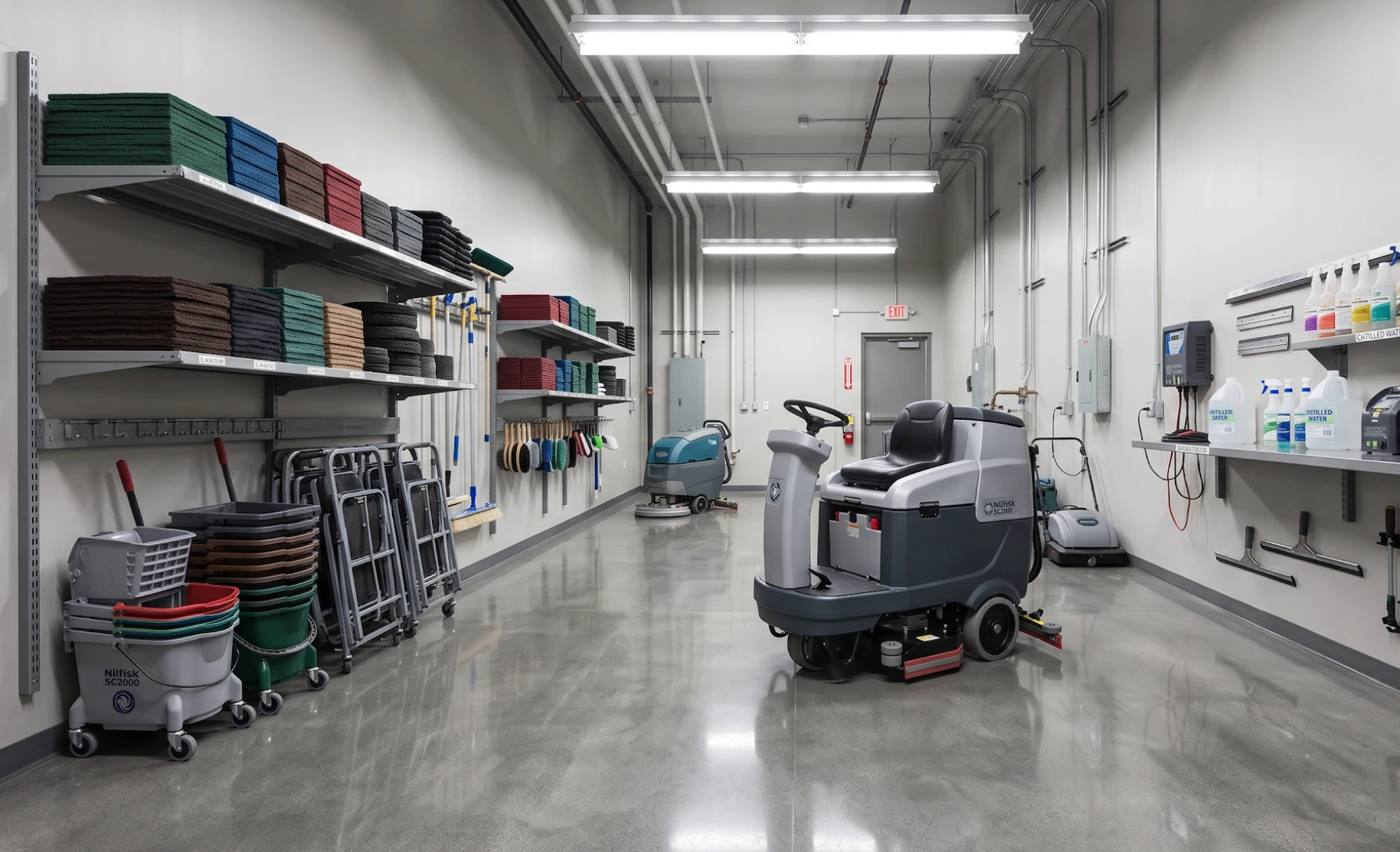
An indoor storage room or dedicated equipment closet is always preferable to an outdoor shed or storage unit. Outdoor storage exposes your machine to rain, humidity swings, and direct sunlight that can degrade plastic housings and seals over time. It also opens the door to rodents or insects that can chew through wiring or hoses, causing damage that is often not noticed until the machine fails during a job. Even a covered outdoor area is a poor substitute for real indoor storage, since temperature and humidity are far harder to control outside. If indoor space is limited in your facility, prioritize the most expensive or electronics heavy machines for indoor storage first.
Keep the Area Clean and Dry
Moisture is one of the fastest ways to damage the sensors, circuit boards, and battery connections found on modern scrubbers and buffers. A good storage environment includes a swept or mopped floor, no standing water nearby, decent ventilation to prevent condensation, and a stable ambient temperature. A clean storage area also makes it far easier for your team to notice leaks, corrosion, or pest activity early, before a small issue turns into a bigger repair.
Avoid Freezing Temperatures
Freezing conditions can crack hoses, damage solution and recovery tanks if water is left inside, and shorten battery life through repeated cold exposure. The general winterizing routine referenced across manufacturer guidance typically includes fully draining the solution and recovery tanks and, in some cases, running an antifreeze solution through the system per your manual's instructions. Harsh environments require more frequent maintenance overall, so facilities in seasonal climates should treat winterizing as a recurring fall task rather than a one time fix. If a machine must be stored in an unheated space, this routine needs to be followed every single time without exception.
Do Not Overcrowd the Storage Space
Cramming multiple machines, mop buckets, and supplies into a small closet leads to dents, scratched housings, and cracked plastic components from equipment bumping into each other or being moved around. There is a less obvious downside too. Operators are less likely to properly maintain a machine if it is buried behind other equipment or already looks beat up. Set up a dedicated storage layout with clear walking space around each machine so it can be wheeled in and out without contact, and consider wall mounted hooks or shelving for accessories like pads and hoses so they are not tossed on top of the machines themselves. Good equipment should already be maneuverable in tight spaces like aisles, and your storage area deserves the same consideration.
Prepare the Machine Before Storage
Empty and Rinse Solution and Recovery Tanks
Leftover cleaning solution or dirty recovery tank water left sitting for days will start to smell, grow bacteria, and in some cases corrode the inside of the tank. Drain both tanks fully after the last use of the day, rinse with clean water to remove leftover dirt and debris, and leave the tank lids open or ajar afterward. Keeping tank lids open allows air circulation and prevents mold growth, which is one of the simplest habits your cleaning staff can build into a daily closing routine.
Keep the Squeegee and Scrub Deck in the Up Position
Leaving the squeegee blade or scrub deck resting on the ground keeps them wet and under pressure, leading to warped blades, flat spots on pads, and mildew growth. Elevating the scrub deck prevents warping and blade damage, and this single habit is one of the most consistently mentioned tips across manufacturer guidance. It is also one of the easiest steps for operators to skip at the end of a shift, so make it the very last step before a machine gets wheeled back into storage. Leaving machines on level surfaces also prevents uneven pressure damage to components while parked.
Clean the Brushes and Pads
Brushes and pads collect dirt, hair, and debris throughout a shift, and if left dirty in storage, this buildup can harden, warp the bristles, or transfer grime onto the floor the next time the machine is used. Build a basic end of shift routine of rinsing or brushing out debris, checking for uneven wear, and replacing any pad that is too worn or clogged to clean effectively. Using the right type of brush or pad for each surface matters here too, since the wrong pad wears out faster and puts more strain on the machine.
Clean the Squeegee Blades
A dirty or damaged squeegee blade is one of the most common causes of streaking and missed water pickup, which defeats the purpose of running a scrubber in the first place. Run a quick inspection routine before storage. Wipe down both edges of the blade, check for tears, cracks, or uneven wear, and flip or replace the blade as needed before it goes back into storage.
Battery Care During Storage
Keep Batteries Charged
Allowing a battery to sit fully drained for an extended period is one of the fastest ways to shorten its usable life, particularly for lead acid batteries commonly used in walk behind and rider scrubbers. Charge the machine fully after every use rather than letting it sit depleted overnight or over a weekend, and charge auto scrubbers only after cleaning procedures are fully complete, not mid shift. Machines stored for longer stretches, such as a seasonal shutdown, should still be put on a maintenance charge on a regular schedule rather than left untouched.
Inspect and Maintain Battery Fluid Levels
For machines using wet cell batteries, check fluid levels regularly and top off with distilled water as needed. Be careful not to overfill, since excess fluid can overflow during charging and cause acid damage to both the machine and the surrounding floor. Maintaining clean battery terminals prevents corrosion as well, so check fluid levels and terminal condition on a set schedule, such as monthly, rather than only when a problem is noticed.
Consider Gel or Sealed Batteries for Easier Long Term Storage
Gel or sealed AGM batteries offer a real practical advantage for facilities that cannot closely monitor fluid levels or charge schedules, since these battery types require lower maintenance and carry a much lower risk of spills or acid damage. This is worth discussing when you purchase a new machine or replacement battery through PS Janitorial, particularly if your facility deals with inconsistent staffing or storage oversight.
Routine Checks While the Machine Is in Storage
Storage is not a set it and forget it situation, especially for a machine that goes unused for more than a couple of weeks. Build a short routine checklist for your team. Lubricate joints and moving parts per the manual's recommended schedule, visually inspect for pests, moisture, or corrosion, confirm the battery is holding its charge, and briefly run the machine every few weeks if it will be idle for an extended period to keep seals and components from drying out or seizing up. Regularly cleaning brushes and debris trays during these checks also prevents clogs from building up unnoticed. A breathable cover over the machine during longer idle periods can help prevent moisture buildup as well, without trapping condensation the way a sealed plastic cover would.
Common Storage Mistakes to Avoid
Here is a quick reference list so you can run a fast gut check on your own facility.
- Storing equipment outdoors or in unheated spaces
- Leaving the squeegee or scrub deck down against the floor
- Letting batteries sit fully drained
- Overcrowding the storage area to the point machines get damaged
- Skipping the manufacturer's manual entirely
- Failing to empty and rinse tanks after the last use of the day
Any one of these mistakes on its own can shorten a machine's life, and most facilities that run into repeated repair costs are dealing with more than one at once.
How PS Janitorial Can Help
A well maintained machine holds its value, keeps your team efficient, and costs less to operate over time, and proper storage is one of the simplest ways to protect that investment. Whether you need a new scrubber sized for your space, or replacement squeegees, brushes, pads, and batteries for the equipment you already own, PS Janitorial is here to help. Reach out with questions about your specific model's storage or maintenance needs, and check out our parts and equipment categories for everything mentioned in this guide.
Frequently Asked Questions
How often should I run a floor scrubber that is in storage?
Briefly run the machine every few weeks during extended downtime. This keeps seals from drying out and gives you an early warning if something needs attention before the machine goes back into regular use.
Can I store a floor buffer outside in a shed?
This is not recommended. Outdoor storage exposes the machine to humidity, temperature swings, and pest access, all of which shorten its lifespan and increase the risk of unexpected repairs.
What happens if I store a scrubber with a full solution tank?
A full tank left sitting risks bacteria growth, odor, and potential corrosion inside the tank itself. Always fully drain and rinse both tanks after the last use of the day, and leave the lids open to let them air dry.
Do I need to remove the battery for long term storage?
Removal is not always necessary if the machine is kept on a proper maintenance charge schedule. Facilities planning an extended shutdown of a month or more should follow the manufacturer's specific guidance on battery disconnection or storage charging.