Cushion vs Pneumatic Forklift: Which Tire Type Is Right for Your Operation?
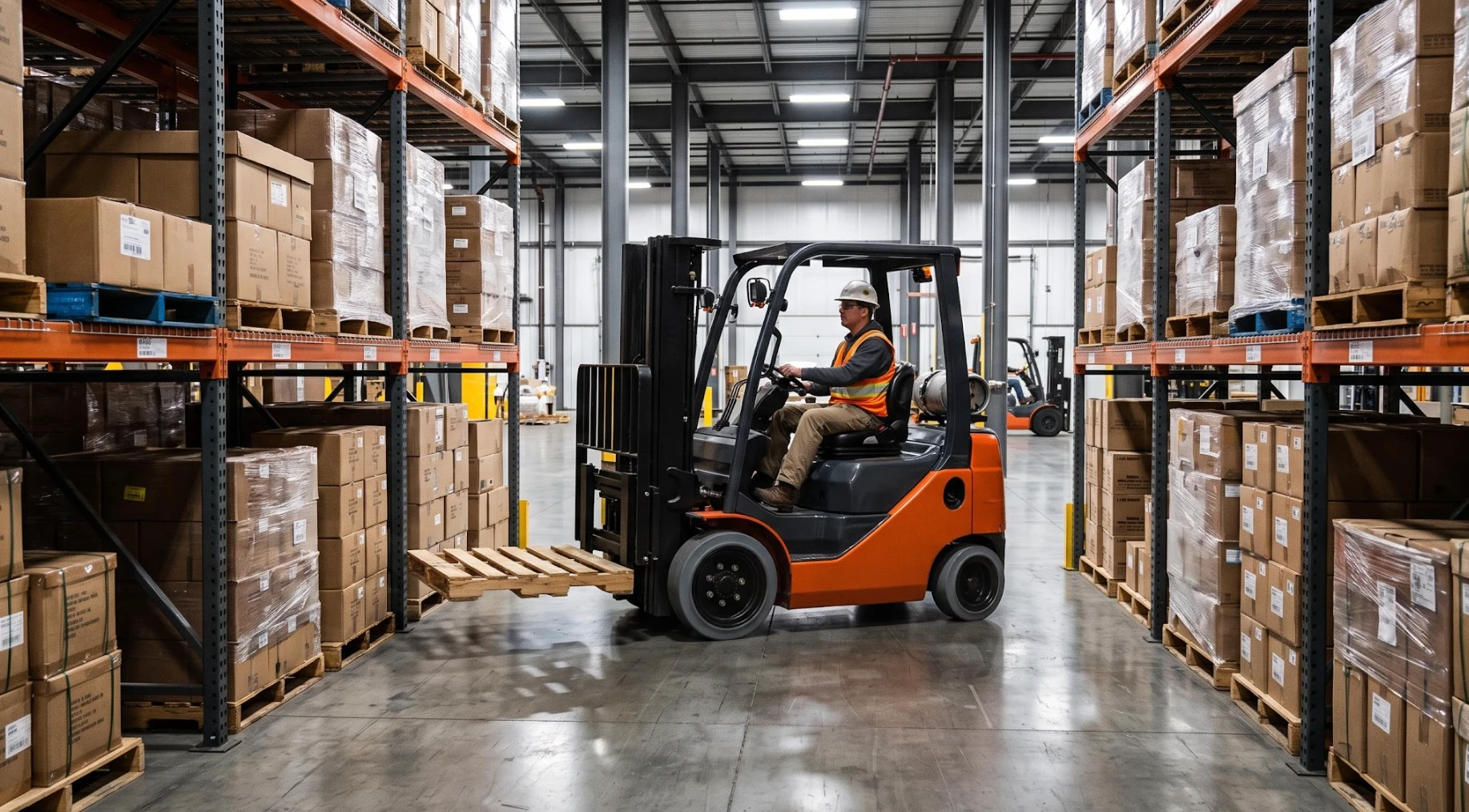
The core difference between a cushion vs pneumatic forklift comes down to tire construction and where each one is built to perform. Cushion tires are solid rubber pressed onto a steel band, made for smooth indoor floors, while pneumatic tires use either air filled or solid pneumatic construction designed to handle rough or uneven terrain outdoors. Choosing the wrong tire type for your work environment can slow down operations, increase maintenance costs, and even create unsafe operating conditions. This guide covers what each tire type is, a side by side comparison of the key differences, and a straightforward decision framework so you can find the right fit before you shop forklifts.
What Is a Cushion Tire Forklift?
A cushion tire forklift uses tires made of solid rubber molded and pressed directly onto a metal band, typically a steel band that forms the wheel's core. There is no air inside, so there is nothing to puncture, deflate, or check pressure on. Because cushion tires sit lower and closer to the frame, cushion tire forklifts have a more compact frame and a smaller turning radius than their pneumatic counterparts. That tighter turning radius makes them easier to maneuver in tight spaces where every foot of clearance counts.
Where Cushion Tire Forklifts Work Best
Cushion forklifts are built for smooth indoor surfaces, which is why you will see them running the floors of warehouses, distribution centers, and manufacturing plants. Their smaller footprint and tighter turning radius make them especially useful in narrow aisles, where a pneumatic tire forklift's wider turning radius simply will not fit. If your work environment is entirely indoors on polished concrete or similar flooring, cushion tire forklifts are usually the more practical and cost effective choice.
What Is a Pneumatic Tire Forklift?
Pneumatic forklift tires are built more like car or truck tires, either air filled or made as solid pneumatic tires with a similar tread pattern and larger overall tire size. That larger tread and higher ground clearance is what allows pneumatic tire forklifts to handle rough or uneven terrain that would beat up a cushion tire forklift's frame and undercarriage. Whether you choose air filled tires or solid pneumatics, the goal is the same: give the forklift enough tire depth and traction to move safely across ground that is not flat, smooth concrete.
Air Filled vs Solid Pneumatic Tires
Within the pneumatic category, you have two main subtypes. Air filled tires work much like the air pneumatics found on a car or truck: they hold air inside for a cushioned ride and good shock absorption, but they carry puncture risk on job sites littered with nails, metal shavings, or sharp debris. Solid pneumatic forklift tires solve that problem by using solid rubber or foam in place of air, so they are effectively puncture resistant while keeping the same tire size and tread pattern as their air filled ones. If your outdoor operations regularly cross debris heavy ground, such as construction sites or scrap yards, solid pneumatic tires are usually the safer long term investment even though they typically carry a higher upfront cost.
Where Pneumatic Tire Forklifts Work Best
Pneumatic tires provide the traction and ground clearance needed for construction sites, lumber yards, gravel lots, and outdoor loading docks. Anywhere the ground is uneven, loose, or unpaved, pneumatic tire models are the right tires for the job. Their higher ground clearance also helps the forklift frame avoid dragging over ruts, curbs, or debris that a lower riding cushion tire forklift could catch on.
Cushion vs Pneumatic Forklift: Key Differences
The table below breaks down how pneumatic and cushion forklift tires compare across the factors that matter most when choosing equipment for your operation.
| Category | Cushion Tires | Pneumatic Tires |
|---|---|---|
| Construction | Solid rubber pressed onto a steel band, no air | Air filled or solid pneumatic rubber with deeper tread |
| Best Surface | Smooth indoor floors, smooth concrete floors | Rough or uneven terrain, gravel, and outdoor surfaces |
| Shock Absorption | Minimal; firmer, more direct ride | Better shock absorption and a more cushioned ride |
| Turning Radius / Maneuverability | Smaller turning radius, tighter turns in narrow aisles | Larger turning radius, needs more room to maneuver |
| Maintenance Requirements | Low; no air pressure checks, but replacement requires a tire press | Higher; regular air pressure checks and tread wear monitoring |
| Puncture Risk | None; solid tires cannot go flat | Air filled tires can puncture; solid pneumatics are puncture resistant |
| Ground Clearance | Lower ground clearance | Higher ground clearance for rugged conditions |
| Typical Cost | Generally lower cost per tire | Higher upfront cost, especially for solid pneumatic tires |
| Common Equipment Types | Warehouse and indoor material handling forklifts | Rough terrain, construction, and outdoor forklifts |
Surface and Terrain Suitability
Surface type is often the single biggest factor in this decision. Cushion tires excel on smooth indoor floors where the ground is flat, dry, and free of debris, but they lose traction and can become unstable on rough concrete, gravel, or wet outdoor surfaces because of their low ground clearance. Pneumatic tires provide the traction and clearance needed for uneven surfaces, gravel lots, and construction sites, but they are not always necessary, or ideal, indoors where their bulkier tire size can reduce maneuverability.
Shock Absorption and Operator Comfort
Because pneumatic tires contain air or a compressible core, they absorb vibration and impact from rough ground far better than cushion tires do. That cushioned ride reduces operator fatigue over a long shift on uneven surfaces. Cushion tires, by contrast, offer a firmer ride that transmits more vibration on rough terrain, which is part of why they are reserved for smooth indoor applications where that firmness is not an issue.
Maneuverability and Turning Radius
Cushion tire forklifts are built with a smaller turning radius and a more compact frame, which is a real advantage in narrow aisle warehousing where space is tight and every turn counts. Pneumatic tire forklifts, with their larger frames and bigger tires, need more room to turn, which is one reason they are less common inside tightly packed warehouse aisles.
Maintenance and Cost Considerations
Pneumatic tires typically require more maintenance than cushion tires. Air filled tires need regular air pressure checks and are more prone to punctures and flats, especially in debris heavy environments, while tread wear needs monitoring on both air filled and solid pneumatic tires. Cushion tires are lower maintenance day to day since there is no air pressure to manage, but replacing them requires a hydraulic press, so it is not a job most operations handle in house. On the cost side, cushion tires are generally cheaper to manufacture and purchase, while pneumatic tires, particularly solid pneumatic tires, carry a higher upfront cost that is often justified by the reduced downtime from punctures.
How to Choose the Right Forklift Tire for Your Application
Start with your operating environment, not the price tag. The tire type that matches your work environment will save you far more in downtime, safety incidents, and premature tire wear than any upfront savings from choosing the cheaper option.
Choose Cushion Tires If...
- Your forklift operates indoors only, on smooth concrete floors.
- You need a tighter turning radius for narrow aisles or confined spaces.
- You want a lower cost per tire and simpler day to day upkeep.
- Your facility has no exposure to gravel, debris, or uneven ground.
Choose Pneumatic Tires If...
- Your operation is outdoor or mixed terrain, such as a loading dock that connects to a gravel lot.
- You regularly cross gravel, dirt, or otherwise uneven surfaces.
- You need better shock absorption to protect operators and cargo on rough ground.
- Puncture resistance matters, in which case solid pneumatic tires are worth the added cost.
Can You Switch Between Cushion and Pneumatic Tires?
Not usually. Cushion and pneumatic forklifts are generally built on different frames with different wheel mounts and axle configurations, so the two tire types are not interchangeable on the same machine without significant modification. That means this decision needs to happen before you purchase or lease equipment, not after. If your operation splits time between indoor and outdoor work, it is worth talking through your specific tire size and terrain needs with a specialist rather than assuming a single forklift can be adapted later.
Shop Forklifts and Tires at PS Janitorial
Whether your operation calls for cushion tire forklifts built for smooth indoor floors or pneumatic tire forklifts ready for rough terrain, PS Janitorial carries equipment suited to a range of work environments. Browse our full selection of forklifts or reach out to our team to talk through your application and find the right tire combination for your facility.
Frequently Asked Questions
Are cushion tires cheaper than pneumatic tires?
Yes, in most cases. Cushion tires are generally cheaper to manufacture and purchase than pneumatic tires, especially compared to solid pneumatic tires, which carry a higher upfront cost due to their puncture resistant construction.
Can a pneumatic tire forklift be used indoors?
It can, but it is not always the best fit. Pneumatic tire forklifts have a larger turning radius and bulkier frame than cushion tire forklifts, so they can be harder to maneuver in narrow aisles or tightly packed warehouse space, even though their tires perform fine on smooth indoor floors.
How long do cushion forklift tires last compared to pneumatic tires?
Cushion tires generally have a longer service life than pneumatic tires because they are solid rubber with no air to lose and less exposure to punctures. Pneumatic tires, particularly air filled models, typically need replacement sooner due to tread wear and puncture related damage from operating on rougher surfaces.
Do cushion tires require air pressure checks?
No. Cushion tires are solid rubber with no air inside, so there is no air pressure to check or maintain. This is one of the main reasons cushion tire forklifts are considered lower maintenance than pneumatic models.