How to Operate a Forklift: A Complete Step by Step Guide
Operating a forklift safely takes more than knowing where the pedals are. From certification requirements to daily inspections and safe maneuvering, this guide from PS Janitorial walks you through everything you need to know before getting behind the wheel, whether you are a new operator or a certified forklift operator brushing up on forklift safety.
Who Can Operate a Forklift
Only operators who hold a valid forklift certification recognized by OSHA are legally permitted to run a forklift, and you must stay within the equipment type and scope your training covers. Operating without a current certification, or outside the class of forklift you were trained on, puts you and everyone around you at risk of injury and puts your workplace at risk of regulatory violations. Forklift operators must possess a recognized qualification certificate before they can be assigned to powered industrial trucks of any kind.
Forklift Operator Certification Requirements
OSHA requires you to complete both classroom instruction and hands on evaluation before you can operate a forklift independently. Training covers equipment specific controls, workplace hazards, and load handling procedures, and most programs take about two weeks for a new operator to reach basic proficiency. Once you are certified, OSHA requires you to complete refresher training at least once every three years, and sooner if you are involved in an incident, operate unsafely, or are assigned to a different type of forklift.
OSHA Training Standards (29 CFR 1910.178)
Federal standard 29 CFR 1910.178 outlines the specific rules you and your employer must follow, including pre operation inspections, safe travel speeds, and load handling limits. Employers are responsible for verifying that every operator has been evaluated and certified before assigning them to a forklift, and you can only operate specific forklift types within the scope your training covered.
Personal Protective Equipment for Forklift Operators
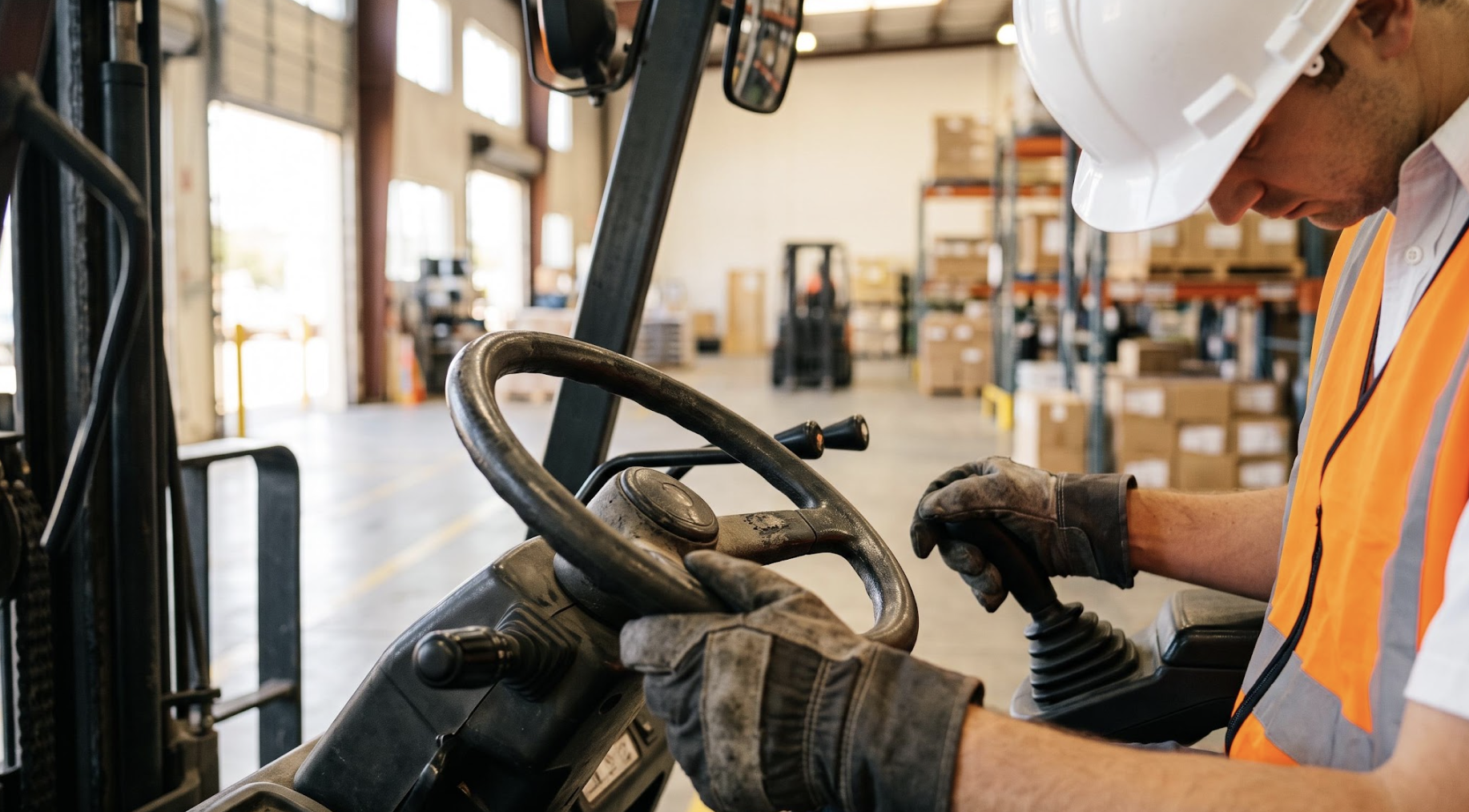
The right protective gear reduces your chance of injury from common forklift hazards like falling objects, pinch points, and slips while mounting or dismounting. Standard PPE for forklift operators includes a hard hat, a high visibility vest, steel toe boots, gloves for grip, and safety glasses where required by your worksite. If you work near loading docks or raised concrete staging areas, check whether your site requires additional fall protection before you begin your shift.
Forklift Components and Controls Explained
Understanding what each system on a forklift does makes every later step, from inspection to driving, easier to follow. The main forklift components include the power system, steering system, braking system, mast and hydraulic system, and the safety features built into the machine, such as the overhead guard and load backrest extension.
Power System and Chassis
The power system includes the engine or battery, transmission, and travel system that moves the forklift forward and backward. The frame supports the entire machine and bears the load weight, while the suspension helps absorb vibration as you travel across uneven surfaces.
Steering and Braking Systems
Forklifts use mechanical, hydraulically assisted, or fully hydraulic steering depending on the model, all designed to keep the machine maneuverable in tight spaces. The braking system, whether mechanical, hydraulic, or vacuum assisted, lets you stop or slow the forklift quickly and reliably, so testing your brake pedal before every shift is one of the most important forklift safety habits you can build.
Mast, Hydraulic System, and Attachments
The mast carries the load and handles lifting and tilting movements, powered by the hydraulic system beneath it. Attachments such as forks or grippers extend what you can carry, and you should always confirm any attachment is rated for the load before use. Keeping the mast forward slightly when approaching a load, and tilting it back once the load is secured, is a small habit that protects both the load and your stability.
Operating Handles and Pedals
Lift and tilt joysticks control the raising, lowering, and tilting of the forks, while the accelerator and brake pedals control your speed and stopping. Many forklifts also include a parking brake and, on some models, a clutch or inching pedal that gives you precise control for slow, careful movement in confined areas.
Dashboard Instruments (Fuel Gauge, Hour Meter, Battery Indicator)
Your instrument panel gives you real time information before and during your shift, including fuel level, oil pressure, transmission temperature, and the hour meter, which tracks accumulated hours of use for maintenance scheduling. Electric forklifts also include a battery discharge indicator, which signals when the machine needs to return to a charging station.
Pre Operation Inspection Checklist
A thorough pre operation inspection before every shift catches problems before they become accidents, and OSHA requires daily inspections before forklift use as part of standard operating procedure. Any issue you find during your visual inspection should be documented and reported, and the forklift should be removed from service until repairs are made.
Visual and Tire Inspection
Walk around the forklift checking for visible damage to the body, cracks or bends in the forks, and proper tire pressure with no embedded objects or excessive wear. This basic forklift walkaround takes only a few minutes but catches many of the issues that lead to forklift accidents later in the shift.
Hydraulic System Check
Confirm the hydraulic oil level is correct and inspect hoses and lines for leaks or seepage. Test the lift and tilt levers to make sure hydraulic movement is smooth and responsive before you load anything, since a sluggish or unresponsive tilt lever can turn a routine lift into a dangerous one.
Brake and Horn Test
Test both the foot brake and parking brake to confirm they engage reliably, and check that the horn and backup alarm are working, since both are required for safe operation around pedestrians and blind corners. Never operate a forklift with brakes you suspect have failed or a horn that does not sound.
Fuel or Battery Check
For internal combustion forklifts, confirm fuel, engine oil, and coolant levels are within range. For electric forklifts, check the battery charge and make sure the connections are secure before starting, since a loose connection can cause unexpected power loss mid shift.
How to Mount and Start a Forklift Safely
Getting on and starting a forklift correctly sets the tone for a safe shift, and skipping these steps is a common cause of preventable injuries.
Mounting the Forklift
Use the handrail to steady yourself as you climb in, never the steering wheel, since it can turn and cause a fall. Once seated, fasten your seatbelt and adjust the seat for comfortable reach and a clear line of sight through both the windshield and your rear view mirrors.
Starting an Internal Combustion Forklift
Shift into neutral, engage the parking brake, then start the engine and let it idle briefly while you check the instrument panel for warning lights before moving.
Starting an Electric Forklift
Confirm the parking brake is set, turn the key to the on position, and wait for the system self check to finish before you operate the controls.
How to Drive and Maneuver a Forklift
Once you are moving, safe forklift operation depends on controlled speed, constant awareness of your surroundings, and following your facility's posted speed limits and traffic regulations.
Traveling Safely and Maintaining Control
Always look in the direction of travel and keep a safe distance from other vehicles, generally around three truck lengths. Slow down on wet or slippery floors, keep forks two to four inches off the ground while driving, and sound the horn at blind spots or cross aisles.
Turning and Steering (Rear Wheel Steering Explained)
Forklifts use rear wheel steering, which means the back of the machine swings in the opposite direction of the turn, a detail that surprises many new operators. Reduce your speed before turning, plan your route to account for the rear swing, and never turn with the forks raised or while on an incline.
Reversing Safely
Reversing carries a higher risk of injury than forward travel, so always check behind you before backing up and use mirrors or a spotter if visibility is limited. Never rely on a pedestrian hearing your backup alarm, since noise levels on a busy floor can easily drown it out, and maintain an eight to twelve inch gap behind you whenever possible to prevent tipovers.
Driving on Ramps and Grades
Loaded forklifts should always travel up a ramp forward and down a ramp in reverse so the load stays upgrade rather than downgrade. Never turn a forklift while on a grade, since even a small incline can cause a lateral tipover.
How to Lift, Transport, and Unload a Load
Handling loads correctly protects the cargo and the people working nearby, and small adjustments in fork height and mast tilt make a significant difference in stability.
Positioning the Forks and Lifting the Load
Approach the load slowly, within about a foot, align the forks with the pallet openings, and advance fully. Raise the load two to four inches off the ground while tilting the mast slightly back to keep it secure against the load backrest extension, then confirm you understand the load's weight and center of gravity before moving.
Transporting Loads Safely
Keep the load as low as practical during transport to maintain stability, drive at a steady speed within posted speed limits, and slow down before passing through doorways or narrow aisles. Load stability matters just as much on a short trip across the floor as it does on a longer haul between loading docks.
Unloading and Setting Down the Load
Align the load with the drop point, maintain an eight to twelve inch gap before you begin lowering, then set the load down slowly and evenly. Reverse carefully once the forks are clear so they do not catch on the pallet, the rack, or any other fixed object nearby.
Forklift Safety Rules Every Operator Should Follow
Even experienced operators benefit from revisiting core safety protocols regularly, since complacency, not lack of skill, is behind many forklift accidents.
Maintaining Stability and Preventing Tipovers
Never exceed your forklift's rated load capacity, and take extra care when turning, braking, or driving on slopes, since forklifts are far less stable than standard vehicles. Tipovers happen in two basic ways, forward and lateral, and driving too fast is one of the most common triggers for either one.
The Three Foot Rule
Treat a three foot radius around your forklift as an active safety zone, slowing down and sounding the horn near intersections or blind spots, and stopping immediately if someone enters that space. Remember that pedestrians have the right of way, even when you are moving a heavy load.
Staying Aware of Pedestrians and Surroundings
Never assume a pedestrian sees or hears your forklift coming. Use your horn and warning light at intersections, stick to established pedestrian walkways whenever possible, and watch for tripping hazards and other dangerous locations like loading docks and elevator car entrances.
What to Do If a Forklift Tips Over
If a sit down forklift begins to tip, stay in your seat, hold the steering wheel firmly, brace your feet, and lean away from the direction of the fall. Jumping off during a tipover, sometimes described as when a forklift jumped forward or sideways, is one of the leading causes of serious injury or death in these incidents, which is why the seatbelt and protective guard rails built into the cab matter so much.
How to Park and Shut Down a Forklift
Ending your shift properly prevents accidental movement and keeps the work area safe for the next operator.
Choosing a Safe Parking Location
Park on a flat, unobstructed surface away from walkways, fire truck access lanes, and exits. If parking on an incline is unavoidable, block the wheels. A forklift is generally considered unattended once you are more than about twenty five feet away from it, so complete your full shutdown procedure before you walk off.
Shutdown Procedure Step by Step
Neutralize the controls, lower the forks fully to the ground, shift into neutral, engage the parking brake in the fully vertical position, and turn off the engine. Remove the key so the forklift cannot be used by anyone without authorization.
Frequently Asked Questions
How long does it take to learn to operate a forklift?
Most operators can learn the basics within about two weeks of formal training, though building full confidence and precise control takes ongoing practice and, eventually, refresher training every three years.
What is the three foot rule for forklifts?
It refers to treating a three foot radius around the machine as a zone requiring extra caution, slowing down and sounding the horn whenever visibility is limited or pedestrian traffic is nearby.
Can you operate any forklift type after certification?
No. Your certification only covers the specific forklift class and scope included in your training, so operating a different type of powered industrial truck requires additional training and evaluation.
What are the basic rules of forklift operation?
Never exceed the rated load capacity, keep loads balanced and low during travel, follow posted speed limits, wear required PPE, and stay alert to pedestrians and other vehicles at all times. Above all, treat pre operational inspection and safe distance as non negotiable habits, not optional steps.
Shop Forklifts and Equipment at PS Janitorial
Whether you are outfitting a warehouse or replacing an aging unit, PS Janitorial carries a range of new and used forklifts built for everyday commercial use. Browse the current selection to find the right fit for your facility or contact us for more information!