Forklift Brakes Not Working? What to Check Before You Call a Technician
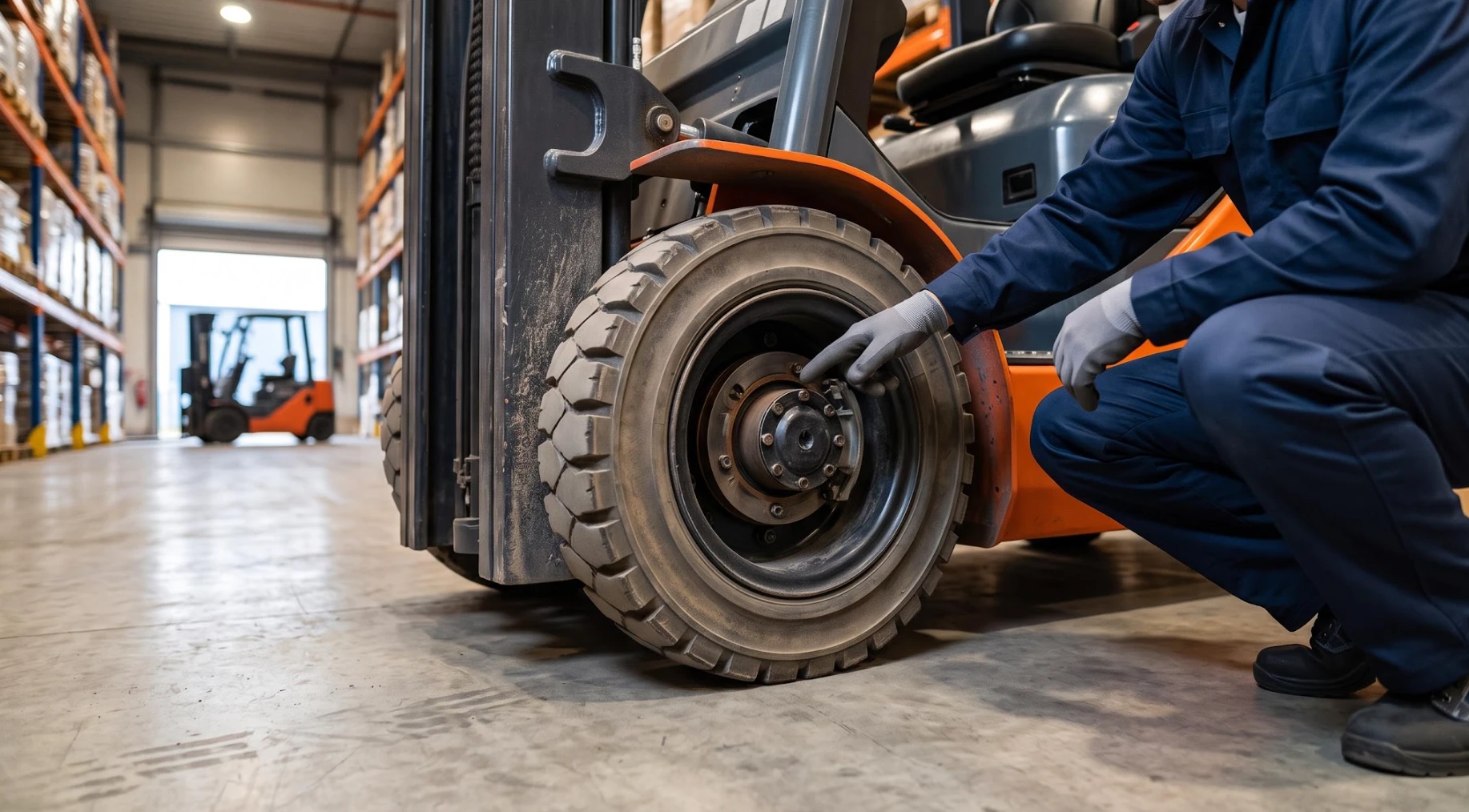
A forklift with brake trouble is not something you want to think twice about. Whether the pedal feels different than usual or you heard a strange noise on your last pass through the warehouse, that instinct to stop and check is the right one. The good news is that not every braking issue calls for an immediate service appointment. Some problems can be identified, and in some cases ruled out, with a careful visual and operational check that any trained operator or facility manager can safely perform. This guide walks through what to look for, what those signs typically mean, and most importantly, the warning signs that mean you should stop using the truck right now and call a professional.
Why Forklift Brake Problems Should Never Be Ignored
A forklift does not operate like the car you drive to work. It carries heavy loads at the front or rear depending on configuration, moves across uneven concrete, gravel, or ramps, and often does so in tight spaces shared with pedestrians and other equipment. That combination puts far more demand on a braking system than most vehicles ever face. A set of car brakes rarely has to stop several thousand pounds of load on a wet warehouse floor or hold a fully loaded truck steady on a loading dock incline. Forklift brake components are engineered for that job, but only when they are functioning properly.
This is also why OSHA requires a documented pre operation inspection before every shift, and brakes are one of the specific items on that checklist. Operators are expected to test service brakes, the parking brake, and general braking power before ever lifting a load. Skipping that step, or ignoring early warning signs of forklift brake problems, creates real safety risks for the operator, for anyone working nearby, and for the facility overall. Addressed immediately, most brake issues are manageable. Ignored, they tend to turn into costly repairs and, worse, into accidents.
Common Signs Your Forklift Brakes Are Failing
Before you can decide what to check, it helps to know what forklift brake problems typically look, sound, and feel like. The following symptoms are the most common indicators that something in the braking system needs attention.
Grinding, Squealing, or Metal on Metal Noise
Squealing or grinding noises almost always point to worn brake pads or worn brake shoes. As friction material wears down, the remaining metal backing can contact the drum or rotor directly, producing a harsh, metallic sound. This is one of the clearest early detection signals a forklift can give you, and it usually means brake pads or shoes are close to needing replacement. Left unaddressed, worn brake pads or shoes reduce stopping efficiency and can damage the drum or rotor itself, turning a simple parts swap into a more expensive repair.
Soft, Spongy, or Unresponsive Brake Pedal
A soft or spongy brake pedal suggests internal brake issues rather than a simple external fix. Low brake fluid levels, air trapped in the brake lines, or a failing master cylinder can all cause this symptom. Air in the hydraulic lines compresses instead of transferring force to the brakes, which is exactly why a pedal can feel like it sinks toward the floor with little resistance. A faulty master cylinder can also let fluid bypass the piston internally, reducing the hydraulic pressure that actually reaches the wheels.
Increased Stopping Distance
If your forklift takes longer to stop than it used to, that is a direct sign of reduced braking power. As a general guideline, a forklift traveling at around 4 mph should be able to come to a complete stop within a few feet under normal conditions, while a forklift moving at 8 mph will naturally need a noticeably longer distance to stop safely. Heavier loads extend that stopping distance even further, since more weight and momentum place additional demand on the same braking system. If you notice your forklift needs more room to stop than it did a few months ago, treat that as an early warning sign rather than something to work around.
Forklift Pulling to One Side When Braking
A forklift pulling to one side during braking usually points to uneven brake wear between the front wheels or a component that is sticking on one side only. This creates uneven braking force across the truck, which can be difficult to control, especially with a load raised or in tight spaces. It is one of the more noticeable forklift brake problems because it changes how the truck handles, not just how it stops.
Burning Smell During or After Operation
A burning smell during operation often indicates overheated brakes, typically caused by a dragging component or by brakes that are engaging more than they should. Overheating of brake components can lead to reduced braking efficiency and brake fade, a temporary loss of braking power that can happen at the worst possible moment, such as while carrying a heavy load. If the parking brake remains partially engaged during operation, that same friction and overheating can occur even when the operator is not actively braking.
Visible Brake Fluid Leaks
Visible brake fluid leaks are one of the more urgent signs on this list because they can lead to sudden brake failure. Fluid pooling or dripping beneath the truck, especially near the wheels or brake lines, points to a leak in the hydraulic system. Since forklift brakes rely on hydraulic pressure to function, any loss of fluid directly reduces braking performance and should never be treated as a minor issue.
Weak or Unreliable Parking Brake
A parking brake that no longer holds the forklift steady on an incline, or that feels loose when engaged, points to a cable, lever, or adjustment problem. Proper adjustment of the parking brake is important not just for parked equipment but for preventing unexpected vehicle movement in general. A weak parking brake is a safety risk that should be tested and addressed promptly.
What to Check Before You Call a Technician
The checks below are meant to help you understand what you are dealing with, not to replace a professional repair. Think of this as safe, operator level triage rather than a repair guide. None of these steps require disassembling brake components, and all of them can be done as part of a normal pre shift inspection or a quick follow up check.
Check the Brake Fluid Level and Condition
Locate the brake fluid reservoir, usually near the master cylinder, and check that the fluid sits at or near the recommended level. Fluid that looks dark, cloudy, or contaminated with debris can point to internal wear or moisture in the system, sometimes referred to informally as wet brakes when hydraulic oil has been compromised. Low fluid on its own is often the reason behind a spongy pedal, so this is one of the fastest checks you can perform.
Inspect for Visible Leaks Under the Truck
With the forklift parked on level ground, look underneath near the wheels, brake lines, and master cylinder for any sign of fluid. A small stain on the floor where the truck normally sits is often the first clue of a slow leak, well before the pedal feel changes noticeably. This is a simple visual check that fits naturally into a daily pre shift routine.
Test the Parking Brake on a Level Surface
On flat, level ground, engage the parking brake and confirm the truck holds firmly without rolling. This test should only be done in a clear area, never on an incline where a failure could put anyone at risk. If the brake feels loose, engages with excessive travel, or does not hold at all, treat that as confirmation of the issue rather than something to test again later.
Listen and Feel During a Slow, Controlled Test Stop
In an open, clear area away from other equipment and personnel, bring the forklift to a slow, controlled stop and pay attention to three things: unusual noises, how the pedal feels underfoot, and whether the truck pulls to one side. This single test can confirm several of the warning signs covered earlier without putting the operator or anyone nearby at risk.
Review Recent Load and Usage Patterns
Operator habits and usage patterns play a real role in brake wear. Consistently heavy loads, aggressive or frequent hard stops, and two footed driving where an operator rides the brake and the accelerator together all accelerate wear on brake pads, shoes, and related components. Contaminated brake linings, from dust, oil, or debris, also reduce stopping power due to lost friction. Reviewing how the truck has been used recently gives a technician useful context and can point to a root cause rather than just a symptom.
What These Checks Can and Cannot Tell You
It is worth being clear about the limits of a pre inspection check like this. What you can do is confirm symptoms, rule out an obviously low fluid level, and get a general sense of severity. What you cannot do without a technician's tools is diagnose internal issues with certainty. A warped drum, air trapped deep in the brake lines, a failing master cylinder, or a seized adjuster inside a drum brake assembly all require proper equipment to confirm and repair. This is triage, not diagnosis, and that distinction matters when deciding how urgently to bring in a professional.
When to Stop Using the Forklift Immediately
Some findings are not up for debate. Stop operating the forklift right away if you notice any of the following: grinding or metal on metal noise, a spongy or unresponsive pedal, the truck pulling noticeably to one side, a burning smell during or after use, a parking brake that fails to hold on level ground, or a visible brake fluid leak of any size. If you have any doubt at all about whether the forklift is safe to operate, treat that doubt as your answer. A brief pause to get equipment inspected is always less costly than an accident on the floor.
How Long Forklift Brakes Typically Last
With regular maintenance, drum and shoe brakes, the most common type used on forklifts, typically last somewhere between 5,000 and 7,000 operating hours before major component replacement is needed. That range is not fixed, though. Dusty or debris heavy environments, consistently heavy loads, and operator habits like riding the brakes all shorten the usable life of brake shoes and related components well before that upper range. Facilities that run forklifts in cleaner, lighter duty environments with trained operators often see brakes last toward the higher end of that range.
Preventive Maintenance That Extends Brake Life
A few consistent habits go a long way toward extending brake life and avoiding surprise repairs. Forklift brakes should be inspected on a set schedule, generally every 500 hours of operation or every 90 days, whichever comes first. Routine fluid replacement and periodic bleeding of the lines help maintain consistent hydraulic pressure and prevent the kind of gradual failure that catches operators off guard. Keeping brake dust and contamination out of the drum assembly, along with scheduled inspection of brake shoes for wear, rounds out a maintenance routine that catches most problems long before they become safety risks. None of this needs to be complicated. It simply needs to happen on a schedule rather than only after something goes wrong.
When It Is Time to Call a Forklift Technician
If your pre inspection check turns up any of the warning signs covered above, especially fluid leaks, a spongy pedal, grinding noises, or a parking brake that will not hold, it is time to bring in a technician rather than continue operating the truck. A professional inspection can pressure test the hydraulic system, inspect the master cylinder internally, measure drum wear precisely, and identify issues like air in the lines or a failing cylinder that a visual check simply cannot confirm. Catching these problems through early detection, rather than waiting for a complete brake failure, is almost always the difference between a routine repair and an expensive one.
Keep Your Fleet Running Safely
Reliable brakes are not optional equipment on a forklift, they are core to safe operation on any floor, in any warehouse, and at any construction site. If your inspection points to a brake issue covered in this guide, or if it is simply time to add to your fleet, explore PS Janitorial's forklifts selection. If you have questions about a specific issue or want expert guidance before you buy or repair, contact our forklift specialists and we will help you find the right solution.