Dry Floor Stripping vs Wet Floor Stripping: What Is the Difference?
Over time, the finish on a hard floor loses its shine and starts to look dull and cloudy no matter how often you clean it. When that happens, the fix is not more mopping. It is floor stripping: pulling off the old finish down to a sound surface so you can lay down a fresh coat that actually holds up. There are two main ways to get there, and understanding dry floor stripping vs wet floor stripping helps you pick the right one for the job in front of you. Traditional wet stripping uses a chemical floor stripper solution to dissolve old wax and finish, while dry stripping uses a high speed orbital machine and abrasive pads to grind it away with little or no liquid. Below, you will learn how each floor stripping process works, the equipment each one needs, how they compare head to head, and how to match the method to your floor type and your facility.
What Is Wet Floor Stripping?
Wet floor stripping is the traditional floor stripping method most crews learn first. You apply a liquid floor stripper across the surface, give it time to break down the old finish, then scrub, vacuum, and rinse the loosened material away. Because it relies on a strong stripping solution to soften layers of old wax, wet stripping remains the go to choice when a floor has years of buildup that need to come off in one full strip.
How the Wet Stripping Process Works
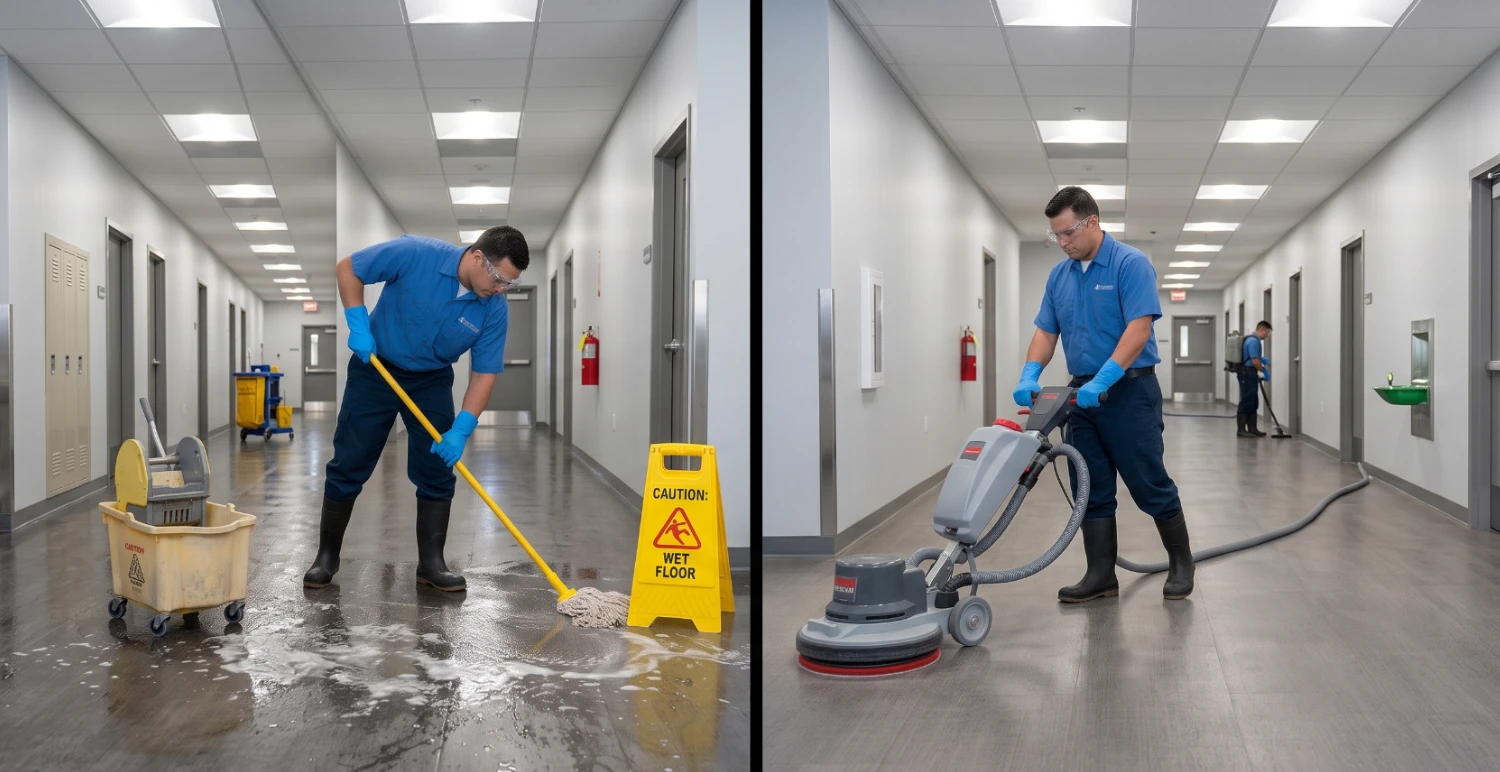
Start by preparing the area. Move furniture out of the way, sweep or dust mop the surface, and post wet floor signs so no one wanders into a slippery zone. Mix your stripping solution according to the label, then apply it with a clean mop, working in manageable sections of 150 to 300 square feet so no area dries out before you can scrub it. Allow proper dwell time of 5 to 10 minutes to let the chemical break the bond between the finish and the floor, but never let the stripper dry on the surface. Next, scrub the softened finish with a low speed machine or an automatic scrubber fitted with a black stripping pad, paying extra attention to corners and edges where a machine cannot reach. Use a wet dry vacuum to remove the slurry, then rinse the floor with clean water and neutralize its pH so any leftover residue will not interfere with the new finish. Finally, let the floor dry completely before you recoat.
Equipment Needed for Wet Stripping
To strip a floor the traditional way, gather these supplies: a quality floor stripper chemical, a mop and bucket, a low speed floor machine or auto scrubber, a black stripping pad, a wet dry vacuum, a neutralizer for the rinse step, and personal protective equipment. At a minimum your PPE should include gloves, safety glasses or goggles, and non slip footwear so you stay upright while the surface is wet.
What Is Dry Floor Stripping?
Dry floor stripping, also called orbital stripping, is a mechanical process rather than a chemical one. Instead of soaking the surface, you run a high speed orbital machine fitted with an abrasive pad across the floor to grind away the top layers of finish. Orbital dry stripping uses high frequency motion and friction to do the work that chemicals do in wet stripping, using minimal moisture and little to no floor stripper solution.
How the Dry Stripping Process Works
Prep the same way you would for any strip: clear the furniture, dust mop or sweep away loose dirt and debris, and section off the space. Attach a surface prep pad, the sandpaper style abrasive that grinds finish rather than scrubs it, to the base of the orbital machine. Flip the power switch and guide the machine steadily across the floor, letting the high speed pad shear off the finish layer by layer. An integrated vacuum captures the dust continuously as you go, which keeps the air clear and the surface visible. Pause to inspect your progress, then repeat a pass over any spots that still hold old finish. Because there is no slurry to chase and no rinse cycle, the whole process moves faster.
Equipment Needed for Dry Stripping
The core of a dry setup is an orbital floor machine, such as a Square Scrub style unit built for this work. You will also need a set of surface prep pads in the right grit for your floor, a dust vacuum system that is either built into the machine or run alongside it, a small amount of water for occasional dust control, and the same basic PPE of gloves and safety glasses.
Key Differences Between Wet and Dry Floor Stripping
Both methods reach the same goal of a clean surface ready for a new finish, but they get there in very different ways. The distinctions below explain where each one shines and where it falls short.
Chemical Use
Wet stripping depends on aggressive alkaline chemicals to dissolve old wax and lift the finish. Dry stripping flips that around: it uses little to no chemical and relies on abrasion and friction instead. If reducing chemical exposure in your building is a priority, dry stripping minimizes it while wet stripping leans on it heavily.
Moisture and Drying Time
A wet strip leaves the floor saturated. Between the stripping solution, the rinse, and the neutralizing step, the surface needs real drying time before it can accept a new coat. Dry stripping uses minimal moisture, so the floor can return to service much faster and, in most cases, skips the separate step of neutralizing pH levels before the new finish goes down.
Labor and Time Investment
Wet stripping is labor intensive by nature. You apply, dwell, scrub, vacuum, rinse, sometimes rinse again, and wait for the floor to dry. Dry stripping compresses that into fewer steps, since grinding and vacuuming happen in a single pass, which makes it generally faster and less demanding on your crew.
Safety Considerations
The wet method creates two main risks: slick slurry underfoot and strong chemical odors in the air. That is why you post wet floor signs and keep the space ventilated. Dry stripping trades those hazards for airborne dust, which a good vacuum system controls, and it removes the chemical smell almost entirely. Neither method is hands off, but they ask you to guard against different things.
Effectiveness on Heavy Buildup
When a floor has been neglected for years and carries many wax layers, wet chemical stripping is the stronger tool. It can take the surface all the way back to bare, which dry stripping is not designed to do. Dry stripping excels at routine work, cutting back a few layers to refresh a finish rather than removing all of it. Floor type matters too. VCT can handle aggressive strippers well, and stone flooring is generally durable enough for either process, while asphalt tile is sensitive to high strength stripping chemicals. Wood, laminate, and ceramic tile should not be stripped at all, so confirm your surface before you choose any method.
Environmental Impact
Wet stripping consumes more clean water and sends chemical runoff down the drain. Dry stripping cuts water use sharply and produces less cleanup waste, so it is the lighter footprint option when sustainability factors into your floor care program.
Pros and Cons of Wet Floor Stripping
Advantages
Wet stripping removes heavy finish buildup thoroughly and can restore a badly worn floor to a bare surface. It is a well established process that crews know well, and it works across a wide range of floor types, which is why it stays a staple of restorative floor care.
Disadvantages
The tradeoffs are longer downtime, higher labor cost, exposure to chemicals, and the slip hazards that come with a wet, slippery surface. All of that adds up to more planning and more risk to manage on every job.
Pros and Cons of Dry Floor Stripping
Advantages
Dry stripping delivers a faster turnaround, reduces labor, and is safer for both your staff and the people using the building, since it avoids slick floors and chemical fumes. It also uses far less chemical and water, which trims both cost and waste.
Disadvantages
It is not the right call for heavily built up or long neglected floors, because it removes fewer layers per pass. It also requires specific orbital equipment and prep pads, and because each pass is gentler, floors may need more frequent maintenance cycles to stay looking sharp.
Which Method Should You Choose?
Match the method to the condition of the floor and the needs of the facility. Reach for wet stripping when you are doing a major restorative job or facing heavy neglect that demands a full strip. Choose dry stripping for routine upkeep, for high traffic facilities where downtime is costly, and any time you need the floor back in service quickly. Many facilities use a combination of both throughout the year: an occasional deep wet strip to reset the floor, then dry stripping between those resets to maintain the shine with less disruption.
Best Facilities for Wet Stripping
Wet stripping suits facilities with infrequent but heavy duty restoration needs, along with any floor carrying years of buildup that a light pass simply cannot touch. These jobs are best scheduled during off hours so the extended drying time does not interrupt operations.
Best Facilities for Dry Stripping
Schools, healthcare facilities, gyms, retail spaces, and any environment that needs a quick return to service with minimal downtime are ideal candidates for dry stripping. Its low moisture, low odor approach keeps the space usable and safe while the work happens around a busy schedule.
Common Mistakes to Avoid With Either Method
A few missteps show up again and again on stripping jobs, and each one is easy to prevent. Skipping PPE tops the list, so always wear gloves and safety glasses when mixing chemicals. Letting the stripper dry on the floor is another common error; work in smaller areas so you can scrub before the solution dries, and give it proper dwell time of at least 5 minutes rather than rushing the chemistry. Using the wrong pad type will either leave finish behind or gouge the surface, so match the pad to the method. Trying to cover too much square footage at once turns a controlled job into a scramble, which is why sections of 150 to 300 square feet keep things manageable. Finally, never pour stripper directly into an automatic scrubber tank, since the chemical can damage the machine and is not meant to be applied that way.
Equipment PS Janitorial Recommends for Floor Stripping
Whichever method you run, the right equipment makes the difference between a smooth job and a struggle. PS Janitorial carries the full lineup you need for both approaches: floor buffers and low speed machines for traditional wet scrubbing, orbital floor machines for dry stripping, and automatic scrubbers that handle large square footage with less effort. Round out your kit with wet dry vacuums to pull up slurry and dust, a range of stripping pads including the black stripping pad for wet work and abrasive prep pads for orbital work, and the neutralizer and accessories that finish the process correctly. For more background, see our guides on the difference between floor buffers and floor scrubbers and what a floor stripping machine does. Building your floor care program around dependable equipment keeps your crew safe and your floors ready to shine.
Frequently Asked Questions
Is dry stripping as effective as chemical stripping?
Not for every job. Dry stripping typically removes fewer layers per pass, which makes it well suited to routine cut backs and refreshes rather than a full restorative strip. When a floor has heavy buildup that needs to come off completely down to a bare surface, wet chemical stripping is the more effective choice.
Can you use both methods on the same floor over time?
Yes, and many facilities do exactly that. The common practice is to use wet stripping for major restoration when the finish has worn down over years, then rely on dry stripping for ongoing maintenance in between. This combination keeps floors looking their best while limiting how often you have to shut an area down for a full strip.
How long does each method take to dry before recoating?
Wet stripping requires the longer wait. Because the surface is rinsed and neutralized, you need to let the floor dry completely, which can take an hour or more depending on ventilation and humidity, before any new finish goes on. Dry stripping uses minimal moisture, so the floor is often ready to recoat almost immediately, which is a big part of why it turns jobs around faster.
What safety equipment is required for floor stripping?
At a minimum, wear gloves and safety glasses or goggles whenever you handle stripper, and use non slip footwear or dedicated stripping boots to reduce fall risk on a wet surface. Post wet floor signs to alert others of the slip hazard, and keep the area ventilated when working with chemicals to limit exposure to strong odors.
Choosing the Right Stripping Method for Your Floors
The core difference comes down to this: wet floor stripping is a chemical and moisture based process built for deep, restorative removal, while dry stripping is a mechanical, abrasion based process built for speed and low disruption. Neither one is universally better. The right choice depends on the condition of your floor, the type of surface you are working with, and what your facility can afford in terms of downtime. When you are ready to equip your crew for either approach, explore the commercial floor machines at PS Janitorial to find the machines, pads, and accessories that fit the way you work.