
Floor Stripping vs Floor Scrubbing: What Is the Difference and When Do You Need Each?
What Is Floor Scrubbing?
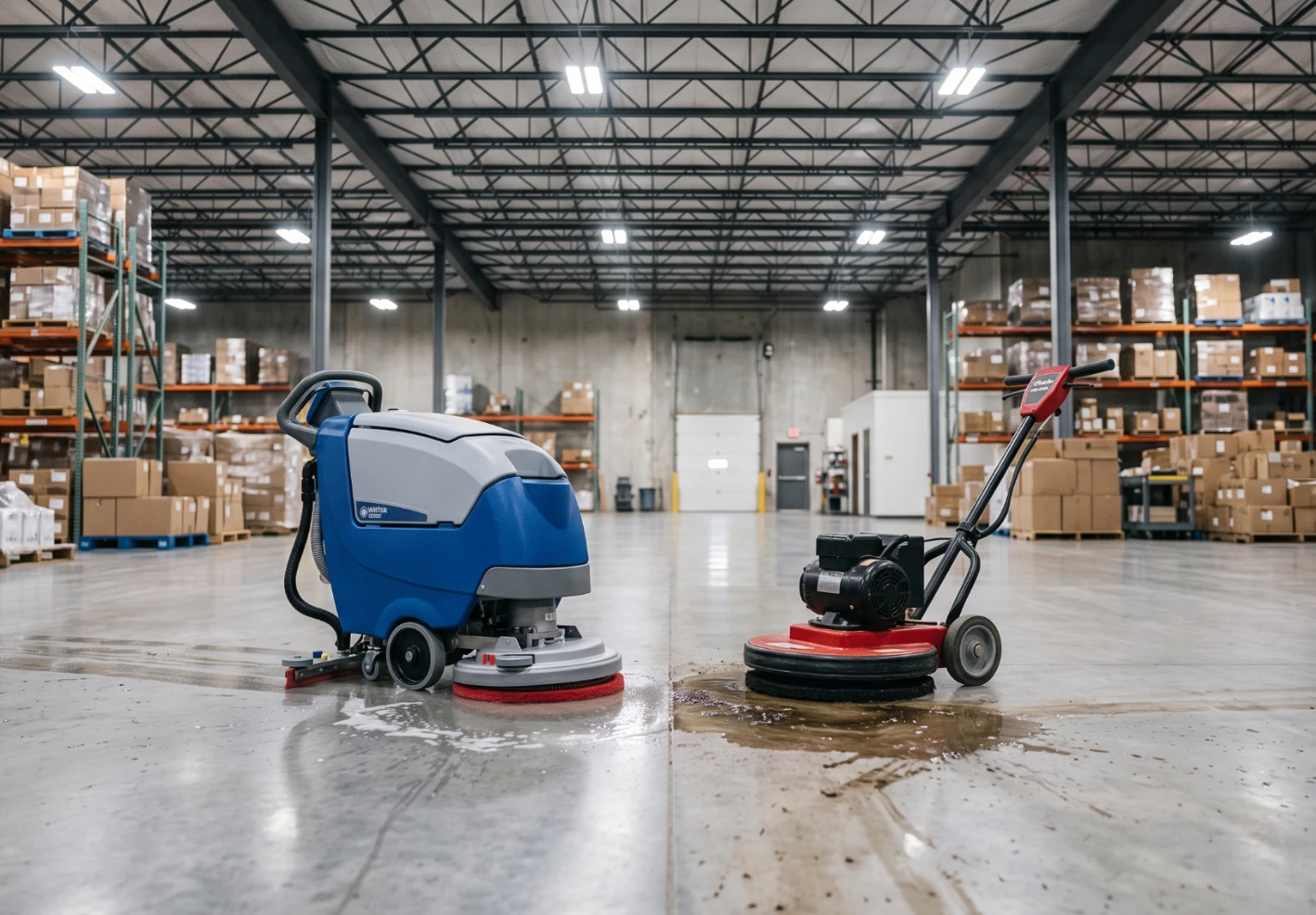
When you think about routine floor maintenance, scrubbing is probably what comes to mind first. Floor scrubbing is the regular cleaning process that removes surface dirt, grime, and light soiling from your commercial floors without touching the floor finish underneath. You'll typically tackle this with an automatic scrubber or floor buffer fitted with a soft pad, paired with a neutral cleaner that won't break down the protective coating you've already applied.
The goal here is simple: you're maintaining the existing finish, not removing it. Think of scrubbing as your floor's regular bath. It lifts away the dust, debris, and tracked in dirt that accumulates from daily foot traffic, but it leaves the underlying layers of floor finish fully intact. This is why scrubbing fits into your everyday or weekly cleaning procedures rather than being a once a year deep cleaning project.
What Is Floor Stripping?
Floor stripping is a different animal entirely. Where scrubbing cleans the surface, stripping removes it. The floor stripping process involves completely dissolving and removing old layers of finish or wax down to the bare floor underneath, using an alkaline stripping solution designed to break the bond between the finish and the floor itself.
You'll want to strip a floor before reapplying new finish, especially when the floor has become heavily discolored, yellowed with age, or built up so many coats that the finish no longer looks clean no matter how often you scrub it. Unlike scrubbing, stripping is labor intensive and time consuming, which is exactly why it's reserved for those moments when your floor needs a true reset rather than a quick clean.
Key Differences Between Floor Stripping and Floor Scrubbing
Purpose and End Result
The clearest way to separate these two processes is by what they accomplish. Scrubbing maintains and cleans the finish layer you already have, preserving the shine and protection it provides. Stripping, on the other hand, removes that finish entirely so you can start fresh with new finish and restore your floor's appearance from the ground up.
Chemicals Used
Your choice of chemicals depends entirely on which job you're doing. Scrubbing calls for neutral pH cleaners that are gentle enough for daily use without damaging your finish over time. Stripping requires a high pH alkaline floor stripper formulated specifically to break down old finish so it can be removed completely. Always check product labels before use, since mixing up these two categories of chemicals can either fail to clean properly or strip a floor you only meant to scrub.
Equipment and Pads
The equipment needed for each process tells you a lot about the intensity involved. Scrubbing uses soft or medium pads, often color coded in red or blue, that clean without being abrasive. Stripping calls for aggressive black stripping pads, and you'll often need a swing floor machine in addition to your auto scrubber to properly agitate and loosen old finish across the entire area.
Frequency
Frequency is one of the easiest ways to keep these processes straight. Scrubbing happens on a daily, weekly, or otherwise routine maintenance schedule depending on your traffic levels. Stripping happens far less often, typically once or twice per year, or whenever the finish has degraded to the point where scrubbing alone can't restore the floor's appearance.
Signs Your Floor Needs Scrubbing
You'll know it's time to scrub when you notice surface dirt buildup that dulls your floor's shine, dullness caused by everyday foot traffic, or light scuffing that hasn't penetrated through the finish layer. If the finish underneath still looks intact and the issue is purely cosmetic dirt sitting on top, scrubbing should bring your floor back to life without any need for stripping.
Signs Your Floor Needs Stripping
Stripping becomes necessary when the problems run deeper than surface dirt. Watch for yellowing or discoloration in the finish itself, visible wear patterns showing through multiple coats, peeling or flaking finish along high traffic paths, or a floor that no longer responds to burnishing or scrubbing no matter how often you clean it. These are signs that the finish itself has broken down and needs to be removed rather than maintained.
How to Scrub a Floor
Supplies and Equipment Needed
Before you start, gather what you need: an automatic scrubber, a neutral floor cleaner, soft scrub pads, wet floor signs, and a dust mop for pre cleaning. Having everything on hand keeps the job efficient and avoids interruptions once you've started.
Step by Step Scrubbing Process
Start by dust mopping the floor to remove loose dirt and debris before any liquid touches the surface. Fill your scrubber's solution tank with diluted neutral cleaner according to the product label. Scrub the floor in overlapping passes to ensure full coverage across the entire area. As you go, the scrubber's squeegee and vacuum system will recover the dirty solution, leaving clean water behind rather than a wet mess. Once you've covered the space, allow the floor to dry fully before foot traffic resumes.
How to Strip a Floor
Supplies and Equipment Needed
Stripping calls for a more substantial list of supplies: a floor stripping solution, a neutralizer, black stripping pads, a swing floor machine or auto scrubber, a wet dry vacuum, and personal protective equipment including gloves, goggles, and stripping boots. Because the chemicals involved have a high pH, protecting yourself properly isn't optional.
Step 1: Prepare the Area
Clear furniture out of the space, place wet floor signs to alert anyone nearby, and dust mop the area thoroughly before introducing any chemicals. A clean starting surface helps the stripping solution work more effectively.
Step 2: Apply the Stripping Solution
Mix your stripper according to the product label's directions, then apply generous amounts with a mop bucket and mop. Work in manageable sections rather than tackling the entire area at once, since the solution needs to stay wet to do its job.
Step 3: Let the Solution Dwell
Give the stripping solution time to dwell on the floor and break down the old wax or finish. Dwell time will vary depending on how many layers of floor finish you're dealing with, so check your product labels and adjust based on how heavily coated the floor is.
Step 4: Scrub the Floor
Once the solution has dwelled, use a swing machine or auto scrubber fitted with a black stripping pad to agitate and loosen the softened finish. Work in overlapping passes just as you would when scrubbing, but expect more resistance since you're breaking apart old layers rather than simply cleaning the surface.
Step 5: Recover the Slurry
As you scrub, the old finish and stripping solution will combine into a slurry that needs to be fully removed. Use a wet dry vacuum or your scrubber's built in squeegee system to recover this slurry completely, since leftover residue can interfere with new finish adhering properly.
Step 6: Neutralize and Rinse
Apply a neutralizer solution and rinse the floor, sometimes more than once, to bring the surface back to a neutral pH level. This step is essential because any leftover alkalinity from the stripper can prevent new finish from bonding correctly.
Step 7: Dry the Floor Completely
Let the floor dry completely before applying any new finish. Skipping this step or rushing it can trap moisture beneath the new coat, leading to poor adhesion and a finish that wears or peels prematurely.
Can You Scrub a Floor Instead of Stripping It?
This is a question worth addressing directly: no, scrubbing cannot replace stripping when your floor genuinely needs it. Scrubbing simply isn't designed to remove old layers of finish, no matter how aggressively you do it or how many times you repeat the process. If your floor's finish has broken down, yellowed, or built up too many coats, only the stripping process will give it the fresh start it needs. Relying on scrubbing alone in these situations wastes labor costs and time without solving the underlying problem.
How Often Should You Strip vs Scrub Your Floors?
As a general rule, scrubbing should happen routinely, whether that's daily in high traffic commercial spaces or weekly in lower traffic areas. Stripping fits into a much longer cycle, often once or twice annually, though this depends heavily on your facility type and how much wear your hard floors take on. Resilient flooring in busy retail environments may need stripping more frequently than hardwood floors in a quieter office setting. Tracking the condition of your finish over time will help you build a maintenance schedule that keeps your floors looking their best without overdoing either process.
Choosing the Right Equipment for the Job
Whether you're scrubbing or stripping, having the right equipment on hand makes both processes more efficient and helps control your overall costs. A reliable auto scrubber, the correct floor buffer for your space, the right pads for the job, and a quality floor stripping machine all play a role in getting consistent results. If you're still deciding which pad color fits your task, our guide to floor pad colors breaks down which pads belong on which jobs. Investing in equipment suited to your specific floors, whether that's resilient flooring, hardwood, or another hard surface, pays off through less labor intensive cleaning and a floor that holds its shine longer between deep cleanings.
Frequently Asked Questions
Is floor stripping the same as deep scrubbing?
Not quite. Deep scrubbing is more aggressive than your routine cleaning, but it still doesn't remove the finish itself the way true stripping does.
How long does floor stripping take compared to scrubbing?
Stripping takes considerably longer since it involves dwell time, multiple passes, and a rinse and neutralize stage, while scrubbing is a quicker, single pass process.
Can I strip a floor without an automatic scrubber?
Yes. A swing floor machine paired with a wet dry vacuum can handle the agitation and slurry recovery steps in place of an auto scrubber.