Forklift vs Skid Steer: Which One Fits Your Job
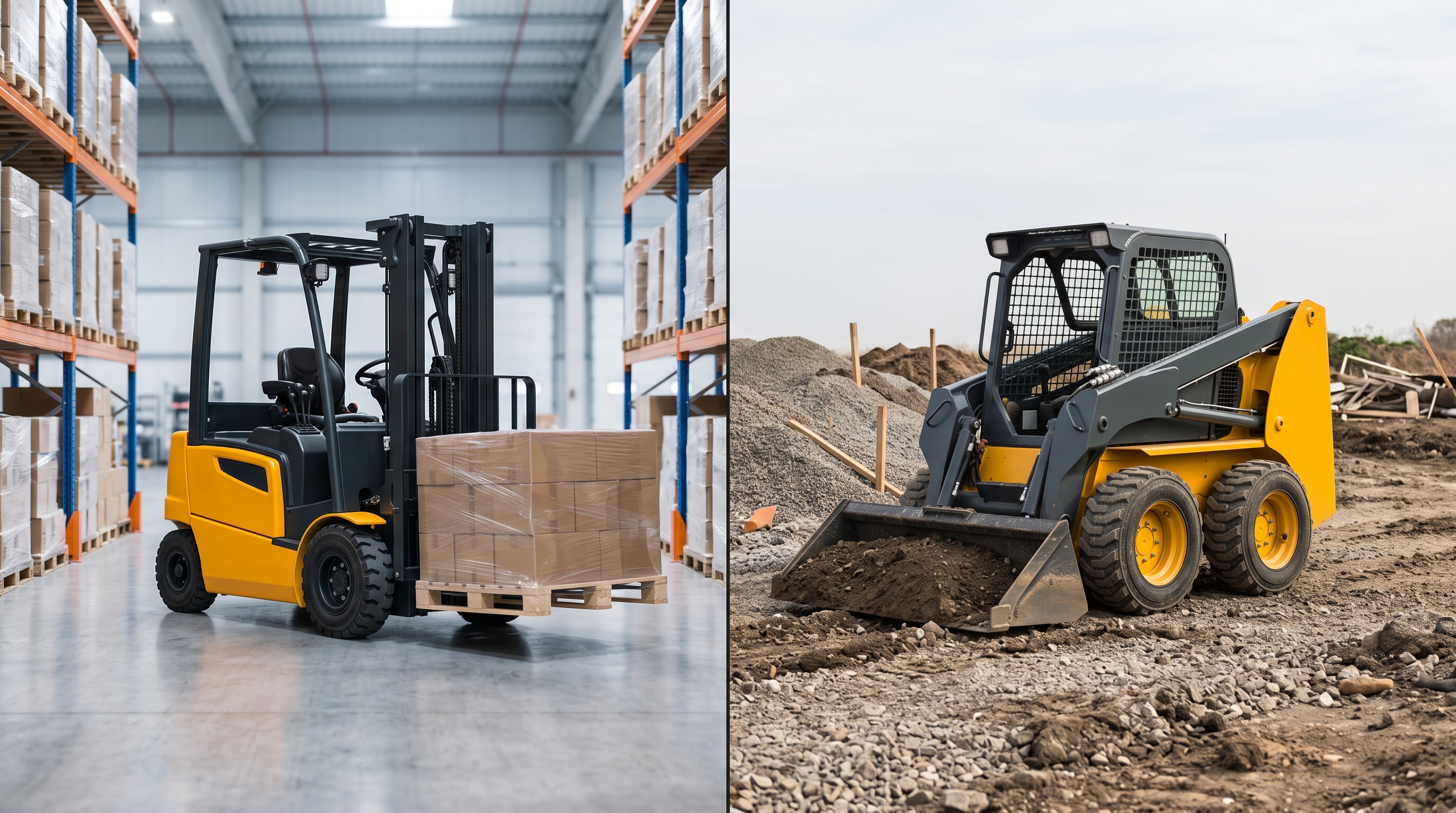
A forklift is a counterbalanced lift truck with a vertical mast and forks, built to lift and stack palletized loads. A skid steer loader is a compact machine with lift arms and a quick attach plate, built to dig, grade, and haul loose material. The core difference in the forklift vs skid steer debate is simple: forklifts handle pallets and racking on firm floors, while skid steers handle dirt, gravel, and debris on rougher ground.
Pick the wrong one and you pay for it in slow work, damaged floors, or a machine that cannot reach what you need. This guide walks through both machines side by side so you finish with a clear decision. If a forklift is already on your shortlist, you can browse the forklift category at PS Janitorial as you read.
Forklift vs Skid Steer at a Glance
Skimming? This table gives you the short answer on the factors that matter most.
|
Factor |
Forklift |
Skid Steer |
|
Terrain |
Smooth, firm surfaces such as concrete and asphalt |
Mud, gravel, dirt, and uneven ground |
|
Lift height |
Generally the higher stacking height |
Lifts to a dump height, not a stacking height |
|
Pallet handling |
Built for it |
Possible with fork attachments, with limits |
|
Turning space |
Needs aisle room to maneuver |
Pivots within its own footprint |
|
Attachments |
Limited range |
Very wide range |
|
Indoor use |
Electric models suit enclosed facilities |
Engine exhaust and noise are concerns |
|
Cost |
Depends on power type, capacity, and mast |
Depends on frame size, lift type, and attachments |
|
Upkeep |
Batteries or fuel system, tires, mast, brakes |
Hydraulics, tires or tracks, engine |
A forklift suits you if your day is pallets, racking, and loading docks. A skid steer suits you if your day is digging, grading, and moving loose material outdoors.
What Is a Forklift?
A forklift pairs a vertical mast and forks with a counterbalanced chassis. The weight of the truck offsets the weight of the load, which lets the machine lift and stack palletized loads safely when it is used within its rated capacity.
Common Types of Forklifts
Forklifts are sold by power source and tire style, and each combination has a home:
- Electric: Quiet and free of exhaust, which makes them the usual choice for enclosed warehouses and food or retail spaces.
- LPG: Run on propane, work well in busy yards and docks, and can move between indoor and outdoor use where ventilation allows.
- Diesel: Favored for heavy outdoor work where exhaust is not a concern.
- Cushion tire: Solid tires that sit low and turn tight, designed for smooth indoor floors.
- Pneumatic tire: Air filled or pneumatic style tires that handle paved yards and light outdoor surfaces better.
- Rough terrain: Larger tires and a sturdier build for unpaved sites. Telehandlers belong in this conversation too, since they combine features of forklifts and cranes and can lift loads up to 18 meters high.
Where Forklifts Work Best
Forklifts earn their keep in controlled environments where the work is material handling: warehouses, loading docks, factories, retail back rooms, and paved yards. Forklifts are primarily used for vertical lifting on flat surfaces, and that is exactly where they shine.
What Is a Skid Steer?
A skid steer is a compact loader with lift arms and a quick attach plate on the front. It steers by varying the speed of the wheels or tracks on each side, which is how it turns so tightly. Manufacturers such as Bobcat, Gehl, John Deere, and JCB all build skid steer loaders in a range of sizes.
Wheeled Skid Steers vs Compact Track Loaders
Wheeled skid steers excel on hard, flat surfaces and are faster there than track loaders. Compact track loaders perform better on slippery or uneven terrain, because rubber tracks spread weight out and give better traction on mud and loose ground. Track loaders also minimize damage on soft surfaces compared to wheels.
Upkeep differs as well. Tires are cheaper to replace than tracks, and wheeled machines are generally easier to maintain than track loaders.
Skid Steer Frame Sizes and Lift Types
Skid steers are categorized by frame size and rated operating capacity. A small skid steer fits through gates and tight spaces. Larger models carry more weight and lift higher, but need more room and a bigger budget.
There are two main lift types. Radial lift arms swing in an arc, which gives strong digging power and good reach at mid height. Vertical lift arms rise more straight up, which suits loading trucks and placing loads at full height. Match the lift type to how you load: digging favors radial, stacking and truck work favor vertical.
Where Skid Steers Work Best
Skid steers are multi functional machines used for earthmoving. You will find them on construction sites, in landscaping crews, on farms, and anywhere that snow removal, demolition, or debris cleanup is part of the job. They can dig, grade, and clean up in the same shift.
Forklift vs Skid Steer: Head to Head Comparison
Here are nine factors that decide which machine belongs on your job site. Each one ends with a clear winner so you can tally the results against your own work.
Terrain and Work Environment
Forklifts are made for smooth concrete and asphalt, and they struggle on unpaved or rough terrain unless you step up to a specialized variant. Soft ground and ruts can stall a standard forklift or put its stability at risk.
Skid steers handle mud and gravel with ease, and they can operate independently on uneven terrain. Pick tracks over wheels when the ground is slippery or soft.
Verdict: Skid steer for rough ground, forklift for firm floors.
Lift Height and Reach
A forklift mast goes straight up, and forklifts typically have a superior lift height compared to skid steers. That vertical reach is what makes racking possible.
A skid steer lifts its loader arms to a dump height, which is ideal for filling a truck bed or a hopper but not for placing a pallet on a high rack.
Verdict: Forklift.
Load Capacity and Pallet Handling
Forklifts are rated for a specific weight at a specific load center, which is the distance from the fork face to the load's center of gravity. The nameplate and operator manual state those limits, and the machine is built around moving pallets all day.
A skid steer has its own rated operating capacity, and fitting forks changes how that rating works because the load sits farther from the machine. Track loaders have a higher lifting capacity than skid steers in many comparisons, but neither is designed around pallet geometry.
Verdict: Forklift.
Maneuverability and Space Requirements
A forklift needs aisle width to turn with a load, and its turning radius matters in narrow aisles. Some models are built for tighter work, but you still plan around the turn.
Skid steers excel in confined spaces with zero turn pivoting, and they can pivot within their own footprint. That compact size is a big advantage in tight spaces on a crowded job site.
Verdict: Skid steer.
Attachments and Versatility
Forklift attachments such as fork positioners, side shifters, and work platforms extend what the truck can do, but versatility stays limited compared to a skid steer. Forklifts are tailored for material handling in controlled environments.
Skid steers can swap between various attachments in minutes. Popular skid steer attachments include buckets, augers, sweepers, and grapples, and the quick attach plate makes switching simple.
Verdict: Skid steer.
Indoor Use, Emissions, and Noise
Electric forklifts are the standard for enclosed facilities because they produce no exhaust at the machine and run quietly, which protects air quality and keeps conversation possible on the floor.
Skid steers run on engines, so exhaust and noise are real concerns indoors, and their size and weight can also be a problem on finished floors.
Verdict: Forklift.
Purchase Cost and Operating Cost
Forklift pricing swings with power type, capacity, and mast height, so get quotes for the exact spec you need. Operating costs come from electricity or fuel, charging or fueling setup, and routine service.
Skid steers save on fuel and transportation costs because one machine can do the work of several. Total cost of ownership also depends on frame size, tires or tracks, hydraulic wear, and the hours you put on the machine.
Verdict: Depends on the job. A skid steer wins for mixed outdoor work, and a forklift wins when pallets are the whole job.
Maintenance and Parts
Forklift upkeep centers on batteries or the fuel system, tires, mast chains, hydraulics, and brakes. Stick to the service intervals in the manual, because small skips turn into downtime.
Skid steers have lower maintenance costs than track loaders, but they still need regular attention to hydraulics, tires, and the engine. Track replacement is a major expense, since track loader tracks cost more to replace than tires.
Verdict: Tie. Both reward disciplined service schedules.
Operator Safety and Training
Forklifts carry tip over risk when loads are raised too high or turns are taken too fast, and stability depends on staying within rated capacity. Visibility can suffer when the load blocks the view forward.
Skid steers have their own risks on slopes and uneven ground, and operators must stay aware of the lift arms and surroundings. Proper operator training matters on both machines, along with following workplace safety rules and the operator manual.
Verdict: Tie. Training decides safety more than machine type.
Pros and Cons of Forklifts and Skid Steers
Both machines are strong in their own settings, so the honest comparison is what each one gives you and what it costs you.
Forklift Pros and Cons
A forklift is a specialist, and its strengths and limits follow from that.
Pros
- Higher lift height for stacking and racking
- Purpose built for moving pallets
- Electric models suit indoor use
- Efficient in controlled environments
Cons
- Struggles on unpaved or rough ground without specialized models
- Limited attachment versatility
- Needs aisle space to turn
Skid Steer Pros and Cons
A skid steer is a generalist, and its strengths and limits follow from that.
Pros
- Handles mud, gravel, and uneven ground
- Zero turn pivoting for tight spaces
- Wide range of attachments
- Digs, grades, and cleans up with one machine
Cons
- Lower lift height than a forklift
- Poor fit for racking and dock work
- Exhaust and noise limit indoor use
- Tracks cost more to replace than tires
Which One Fits Your Job?
Match the machine to your terrain, load type, and workspace first. Budget comes second, because the wrong machine costs more in the long run than the right one at a higher price.
Choose a Forklift If
A forklift is the right machine when your scenario looks like this:
- Most of your work is moving pallets and stacking racks
- You work on smooth concrete or asphalt
- You work indoors and want electric power
- You load and unload trucks at a dock all day
- You need reach well above a skid steer's dump height
Choose a Skid Steer If
A skid steer is the right machine when your scenario looks like this:
- Your site has mud, gravel, or uneven ground
- You dig, grade, and move loose material
- You need to swap between buckets, sweepers, and other tools
- Snow removal or site cleanup is part of your year
- You work in confined spaces where a forklift cannot turn
Best Pick by Industry
|
Industry |
Better Machine |
|
Warehouse |
Forklift |
|
Distribution center |
Forklift |
|
Manufacturing |
Forklift |
|
Construction |
Skid steer |
|
Landscaping |
Skid steer |
|
Farm |
Skid steer |
Can a Skid Steer Replace a Forklift?
Sometimes, for light and occasional pallet work, but not as a full replacement. Here is where fork attachments help and where they fall short.
Using Pallet Forks on a Skid Steer
Fork attachments let a skid steer pick up and carry pallets around a yard or job site, which is handy when pallets are a side task. The limits show up quickly: reach and stacking height are lower, rack work is not realistic, forward visibility drops with a load on the forks, and the load center sits farther out than it does on a purpose built forklift.
When You Still Need a Real Forklift
If you handle high volume pallets, work with racking, run a dock, or operate indoors, a skid steer is a stopgap and not a solution. A forklift moves pallets faster, stacks higher, and fits the way a warehouse is built.
Buying Tips: New, Used, or Rental
Whether you buy new, used, or rent, start with the same checklist. Look at hours of use, because it tells you how hard the machine has worked. Inspect forks or buckets, tires or tracks, hydraulic hoses, mast chains, and brakes for wear. Confirm the power type, whether that is a battery with its age and condition or a fuel engine, and check the rated capacity against the heaviest load you expect.
A new skid steer brings warranty coverage and the latest features, while a used machine fits smaller budgets if you inspect it carefully. If you only need a machine for a season or a single project, rent. Renting also lets you test a size or lift type before you commit. And if you are unsure which forklift spec fits your facility, contact the PS Janitorial team and talk it through before you buy.
Shop Forklifts at PS Janitorial
PS Janitorial carries forklifts for a range of applications, including used forklift options. Many warehouse facilities pair their forklifts with floor cleaning equipment, since pallets, dust, and tire traffic leave floors that need regular care. Look at our floor scrubbers and floor sweepers to keep aisles and docks clean, or save money with refurbished floor cleaning machines.
Frequently Asked Questions About Forklifts and Skid Steers
These are the questions buyers ask most when choosing between the two machines.
Can a skid steer do the same job as a forklift?
Only partly. With forks, a skid steer can handle light pallet work, but it cannot match a forklift for true stacking and racking.
Which is better on uneven ground, a forklift or a skid steer?
A skid steer has the advantage on uneven ground, and a track loader is better still on soft or slippery surfaces. If you need forklift style lifting outdoors, a rough terrain forklift is the right tool.
Can I use a skid steer inside a warehouse?
It is possible but rarely ideal. Exhaust, noise, and the machine's size and weight are all concerns, which is why electric forklifts are the usual indoor choice.
Which costs more to own and maintain?
It depends on the machine and how you use it. Forklift costs follow power type, battery or fuel, and service needs, while skid steer costs follow tires or tracks, hydraulics, and hours of use.
Do skid steers lift higher than forklifts?
Generally no. Forklift masts stack higher, while skid steers lift to a dump height that suits loading trucks.
Do I need training or certification to operate either machine?
You should have proper operator training for either machine. Follow your workplace safety rules and the operator manual every time.
Final Verdict: Forklift or Skid Steer
Pallets and racking go to the forklift, and digging and loose material go to the skid steer. Match the right machine to your terrain, load, and space, then explore our forklift categories to find the one that fits your facility.