High-Speed Floor Burnisher vs. Low-Speed Buffer
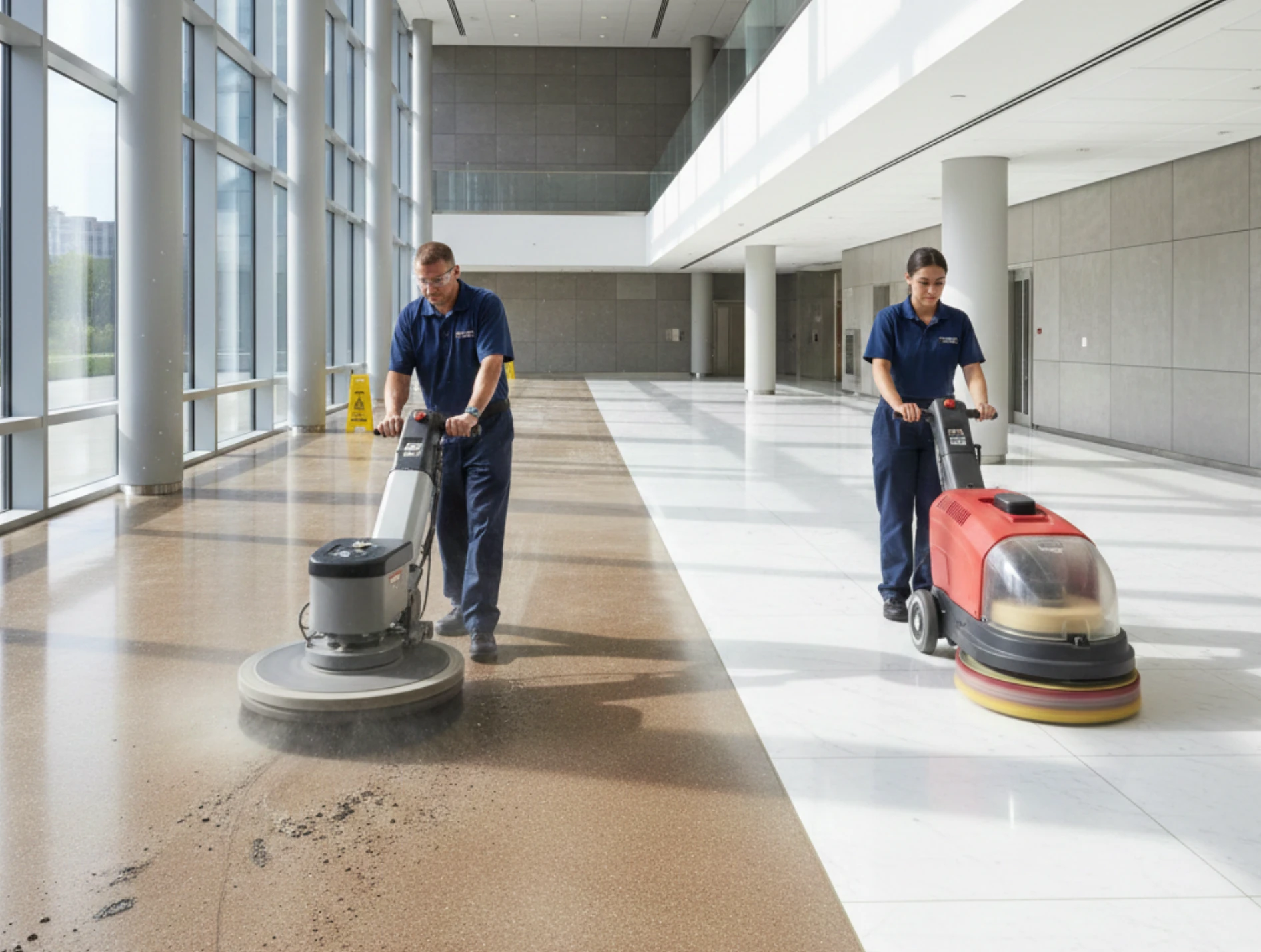
Choosing the right floor maintenance machine is crucial for effective janitorial tasks that ensure your floors not only look clean but maintain their longevity and safety. The quality of floor care can significantly affect the appearance and hygiene of your commercial or residential space. Two essential floor machines commonly used in the janitorial industry are floor buffers and floor burnishers. Understanding their differences and appropriate uses is key to achieving the best results for your floors.
What is a Floor Buffer?
A floor buffer, often referred to as a low speed buffer, is a versatile floor machine designed for various cleaning and maintenance functions. It operates at a suitable RPM range of approximately 150 to 330 RPM and is widely used for tasks including cleaning, scrubbing, stripping, and polishing hard floors.
Purpose and Functions
- Cleaning and scrubbing dirt and grime from surfaces.
- Stripping old finishes to prepare floors for refinishing.
- Polishing hard floors to enhance their shine and durability.
This low speed floor buffer is effective for deep floor maintenance, providing thorough cleaning while preserving the integrity of the floor finish.
When and Where to Use a Floor Buffer
- Deep cleaning and maintenance of various hard floor types, including tile, vinyl, and linoleum.
- Managing uneven surfaces or floors that are heavily soiled and require robust cleaning action.
The operating motion, typically a side to side motion or swinging action, helps lift dirt while minimizing floor damage.
What is a Floor Burnisher?
A floor burnisher is a high speed machine designed specifically for producing a high-gloss finish on floors. Commercial floor burnishers generally operate at a faster RPM range, between 1000 and 3000 RPM, and are designed to polish hard floors by generating heat that enhances the floor finish.
Purpose and Functions
- High-speed polishing and burnishing to restore and maintain shine.
- Enhancing the aesthetic appeal of smooth, well-maintained surfaces by producing a reflective finish.
When and Where to Use a Floor Burnisher
- Smooth, polished surfaces that require a high-gloss finish.
- Routine maintenance of floors to keep them looking pristine without the need for deep cleaning.
The machine’s back and forth motion or straight line movement is essential for evenly applying polish and preventing floor damage.
Key Differences Between High-Speed Floor Burnishers and Low-Speed Buffers
Speed and RPM
One of the most significant differences lies in their speed. Low speed buffers operate within a range of 150-330 RPM, which suits cleaning and polishing tasks that require gentle handling. In contrast, high speed burnishers run at 1000-3000 RPM, generating heat through friction to enhance floor gloss and shine effectively.
Functionality
While both machines contribute to floor care, their functions differ:
- Low speed buffers are versatile machines designed for scrubbing, stripping, and polishing.
- High speed burnishers specialize in polishing, providing a high-gloss finish on already maintained floors.
Motion and Operation Technique
- Floor buffers use a side to side motion or swinging action to clean and polish.
- Floor burnishers move in a back and forth motion or straight line to uniformly polish surfaces.
Surface Suitability
- Buffers are effective on rougher, uneven, or heavily soiled hard surfaces.
- Burnishers perform best on smooth, polished floors needing routine shine maintenance.
Operator Skill Level
Ease of use and required experience is another consideration:
- Low speed floor buffers tend to be more manageable for new or less experienced users, thanks to their slower speed and versatile applications.
- High speed burnishers require more skill and control due to their rapid motion and potential to generate floor damage if misused.
Benefits of Using a Low-Speed Floor Buffer
- Versatility in performing a range of tasks including scrubbing, stripping, and polishing.
- Effectiveness on mixed and imperfect surfaces, such as uneven or textured floors.
- Easier handling for operators new to floor maintenance equipment or those seeking a more controlled machine.
Benefits of Using a High-Speed Floor Burnisher
- Efficient production of a high-gloss finish to enhance floor aesthetics.
- Ideal for maintaining shine on polished floors, saving time in routine floor care.
- Reduces labor by quickly restoring gloss without the need for extensive deep cleaning.
Choosing the Right Machine for Your Janitorial Needs
To select the best machine for your janitorial tasks, consider the following factors:
- Floor type: Determine if your floors are rough, uneven, or smooth and polished.
- Floor condition: Assess whether deep cleaning or high-gloss polishing is the priority.
- Desired finish: Choose a machine that matches your aesthetic goals, whether it's a clean, matte look or a shiny, reflective finish.
- Frequency of use: Consider how often you will use the equipment and the level of maintenance you can provide.
- Operator skill: Match the machine to the skill level of those who will be operating it.
Often, combining the use of both machines in your cleaning regimen is recommended. Start with a low speed buffer for cleaning and maintenance, followed by a high speed burnisher to polish and shine the hard surfaces.
Maximizing Floor Care with the Right Buffers and Burnishers
Understanding the differences between a high-speed floor burnisher and a low-speed buffer is essential for effective floor care. Each machine serves distinct purposes, and choosing the right one depends on your floor type, maintenance needs, and operator capability. Assess your specific needs carefully before investing in floor machines to ensure optimal results. To explore a variety of floor buffers and commercial floor burnishers tailored to your requirements, visit PS Janitorial or contact us today to make an informed choice that meets your janitorial equipment needs.