How Do Deep Cycle Batteries Work?
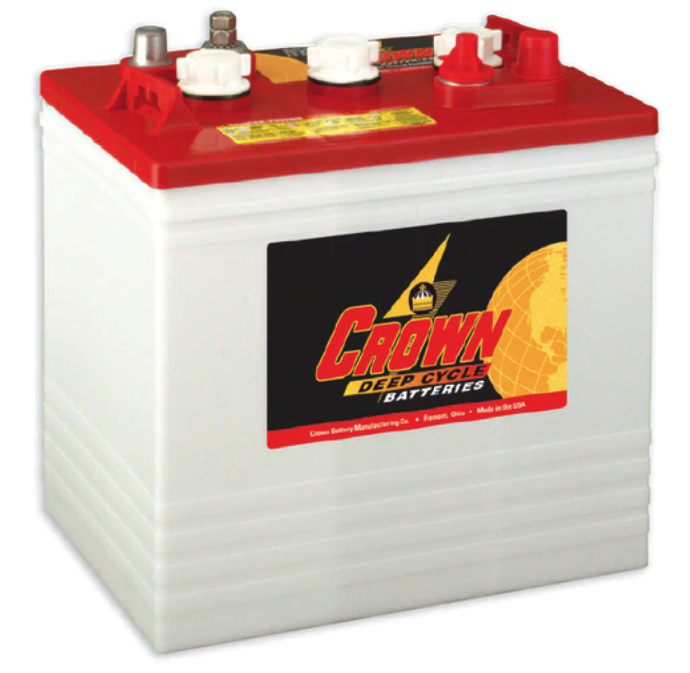
Whether you run your own business or manage the custodial department of a larger organization, you may find yourself always trying to look for new ways to save a little cash. You’ve probably heard that deep cycle batteries can provide a much more consistent supply of electrical current than traditional cranked batteries.
That being said, there’s a good chance that you’ve never seen a full explanation of why these batteries work so well. Here’s a brief rundown of how they’re able to achieve this feat.
The Working Principle Behind Deep Cycle Starting Batteries
Cranking lead-acid batteries, like the kind that you might see in a commercial-grade automobile, have smaller active plates thank deep cycle ones. You’ll also find higher-density active paste material and much bigger separators in a deep cycle battery, which allows it to handle the discharge and recharge process better than a more traditional battery would.
Thicker plates also resist the kind of corrosion that results as a result of going through an extended number of cycles. At their heart, however, they function like any other chemical battery.
Current flows from one terminal into another as the result of a chemical reaction. Once the battery’s terminal charges become reversed the battery appears to lose voltage. By passing an external source of electricity across the terminals, the battery then appears to come back to life.
Most deep-cycle batteries generally fall into one of two categories. Flooded batteries contain a quantity of electrolytic fluid that submerges the plates. Contrary to popular belief, the water that you have to add to batteries does not flood them. You’ll find many types of batteries that aren’t classified as flooded cells that still need coolant water. Technically, this coolant does not come into direct contact with the actual battery system.
Other deep cycle batteries utilize so-called valve-regulated structures. These rely on additional separators made from absorbed glass mats that help to further reduce wear and tear caused by spillage. You’ll also come across sealed units that make use of gel instead of absorbed glass. In either case, these batteries should hold up for quite some time.
Engineers have developed a number of different solutions that have fundamentally changed the way that batteries are manufactured. Eventually, many golf cart manufacturers will probably start to switch over to lithium-ion cells or other technologies. You can be sure that deep-cycle cells will be offered in nearly any technology that achieves a wide degree of market adoption regardless of how it works.
After all, every battery does share some basic operating functions under the hood, with charge and discharge. Technicians have taken advantage of this to adapt their designs to a variety of different use cases.
Locate Your Fully-Charged Batteries For All Applications At PS Janitorial
At Performance System Janitorial, we’ve long recommended that people switch over to this newer type of technology. Deep cycle batteries last longer, and we have reliable brands for viable energy storage.
No matter what kind of equipment you might find yourself working with, deep cycle batteries will last longer than other competing technologies. Contact PS Janitorial today to learn more. These batteries can reduce the number of times you have to charge your equipment during a work cycle.