How to Clean a Hotel Lobby Floor
Why Hotel Lobby Floor Cleanliness Matters
The lobby is the first thing guests see when they walk into a hotel, and the condition of the floors sets the tone for their entire stay. Dirty, scuffed, or sticky floors can undermine an otherwise excellent guest experience — and show up in online reviews. The challenge for housekeeping teams is that lobby floors are among the most heavily trafficked surfaces in any building, quickly accumulating dirt, moisture, and debris at an unpredictable rate throughout the day.
Customer satisfaction starts at the entrance. When guests roll luggage across a grimy floor or notice scuff marks near the reception desk, they form an impression that's hard to reverse. Keeping your lobby area spotless isn't just about aesthetics — it's a direct investment in the guest experience.
Types of Hotel Lobby Flooring and Their Cleaning Needs
Hard Surface Floors (Tile, Marble, Hardwood, Vinyl)
Hard surface floors are common in hotel lobbies because they're durable and easy to clean — but they show dirt, scuffs, and stains quickly. Foot traffic, rolling luggage, and outdoor weather conditions constantly track in grime, which means hard floors need frequent attention throughout the day. The good news is that with the right tools and a consistent routine, they can be kept looking sharp.
Carpet, Rugs, and Mats
Carpeted areas are more forgiving when it comes to hiding surface debris, but they trap odors, allergens, and deep-set dirt in ways that hard flooring doesn't. Entry mats serve as the first line of defense by catching dirt at the door, but they need regular cleaning themselves. Daily vacuuming is essential but not enough on its own — periodic deep cleaning is required to address what vacuums leave behind.
How to Clean Hard Hotel Lobby Floors: Step-by-Step
Step 1: Dry Sweep or Dust Mop First
Before any wet cleaning, remove loose debris with a dust mop or dry sweep. Skipping this step means you're just pushing dirt around when you mop. Microfiber flat mops are ideal here — they pick up fine particles and food particles more effectively than traditional brooms and won't scratch delicate floor surfaces like marble or hardwood.
Step 2: Mop with the Right Cleaning Solution
Once the floor is dry-swept, mop using a cleaner suited to your specific floor type. Tile and vinyl can handle stronger solutions, while hardwood and marble require pH-neutral cleaners to avoid damage. Microfiber mops are generally preferred over traditional string mops because they hold more solution, dry faster, and are easier to sanitize between uses. Always place a wet floor sign after mopping to protect guests from slip hazards.
Step 3: Spot Clean Stains Immediately
In a busy lobby, spills happen constantly. Response time is everything — the longer a stain sits, the harder it is to remove and the greater the slip risk for guests. Use a specialty stain remover appropriate for your floor type and dry the area as quickly as possible. Front desk staff can serve as an early-warning system here, alerting housekeeping the moment they notice a spill rather than waiting for the next scheduled round.
Step 4: Scrub and Deep Clean on a Regular Schedule
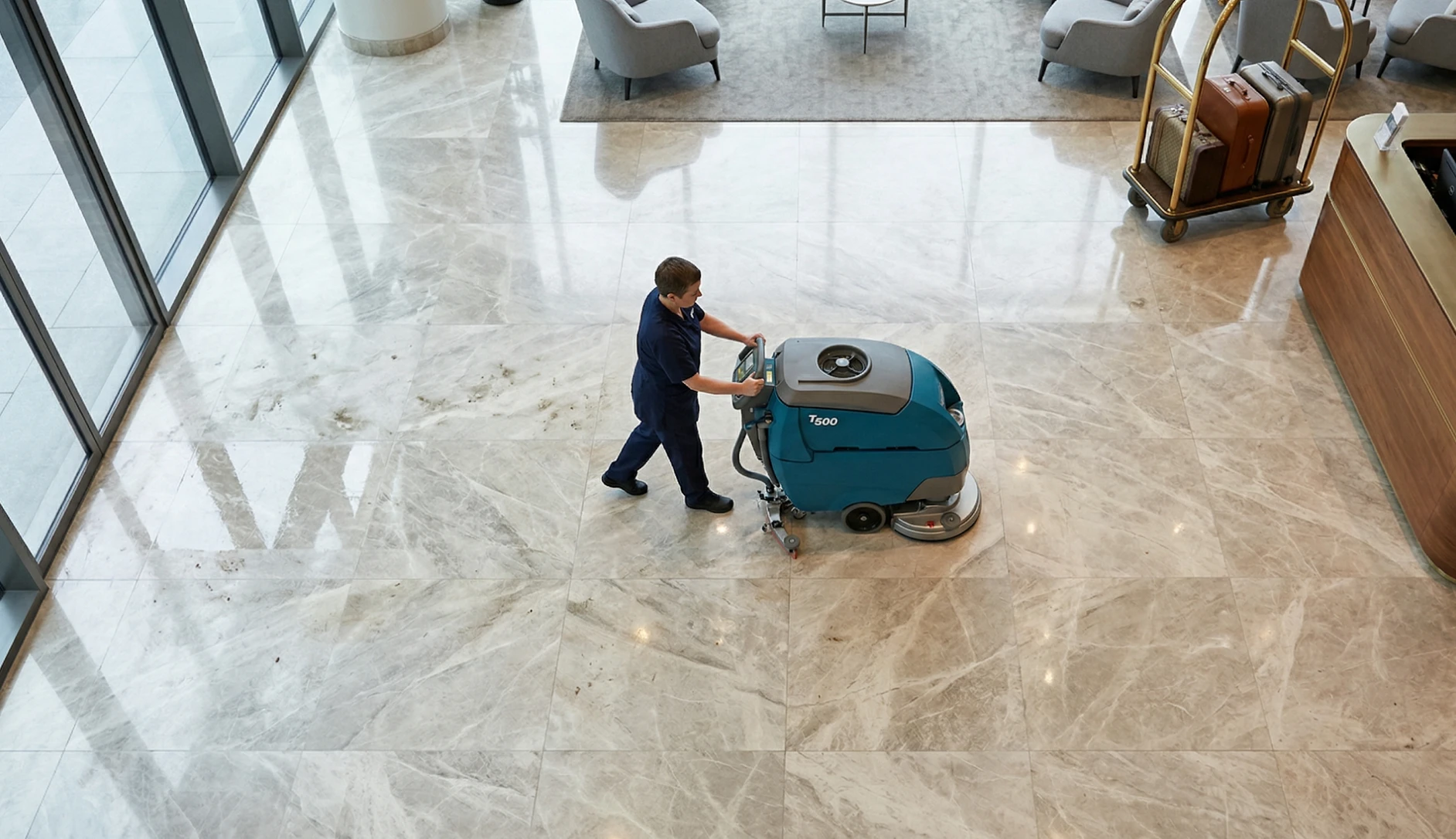
Sweeping and mopping handle day-to-day maintenance, but high-traffic lobby floors need periodic deep cleaning to address buildup that regular mopping misses — particularly in grout lines, textured tile, and around lobby furniture legs. A commercial floor scrubber is the most effective tool for this job, combining scrubbing action with water and cleaning solution in a single pass. How often you schedule a deep clean will depend on the size of your lobby and daily foot traffic, but weekly or biweekly is typical for most hotel properties.
How to Clean Hotel Lobby Carpet, Mats, and Rugs
Daily Vacuuming Best Practices
High-traffic lobby carpet should be vacuumed at least once — and ideally twice — per day. Choose a commercial-grade vacuum suited to your carpet type, and train staff to vacuum slowly with overlapping strokes in two directions. Rushing through vacuuming leaves debris behind and reduces the life of the carpet over time.
Addressing Odors in Carpet
Daily vacuuming keeps carpet looking clean, but it doesn't address musty or set-in odors from mildew, spills, or heavy use. Carpet cleaning additives and odor-neutralizing solutions can be worked into your regular cleaning routine, while periodic carpet extractor treatments are recommended to deep-clean fibers and eliminate odors that surface cleaning can't reach.
Entry Mats and Rugs
Entry mats placed both inside and outside the lobby entrance dramatically reduce the amount of accumulated dirt tracked onto lobby floors and carpet. They need to be cleaned and shaken out daily, and rotated or replaced during periods of heavy rain or snow. A wet, saturated mat stops doing its job and can become a slip hazard itself.
Other Hotel Lobby Cleaning Tasks to Include in Your Routine
Dusting Furniture, Surfaces, and Décor
Lobby furniture, countertops, and decorative elements accumulate dust and fingerprints quickly. Seating should be wiped down and vacuumed daily, covering armrests, seat cushions, and backrests. Glass surfaces like coffee tables and reception counters need a streak-free glass cleaner. Don't overlook harder-to-reach areas like window ledges, kick plates, and light fixtures — these collect dust fast and are often missed in daily routines.
Sanitizing High-Touch Surfaces
Door handles, elevator buttons, luggage carts, and handrails are touched by dozens or hundreds of guests every day. Sanitizing these surfaces should be part of every cleaning round — not just for hygiene, but because guests notice when these areas are grimy. This is especially true of entry door handles and glass panels, which show smudges almost immediately.
Restroom Maintenance
Lobby restrooms experience a disproportionate amount of traffic compared to restrooms elsewhere in the hotel. A poorly maintained restroom adjacent to the lobby can cancel out an otherwise clean and welcoming first impression. Floors should be mopped, cleaning supplies restocked, and all surfaces wiped down on a regular schedule — hourly checks during peak times are best practice for busy properties.
Trash and Recycling Bins
Trash cans and recycling bins should be emptied frequently enough that they never overflow, and the area around them should be checked for trash left on nearby surfaces or floors. After emptying, wipe down the inside of the bin before relining it. Deodorizing the surrounding area helps prevent odors from building up, particularly near food and beverage stations. Garbage bins placed near seating areas fill up faster than you might expect — during peak check-in hours, they may need attention every hour.
Windows and Glass Doors
Ground-level windows and glass entry doors need frequent cleaning — both inside and out. Smudges, handprints, and streaks are especially visible in lobbies with natural light. Low-lying glass in high-touch areas may need spot cleaning multiple times throughout the day, while a full inside-and-outside window clean should be part of the daily or every-other-day routine.
Building a Hotel Lobby Cleaning Schedule
Daily Cleaning Tasks
- Sweep and mop all hard surface floors
- Vacuum carpet, rugs, and entry mats
- Wipe down furniture, countertops, and reception surfaces
- Sanitize door handles, elevator buttons, and high-touch surfaces
- Empty and reline trash and recycling bins
- Clean and restock lobby restrooms
- Spot clean windows and glass doors
Weekly and Monthly Deep Cleaning Tasks
- Deep scrub hard floors with a commercial floor scrubber
- Professional or deep-clean carpet extraction
- Clean grout lines on tile floors
- Condition or treat hardwood floors as needed
- Full interior and exterior window cleaning
- Inspect and clean under and behind lobby furniture
Adjusting the Schedule for Peak Traffic
A fixed cleaning schedule works as a baseline, but lobby cleaning needs to flex with real-world conditions. Rainy days, check-in and check-out rush hours, and special events can dramatically increase the rate at which floors get dirty. Build in buffer time for reactive cleaning and designate specific staff to handle spot responses during peak windows rather than waiting for the next scheduled round. In high traffic areas during busy periods, proper cleaning is more about constant vigilance than scheduled intervals.
Choosing the Right Equipment for Hotel Lobby Floor Cleaning
Consumer-grade cleaning equipment isn't built for the demands of a commercial hotel lobby. Commercial-grade machines clean more effectively, last longer, and are designed to handle continuous daily use.
The two most important pieces of floor cleaning equipment for most hotel lobbies are a commercial floor scrubber for hard surfaces and a carpet extractor for carpeted areas. Floor buffers are useful for maintaining sparkling floors between deep cleans, giving high-gloss surfaces a polished appearance without requiring a full scrub cycle. Microfiber mops offer an affordable, effective option for daily mopping that outperforms traditional string mops in both cleanliness and hygiene — and they're easier to launder and reuse, which keeps your supply costs down over time.
Tips for Maintaining Spotless Hotel Lobby Floors Long-Term
- Invest in durable, easy-to-clean flooring materials like porcelain tile, vinyl, or dent-resistant laminate
- Train staff on proper cleaning technique and set clear, measurable cleanliness standards
- Place entryway mats both inside and outside to intercept dirt at the source before it spreads across the lobby area
- Empower front desk staff to flag spills and messes in real time rather than waiting for scheduled rounds
- Schedule periodic professional deep cleans to address what daily routines miss
A clean lobby isn't just the result of hard work — it's the result of the right systems, the right equipment, and a team that understands what's at stake. When guests walk through your doors and see sparkling floors and a fresh, well-maintained space, that impression carries through their entire stay.