How to Clean and Maintain Quarry Tile in Commercial Kitchens
Quarry tile is an unglazed clay tile prized for its durability, slip resistance, and low water absorption, which is exactly why it has become the standard flooring choice for commercial kitchens and restaurant kitchens across the country. Unlike the glazed tile you might find in bathrooms or locker rooms, quarry tile is built to survive heat, grease, heavy foot traffic, and constant moisture without cracking or becoming a safety hazard. But that durability only holds up if you clean it the right way. This guide walks you through the daily cleaning, weekly scrubbing, sealing, and stain removal procedures that keep quarry tile performing for years, along with the equipment that makes the process faster and more consistent.
Why Quarry Tile Needs a Different Cleaning Approach Than Other Commercial Floors
Quarry tile is manufactured unglazed on purpose. That rough, porous tile surface is what gives it its traction and slip resistance, but it also means it behaves differently than the glazed tile you would find in restrooms or locker rooms. In a restaurant kitchen, the biggest daily challenge is not dirt, it is grease and fat. Cooking oil, animal fat, and food particles settle into the texture of the tile and into the grout lines, and an alkaline cleaner alone will not break that down. You need a degreasing solution formulated for the job. This is also where a lot of kitchens get tripped up by no rinse cleaners. Even when a product claims no rinse is necessary, skipping the rinse step allows fats to break down into fatty acids over time, and those fatty acids can damage both the tile and the grout. Rinsing with clean water after every cleaning pass protects your investment even when the label says you do not have to.
Daily Cleaning Procedure for Quarry Tile Floors
A consistent daily routine is what keeps grease from building up into a problem that requires a major restoration. Skip a day or two and grime that would have taken five minutes to remove can turn into a job that takes hours and requires much more aggressive scrubbing.
Equipment You Need
- Broom or vacuum for initial debris removal
- Dust pan
- Mop and bucket, or an autoscrubber for larger kitchens
- Wet floor signs
- Degreasing all purpose cleaner
- Scrub brush for grout lines and tough spots
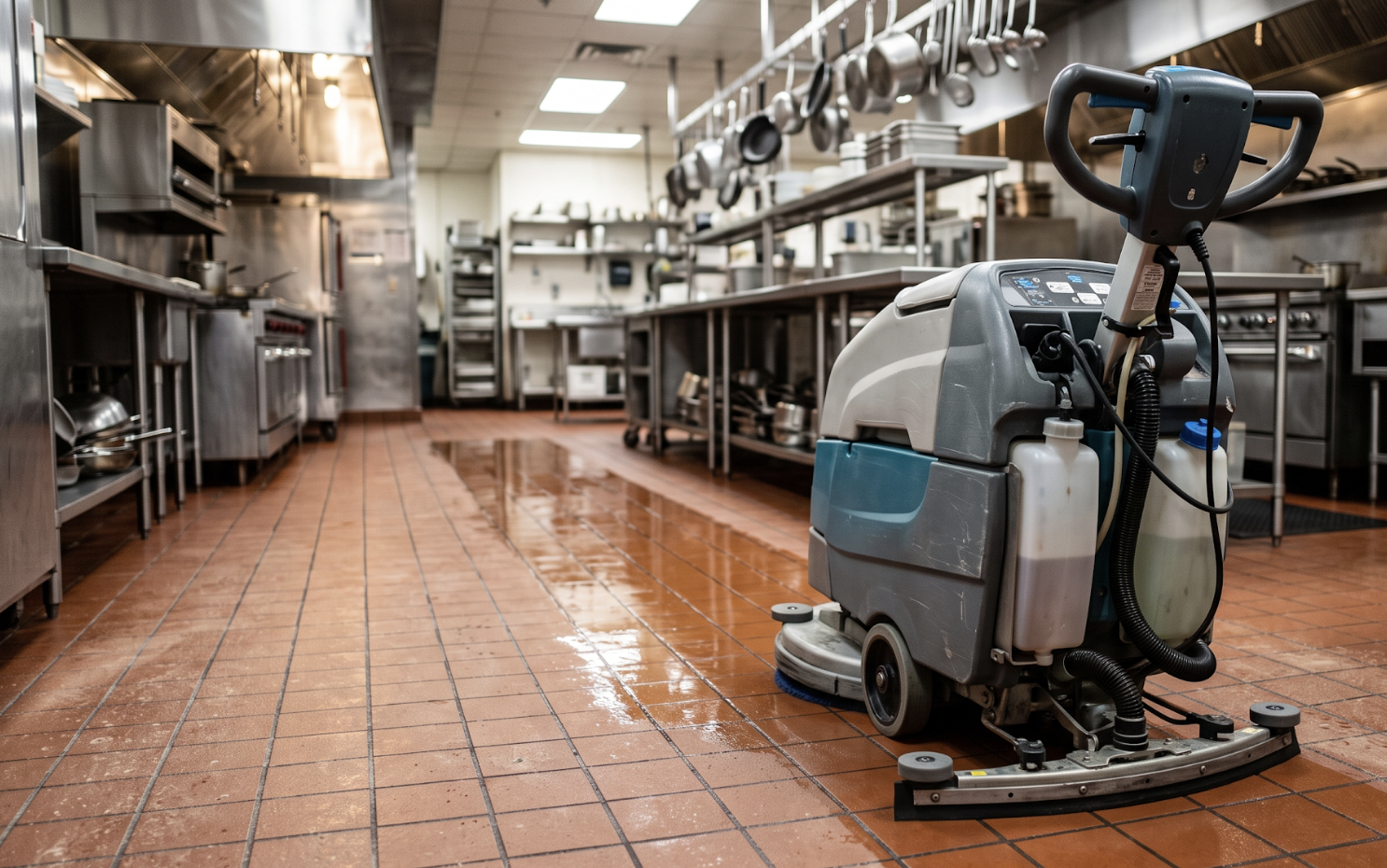
Vacuuming is preferred over sweeping in a lot of kitchen maintenance guidance, since a broom can drag grit across the tile and scratch the sealer over time. For larger commercial kitchens, an autoscrubber is a practical upgrade from manual mopping. It covers more ground in less time, applies consistent pressure across the tile surface, and reduces the labor hours spent on daily maintenance.
Step by Step Daily Mopping and Degreasing
- Clear all loose debris and food particles from the floor before you introduce any water or cleaning solution.
- Mix your degreasing cleaner in hot water at the ratio listed on the product label. Hot water helps break down grease faster than cold water will.
- Work in manageable sections rather than mopping the entire kitchen floor in one pass. This keeps the solution from drying on the tile before you have a chance to agitate and lift the grime.
- Change your solution as soon as it looks dirty. Continuing to mop with dirty water just redeposits grease and residue back onto the tile.
- Wipe up spills immediately rather than letting them sit. Quarry tile is porous, and standing water or lingering spills can cause staining that is much harder to remove once it sets in.
- Rinse and dry your mop, bucket, and any equipment after use so you are not starting the next shift with contaminated tools.
Weekly Deep Scrubbing for Grease and Grout Lines
Grout lines almost always end up dirtier than the tile face itself. The recessed, porous surface of grout traps grease, food residue, and moisture more readily than the flatter tile surface around it, and daily mopping typically is not enough to fully clean it. A weekly deep scrub with a stiffer brush or a floor machine breaks up the buildup that accumulates in those grout lines before it hardens into something much harder to remove.
Manual Scrubbing vs Using a Floor Machine
Hand scrubbing with a swivel brush works fine for smaller kitchens or tight corners where a machine cannot reach, but it is labor intensive and inconsistent across a large floor. A single brush floor machine or automatic scrubber applies even pressure and consistent agitation across the entire tile and grout surface, cutting the time it takes to complete a weekly deep clean. If your kitchen covers a lot of square footage, investing in a floor cleaning machine pays for itself quickly in labor savings alone.
What Cleaning Products to Use and What to Avoid
Use pH neutral or enzyme based degreasing cleaners formulated specifically for unglazed tile. These break down grease and oil without attacking the grout or the sealer underneath. What you want to avoid is just as important. Acidic cleaners such as vinegar or citrus based products, along with harsh soap based cleaners, can break down grout over time and strip away sealant, leaving your tile and grout vulnerable to staining and moisture damage. Hillyard's Super ShineAll is one commonly recommended neutral cleaner for this kind of floor, and it is worth keeping cleaning tools for the kitchen separate from tools used in dining areas so you are not cross contaminating grease and food residue into other parts of the building.
Sealing Quarry Tile and Grout in Commercial Kitchens
There are two main categories of sealer, penetrating or impregnating sealers, and surface coatings. Surface coatings sit on top of the tile and can actually reduce slip resistance over time as they wear, which is the last thing you want in a kitchen. Impregnating sealers soak into the tile and grout instead, protecting against moisture and staining from the inside without changing the surface texture or compromising traction. That makes penetrating sealers the recommended choice for commercial kitchen floors.
How to Apply a Penetrating Sealer
- Apply the sealer evenly using a sponge or squeegee.
- Avoid heavy buildup on the tile face. The goal is absorption, not a visible coating.
- Let the sealer soak into the grout lines, where it does the most protective work.
- Wipe away any excess sealer within a few minutes so it does not dry on the tile surface.
- If needed, apply a second coat after 24 hours for added protection in high traffic areas.
How Often to Reseal
A residential kitchen might only need resealing every one to two years, but commercial kitchens see far more foot traffic, moisture, and grease exposure. Depending on your volume, plan on resealing your quarry tile and grout roughly every six to twelve months. Keep in mind that routine maintenance and heavy scrubbing gradually wear away protective coatings, so a kitchen with heavy foot traffic will need resealing on the shorter end of that range.
Removing Common Stains from Quarry Tile
| Stain Type | Removal Method |
|---|---|
| Grease and food stains | Apply a food safe degreasing cleaner directly to the stain, allow proper dwell time, then agitate with a scrub brush and rinse with clean water. |
| Coffee and tea stains | Use a pH neutral cleaner with a soft scrub brush, working in small circles to lift the residue without damaging the sealer. |
| Ink and dye stains | Blot the area rather than rubbing it in, then treat with an enzyme based cleaner formulated for tile and grout, repeating as needed. |
| Mineral or rust stains | Use a cleaner specifically formulated for mineral deposits, since standard degreasers will not break these down effectively. Avoid acidic products that can damage grout. |
How Often to Schedule Professional Deep Cleaning
Daily mopping and weekly scrubbing handle the routine buildup, but even the most consistent in house maintenance program benefits from periodic professional deep cleaning. Professional services often use methods like steam cleaning, hot water extraction, or degreasing with a rotary brush machine to reach a level of clean that manual scrubbing cannot match. For most high volume restaurant kitchens, scheduling professional deep cleaning every three to six months is a reasonable target, though your exact interval should account for traffic and how much grease your kitchen generates.
Signs Your Quarry Tile Needs Restoration, Not Just Cleaning
Most kitchens can stay ahead of major problems with a consistent daily and weekly routine plus the right equipment, but there are signs that cleaning alone will not fix. If grout is cracking, missing, or so saturated with grease that scrubbing no longer restores its appearance, you are looking at a restoration job rather than a cleaning one. Catching these signs early, before the tile or subfloor is compromised, keeps a restoration project smaller and less disruptive to your operations.
Frequently Asked Questions
Is quarry tile slip resistant when wet?
Yes. Slip resistance is one of the core advantages of quarry tile in a commercial kitchen setting. Using a proper penetrating sealer preserves that slip resistance, unlike some surface coatings that can create a slicker finish over time as they wear.
Can I use vinegar or citrus cleaners on quarry tile?
No. Acidic cleaners like vinegar and citrus based products can break down grout and strip away sealant over time. A pH neutral or enzyme based cleaner formulated for unglazed tile is the safer choice for both the tile and the grout.
How long does quarry tile last in a commercial kitchen?
With proper maintenance, quarry tile can last many years in a commercial setting. That said, heavily used restaurant kitchen floors are often resurfaced or replaced every few years depending on foot traffic, grease exposure, and how consistently the maintenance schedule has been followed.
Building a Maintenance Schedule That Actually Works
The most effective quarry tile maintenance program comes down to a simple cadence: mop and degrease daily, scrub weekly, reseal periodically, and bring in professional deep cleaning on a regular schedule. The equipment you use has a critical role in how sustainable that cadence actually is. Autoscrubbers and floor machines cut labor time significantly on larger commercial kitchen floors, which makes it far more realistic to stick to the schedule instead of falling behind. If you are ready to equip your kitchen with the right tools, browse the full floor machines at PS Janitorial.
Quarry tile is manufactured to handle exactly the kind of heat, grease, and heavy foot traffic that commercial kitchens throw at it every single day, but that durability depends on you keeping up your end of the maintenance routine. Consistent daily cleaning, regular sealing, and the right equipment are what protect your investment for the long term. PS Janitorial carries the autoscrubbers and floor machines that make that routine faster, easier, and far more consistent to maintain.