How to Keep Carpets Clean in Daycare Centers and Preschools
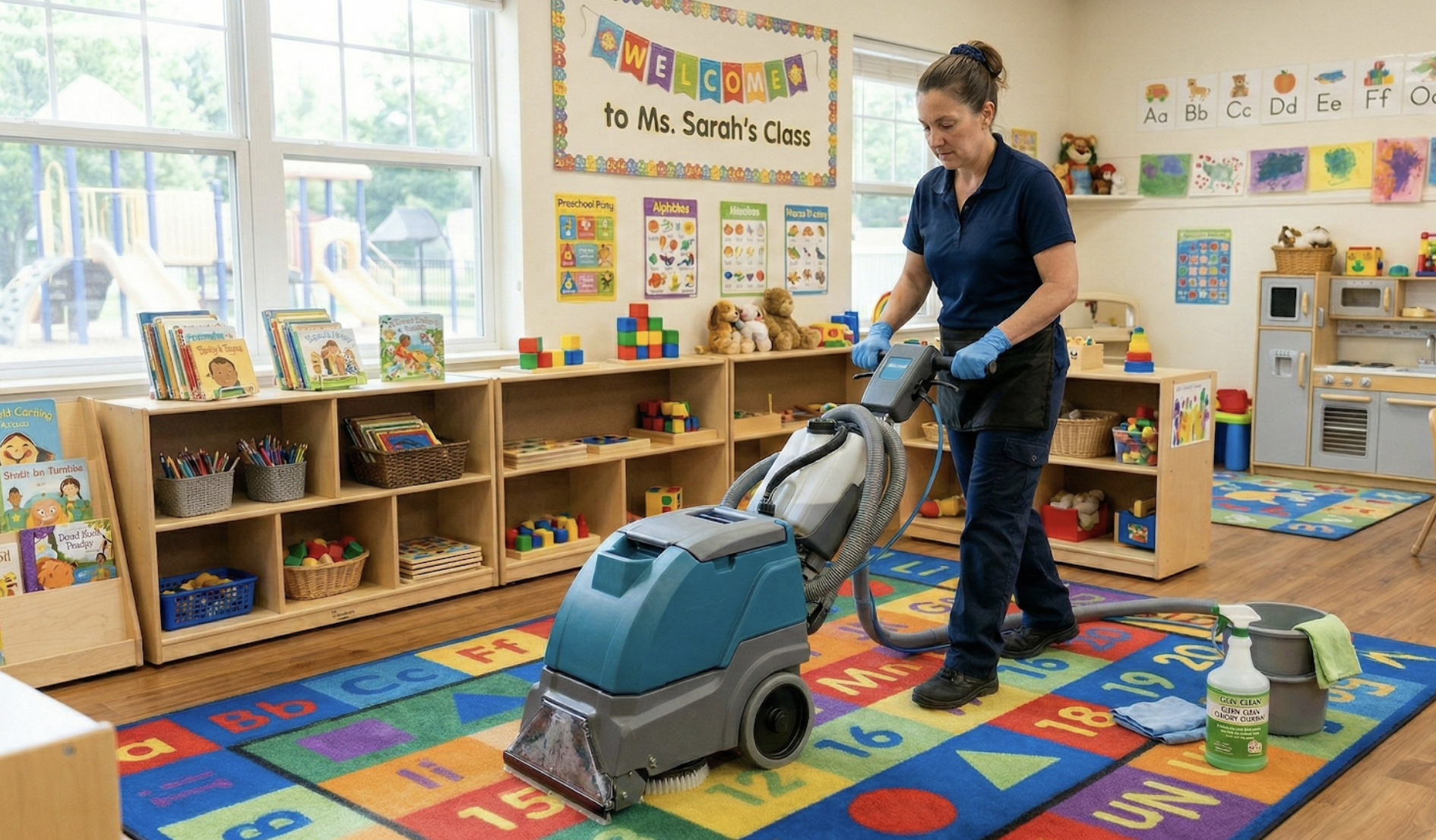
Carpet cleanliness is absolutely essential in daycare centers and preschools. Clean carpets help foster a healthier environment for young children, who are more susceptible to allergens, dust mites, and germs. Since children often play directly on carpets and soft surfaces, keeping these areas clean also helps prevent the spread of illnesses, maintains good indoor air quality, and creates a more welcoming space for families and staff. In addition, stain-free and well-maintained carpets make a great first impression and support the overall safety of your facility.
Why Carpet Care Matters in Childcare Settings
Maintaining clean carpets in childcare settings presents special challenges. Daycare carpets in classrooms, play areas, and nap zones are exposed to spills, crumbs, tracked-in dirt, and frequent foot traffic. Young children drop food, perform messy art projects, and sometimes have accidents, all of which can lead to stubborn stains or embedded dirt. Without routine cleaning, carpet fibers trap dust, allergens, and bacteria that can circulate through the facility, impacting hygiene, increasing the risk of illness, and lowering indoor air quality. That’s why a proactive, comprehensive approach to carpet cleaning is critical in high-traffic, child-focused environments.
Daily Maintenance Tips
1. Vacuum Daily to Reduce Dirt and Allergens
Regular vacuuming is the cornerstone of carpet care in daycare centers. Daily vacuuming in high-traffic areas—such as entryways, classrooms, and play areas—prevents dirt and allergens from accumulating in carpet fibers and helps maintain hygiene. Choose vacuums fitted with HEPA filters, as these capture fine dust particles and reduce the circulation of allergens, keeping the environment safer for children prone to respiratory issues and allergies. For best results, use slow, overlapping passes and pay special attention to spots near doors, under play equipment, and around shelving units where debris often collects.
2. Spot Clean Spills Immediately
Spills are inevitable in preschool and daycare settings, but responding quickly is key. When liquids or food hit the carpet, blot the area with a clean, dry cloth—avoid rubbing, which can push the stain deeper into the fibers and make tough stains harder to remove. Keep a well-stocked cleaning kit in every classroom, so staff can tackle spills promptly. Fast action not only prevents permanent stains but also minimizes the risk of sticky residue that attracts even more dirt.
3. Use Child-Friendly Cleaning Products
To preserve a healthier environment, always opt for child safe cleaning products for everyday carpet cleaning and spot treatment. Non-toxic, low-VOC cleaning solutions ensure that the products you use won’t aggravate allergies or place children at risk from harsh chemicals. Check that all products are appropriate for soft surfaces, and always follow manufacturer guidelines for application and rinsing, ensuring residue isn’t left behind where children crawl or play.
Preventative Carpet Protection Strategies
1. Implement Shoe-Free Zones
Shoe free zones are one of the most effective ways to reduce tracked-in dirt, germ transfer, and allergens on daycare carpets. Encourage staff, children, and visitors to remove shoes before entering carpeted areas, and provide indoor slippers or socks for use within classrooms. This simple protocol keeps outdoor contaminants from being ground into carpet fibers and supports overall cleanliness.
2. Place Mats at Entry Points
Strategically placed, durable mats or runners at every entrance can capture large amounts of grit, mud, and moisture before they ever reach your carpets. For best results, choose mats designed to trap both fine particles and water, and extend them far enough inside entryways that both staff and children can wipe their feet thoroughly. Mats should be cleaned and inspected regularly to remain effective, preventing embedded dirt from migrating to classroom carpets.
3. Rotate Furniture to Even Wear
High traffic areas and fixed placements of classroom furniture can create worn paths and high-stress zones in your carpets. Rotate heavy items, such as play equipment and shelving units, on a regular schedule to promote even wear and avoid permanent indentations or premature damage. This also helps circulate traffic patterns, allowing for more consistent routine cleaning and maintaining clean carpets throughout your facility.
Scheduled & Professional Carpet Cleaning
1. Schedule Regular Deep Cleaning
Daily care removes surface debris, but professional carpet cleaning—especially steam cleaning, hot water extraction, or using a carpet extractor—penetrates deep into carpet fibers to get rid of embedded dirt, allergens, and bacteria. Scheduled deep cleaning by qualified cleaning services with a high-performance carpet extractor eradicates what daily vacuuming and spot cleaning miss, reduces lingering odors, and revitalizes the appearance of your carpets. These intensive cleaning services also extend carpet life, saving you the cost and hassle of premature replacement.
2. How Often Should You Deep Clean?
For daycare centers with continual use and high traffic, schedule professional deep cleaning on a quarterly basis or at least twice a year (semi-annual). Programs with especially messy activities may require more frequent cleaning. Always plan deep cleans for times when the childcare space is unoccupied or minimally staffed, such as weekend hours or seasonal breaks, to allow carpets to dry fully before use.
Supporting Hygiene Habits & Staff Training
1. Promote Hand & Foot Hygiene
Empowering children and staff with the right habits is an often-overlooked method to preserve clean carpets. Teach and encourage children to wash hands after outdoor play and before meals, and to wipe feet—removing dust and soil—before entering carpeted rooms. Providing hand sanitizer and posting visual cues or fun reminders at sinks and by classroom doors can reinforce these healthy routines.
2. Train Staff on Carpet Care Protocols
Even the best cleaning products and policies fall short without well-informed staff. Regularly train your staff on carpet care responsibilities, including the proper protocol for daily vacuuming, immediate spill response, and the use of child-safe products. Ensure everyone knows how to operate cleaning equipment and understands when to call for professional cleaning services for deep cleaning or tough stains. Strong staff training ensures that carpet care is consistent, thorough, and effective.
Recommended Tools & Janitorial Equipment
Equipping your daycare center with the right janitorial equipment makes all the difference in maintaining clean carpets. Consider investing in these essential tools:
- Commercial-grade vacuums with HEPA filtration for efficient daily vacuuming.
- Portable carpet scrubbers and spot cleaners that handle routine stains and spot treatment between deep cleans.
- Professional-grade steam cleaning machines and carpet extractors for scheduled deep cleaning of carpet fibers and removal of embedded soils.
- Heavy-duty entry mats and runners to trap dirt and moisture at the door.
- Child safe cleaning products designed specifically for carpets and soft surfaces.
A modern carpet extractor is a critical tool for maintaining daycare carpets. It uses powerful suction and water extraction to lift deep-seated dirt, allergens, and liquids from carpet fibers, resulting in a cleaner, fresher, and healthier environment for kids and staff. All these tools support best practices in carpet cleaning, ensuring your team can maintain hygiene and a cleaner environment with greater effectiveness and ease.
Your Path to Cleaner, Healthier Daycare Carpets Starts Here
Clean carpets are more than just a cosmetic concern—they are vital to the health, safety, and learning experience of children in childcare settings. By following the strategies outlined above—prioritizing daily and preventative care, choosing safe cleaning products, scheduling professional carpet cleaning, and empowering your staff and children—you create a safer, more welcoming space for everyone in your daycare center or preschool. Implement these tips and invest in the right janitorial equipment to ensure your play areas are always ready for fun, comfort, and learning.