
How to Remove Rust Stains from Concrete Floors: A Complete Guide
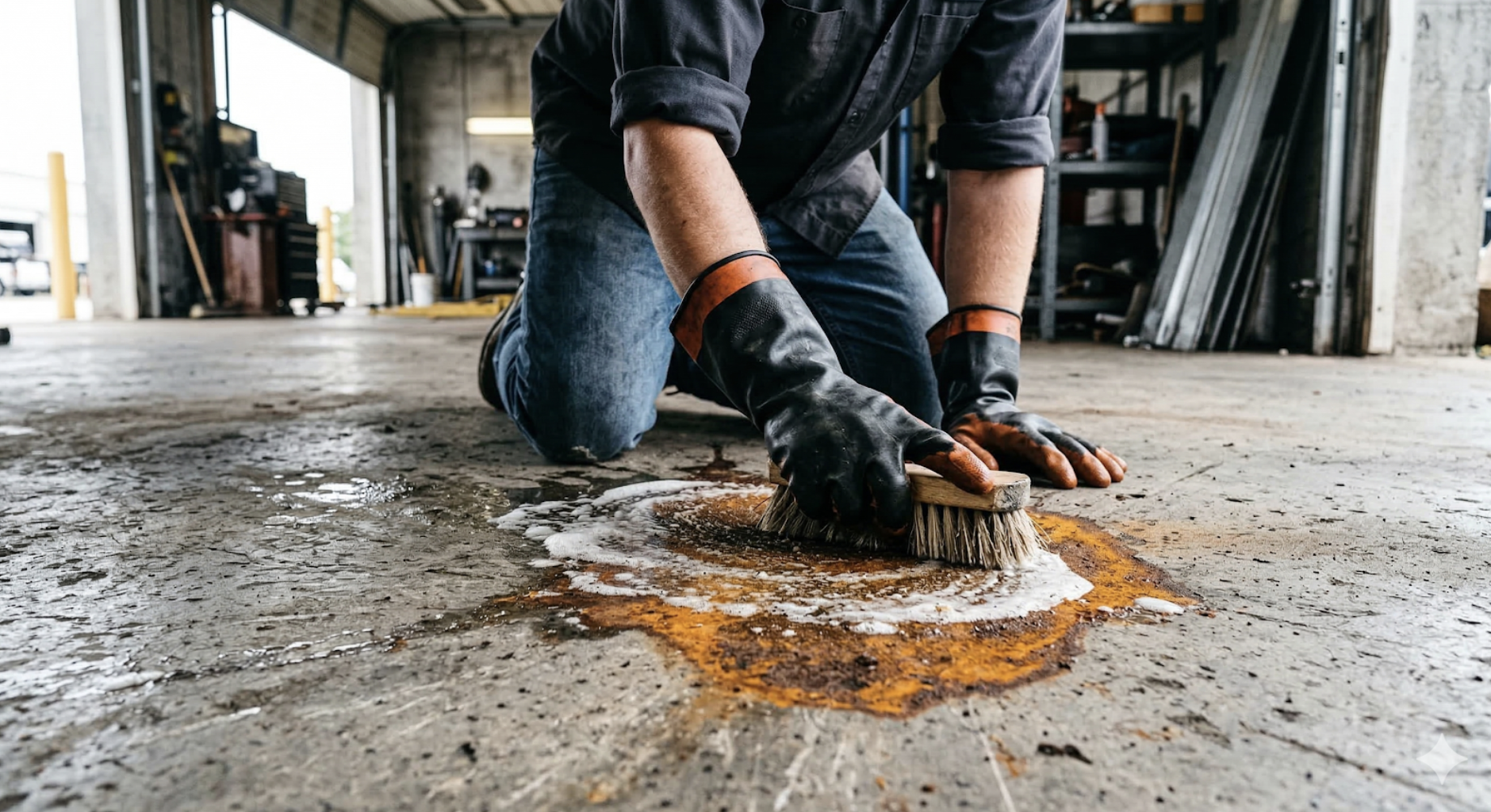
Rust stains are among the most stubborn and unsightly issues you'll encounter on concrete floors, in commercial facilities, warehouses, garages, and homes alike. If your floor sees regular contact with metal equipment, tools, machinery, or even a wet mop bucket, you've probably dealt with that familiar orange discoloration at some point.
The good news: removing rust stains from concrete is entirely doable as a DIY project. The key is matching the right method to the severity of the stain, and acting quickly. A fresh rust stain responds to treatments that would barely touch a stain that's been baking into unprotected concrete for years. The sooner you address it, the easier the job.
What Causes Rust Stains on Concrete Floors?
Before reaching for a cleaning product, it helps to understand what's actually driving the problem. The source isn't always obvious, and identifying it is the first step toward making sure it doesn't come back.
Metal Objects and Equipment
The most common culprit is direct metal-to-concrete contact. Floor buffers, scrubbers, metal storage racks, machinery, and outdoor furniture all leave rust stains when moisture causes them to oxidize against the surface. In janitorial environments, even a wet mop bucket or metal cart left sitting overnight can leave a ring of orange discoloration.
Iron-Rich Water Sources
If you draw from a well or use hard water for irrigation, you may notice rust spreading across large sections of your concrete with no obvious metal source nearby. The iron dissolved in that water deposits into the porous concrete surface and oxidizes over time, the floor itself is absorbing the problem.
Rebar and the Concrete Itself
Some grades of concrete contain ironstone or coal particles embedded in the aggregate. As the surface wears over the years, these particles become exposed to air and moisture and begin to rust from within, creating orange splotches with no apparent external cause. Similarly, if the slab has internal rebar and develops cracks, water can reach the steel and cause rust to bleed through from the inside out.
Fertilizers and Chemical Runoff
Many fertilizers contain metallic minerals, iron, magnesium, zinc, that form rust stains when overspray or runoff lands on a concrete driveway, walkway, or warehouse floor and isn't rinsed away promptly. Those minerals embed in the concrete's pores and react with air and moisture over time.
What You'll Need: Tools and Supplies
Having the right setup before you start will save you time and prevent accidental damage to your concrete or yourself.
Protective Gear
Safety comes first, especially when working with chemical rust removers. At minimum, wear rubber gloves and safety goggles. When using stronger acids like muriatic acid or TSP, add long sleeves, a respirator, and closed-toe shoes.
Cleaning Tools
- Stiff-bristled scrub brush (avoid metal bristles, these can create new rust particles)
- Pump-up sprayer (helpful for applying solution evenly over large areas)
- Mop or sponge for rinsing
- Pressure washer (optional, but very effective for deep stains)
- Bucket
Cleaning Agents
Organized from mildest to strongest, always start mild and work your way up. Using a heavy-duty acid on a surface stain is unnecessary and can damage your concrete.
- Light stains: dish soap, lemon juice, white vinegar, baking soda
- Moderate stains: WD-40 Multi-Use Product, oxalic acid-based commercial rust removers
- Stubborn or deep stains: trisodium phosphate (TSP), muriatic acid (hydrochloric acid)
How to Assess the Severity of Your Rust Stain
Not all rust stains are equal. A fresh stain that appeared last week after a metal chair sat on a damp patio is very different from a stain that's been baking into unsealed concrete for eight years.
Fresh, surface-level stains are typically light orange and respond well to household remedies. Older stains are darker, more saturated in color, and have penetrated deeper into the concrete's pores, they'll require stronger chemical treatments and more patience.
Before applying any cleaning agent, test it on a small, inconspicuous section of the floor first. This is especially important if your concrete is painted, decorative, or sealed, since some acids can strip coatings and alter the surface's appearance. When in doubt, start mild and escalate only if the result calls for it.
Step-by-Step: How to Remove Rust Stains from Concrete Floors
Step 1: Prepare the Area
Clear the area completely before applying any cleaning solution. Remove all equipment, furniture, and objects from the floor, then sweep or vacuum thoroughly, any surface grime left behind can act as a barrier that prevents your cleaning agent from fully penetrating the stain. Take a moment to inspect the concrete for cracks or damage that may need to be addressed separately. Finally, pre-wet the surface with water. This step is especially important when working with acid-based cleaners.
Step 2: Mild Methods for Light or Fresh Stains
Start here if the stain is relatively new or light in color. These approaches are safe, inexpensive, and effective for surface-level rust.
- Dish soap and water: Mix with warm water, apply to the stain, and let the solution sit until the surface loosens. Scrub with a stiff brush, then rinse clean. Best for routine maintenance and very fresh stains.
- Lemon juice: Pour undiluted lemon juice directly on the stain. The citric acid breaks down light rust. Let it sit for 10–15 minutes, scrub, and rinse. Repeat as needed until the stain lifts.
- White vinegar: Stronger than lemon juice and a reliable go-to for minor rust. Pour it onto the stain, soak for 10–15 minutes, scrub with a stiff brush, and rinse with clean water. Combine with baking soda for added abrasiveness on slightly tougher spots.
- Coca-Cola: A surprisingly effective option for very minor stains, the phosphoric acid content can dissolve light rust. Worth trying as a first step on small spots before reaching for anything stronger.
Step 3: Intermediate Methods for Moderate or Older Stains
If household remedies haven't done the trick, it's time to step up to something with more chemical punch.
- WD-40 Multi-Use Product: WD-40 works as a penetrant, getting underneath the rust rather than simply sitting on top of it. Spray generously using the wide-area nozzle, scrub with an abrasive brush, and rinse thoroughly. You may need to repeat this process a few times for stains that have had time to set.
- Oxalic acid-based commercial removers: Available at most hardware stores in liquid or powder form, these products are specifically formulated to dissolve rust on concrete without the hazard profile of stronger acids. Follow the manufacturer's instructions, allow the solution to penetrate, scrub, and rinse thoroughly.
Step 4: Heavy-Duty Methods for Deep or Stubborn Stains
For stains that have been in place for years or cover a large area, stronger chemical treatments may be necessary. Proceed with full protective gear and proper ventilation, this isn't the step to cut corners on.
- Trisodium phosphate (TSP): Mix approximately half a cup of TSP with a half-gallon of water. Apply the solution to the stained area, scrub with a stiff brush, and rinse well. Make sure the space is well-ventilated throughout.
- Muriatic acid (hydrochloric acid): Mix a 50/50 solution of water and muriatic acid in a pump sprayer, always add acid to water, never the reverse. Dampen the concrete first, then apply and let it sit for no more than 10 minutes. Leaving it longer can etch or permanently discolor the surface. Scrub, then rinse thoroughly, ideally with a pressure washer or hose on full flow. Wear full PPE and ensure maximum ventilation.
Step 5: Rinse, Dry, and Inspect
Once you've applied and scrubbed your chosen treatment, rinse the area thoroughly with clean water. Allow the floor to dry completely before inspecting the result. Deep or long-standing stains may require multiple treatment sessions, don't be discouraged if the first round doesn't fully eliminate the discoloration. Keep at it, and escalate to the next level of treatment if the current method has reached its limit.
Alternative Option: Covering Stains with Concrete Acid Staining
In cases where the rust has penetrated so deeply that cleaning alone can't fully restore the concrete's appearance, acid staining is a legitimate alternative. Rather than removing the discoloration, you're adding a color treatment that reacts with the concrete itself to create a natural, variegated look. Choosing the right stain color can make old rust blotches blend seamlessly into the floor's overall appearance, and actually improve it visually. This is generally a last resort after cleaning methods have been exhausted, but it's a viable one.
Safety Precautions When Using Chemical Rust Removers
Working with acid-based cleaning agents requires care. Always wear gloves and eye protection as a baseline, and add a respirator and long-sleeved clothing when working with muriatic acid or TSP. Keep the area well-ventilated, open all doors and windows and use a fan if you're working indoors. Never mix different acids or chemical cleaners together. Keep solutions off nearby plants, grass, and adjacent surfaces. If you're working in an enclosed space, make sure children and pets are completely out of the area until the floor has been rinsed and dried.
How to Prevent Rust Stains on Concrete Floors
Once you've put in the work to get rid of a rust stain, the last thing you want is the same problem back six months later. A few straightforward habits, and one smart one-time treatment, can dramatically reduce your risk going forward.
Seal the Concrete
Applying a high-quality penetrating concrete sealer is the single most effective thing you can do to protect your floors. Sealer fills the porous surface, creating a barrier that prevents stains from soaking in. Reapply periodically as part of your regular maintenance routine.
Minimize Metal-to-Concrete Contact
Use rubber or plastic feet on equipment, furniture, and machinery whenever possible. Don't leave janitorial equipment like floor buffers, scrubbers, metal storage or metal carts sitting on wet concrete for extended periods. Store metal tools on racks or shelving rather than directly on the floor.
Address Moisture and Water Issues
Moisture is the trigger for rust, so controlling it goes a long way. Check regularly for leaks from pipes, faucets, or HVAC equipment. Ensure proper drainage across floor surfaces to prevent standing water. If iron-rich well water is the source of your staining, a water softener can solve the problem at its root.
Repair Cracks Promptly
Cracks in concrete allow water to penetrate the slab and reach internal rebar, which then rusts from the inside out. Addressing cracks as soon as they appear is both a rust-prevention measure and a structural one, it's worth doing quickly.
Clean Up Spills and Debris Quickly
Rinse away fertilizer, lawn chemicals, and other mineral-rich substances as soon as they land on concrete. Remove leaves and organic debris that can trap moisture against metal objects and accelerate rust formation in the future.
Your Concrete Can Look Like New Again
Rust stains on concrete don't have to be permanent. By starting with mild methods and working your way up to stronger treatments only when necessary, you can restore virtually any stained surface without causing damage to the concrete beneath. More importantly, a few simple preventive habits, sealing your floors, managing moisture, and keeping metal equipment off wet concrete, can stop the problem from forming in the first place.
Ready to keep your floors in top shape? Browse PS Janitorial's full lineup of floor scrubbers, floor buffers, and professional floor care equipment, the right tools make all the difference.