
How to Winterize Your Floor Cleaning Equipment
Why Winter Is Hard on Floor Cleaning Equipment
Winter is the most demanding season for your floor cleaning equipment — and not just because your floors are dirtier. Ice melt, rock salt, and moisture get tracked inside constantly, landing on high traffic areas near entrances and spreading through the facility on foot traffic. That debris is coarser and more chemically aggressive than typical dirt, which accelerates wear on brushes, pads, and squeegee blades.
Temperature itself creates a second set of problems. Cold slows battery performance, reduces capacity, and — if a battery is left in a discharged state — can cause permanent cell damage. Water left in solution lines or the recovery tank overnight in an unheated space can freeze, cracking tanks or blocking internal waterways. Even your squeegee suffers: rubber stiffens in cold air, which affects how consistently the blade contacts the floor surface.
For facility managers, the consequence isn't just equipment downtime. A floor scrubber that isn't picking up residual water is a slip hazard. A machine with a blocked recovery tank leaves a wet film behind that can cause a white haze on hard floors. A proactive approach to winter maintenance keeps your equipment running, your floors clean, and your facility safe.
Pre-Season Inspection: Where to Start Before Winter Hits
Check Hoses, Gaskets, and Fittings for Cracks
Cold temperatures don't create weak points — they expose the ones that already exist. Before the winter months begin, inspect every hose connection, gasket, and fitting on your auto scrubber. Squeeze hoses to feel for brittleness or stiffness. Look for hairline cracks at connection points where stress concentrates. Replace anything that's borderline now, because once you're mid-season and the machine is running daily, a slow leak becomes a much bigger problem.
Inspect the Recovery and Solution Tanks
Open both tanks and look carefully. Hairline cracks are easy to miss but will worsen under freeze-thaw cycles. Also check for gel-like residue from old cleaning solution — this is a sign the tank wasn't fully drained and flushed after previous use. Any residue needs to be cleared before winter use begins, or it will clog the system and create odor problems down the line.
Test the Suction System
Suction loss is one of the most common issues during winter, and it's often misdiagnosed. Before the season starts, run a basic suction test: listen for changes in motor sound, check that the recovery tank lid is sealing properly, and inspect the float shut-off filter inside the tank for debris. Also check hoses for blockages. In-season, these checks are harder to do methodically — do them now, when you have time.
Protect Your Battery from the Cold
Keep the Battery Fully Charged
A fully charged battery handles cold far better than a depleted one. The chemistry inside a lead-acid battery changes as it discharges, and at low charge levels, the electrolyte becomes more water-like and more susceptible to freezing. Make full charging after every shift a non-negotiable habit — don't wait until the machine signals low battery.
Store Equipment in a Temperature-Controlled Space
Wherever possible, your floor care equipment should be stored indoors at room temperature. Unheated garages, loading docks, and exterior storage areas expose batteries and tanks to conditions that accelerate damage. Even a few nights below freezing can start to degrade battery capacity. If temperature-controlled storage isn't available for all your equipment, prioritize the machines with the most hours on them.
Know Your Battery Type
Different battery types behave differently in harsh conditions:
- Wet cell (flooded lead-acid): Requires periodic top-offs with distilled water — only when fully charged, filled to approximately ¼ inch above the lead plates. Check water levels more frequently in winter.
- AGM (absorbed glass mat): Sealed and maintenance-free, but still sensitive to deep discharge and extended cold exposure.
- Lithium-ion: Largely maintenance-free and handles temperature variation better than lead-acid, but should still be stored indoors. Performance will drop in extreme cold.
Knowing what you're working with determines your maintenance routine.
Clean Battery Terminals to Prevent Corrosion
Mix baking soda and clean water, apply it to the tops of wet cell batteries, and wipe down the terminals. White or blue-green buildup around terminals is corrosion — it increases resistance and can cause charging issues. While you're at it, check that cables are tight and that there's no fraying or cracking in the insulation. Loose or corroded connections are a common cause of charging problems that get misdiagnosed as battery failure.
Winterize Your Tanks and Water System
Drain Both Tanks After Every Use
This one is simple and non-negotiable. Water left in the solution tank or recovery tank overnight — especially in any space that isn't climate-controlled — can freeze. Frozen water expands, and that expansion can crack plastic tanks or block internal waterways in the machine's moving parts. Make tank draining the last step of every post-shift routine during winter.
Add Antifreeze If the Machine Will Sit in Cold Conditions
If your equipment has to be stored in a space that drops below freezing, add an appropriate antifreeze to the solution tank before storage. This protects lines and internal components from freeze damage. Check your machine's manual for recommended products — not all antifreeze formulations are safe for floor scrubber systems.
Flush the Solution System Regularly
Monthly, flush the solution system with hot water and an approved alkaline detergent. Run the machine for approximately 45 seconds with the solution control active, then let it sit overnight before rinsing. This prevents chemical buildup, removes residue that can harbor bacteria, and keeps the system flowing cleanly. It also reduces the chance of odor developing in the recovery tank.
Keep the Squeegee in Peak Condition
Clean the Squeegee After Every Use During Winter
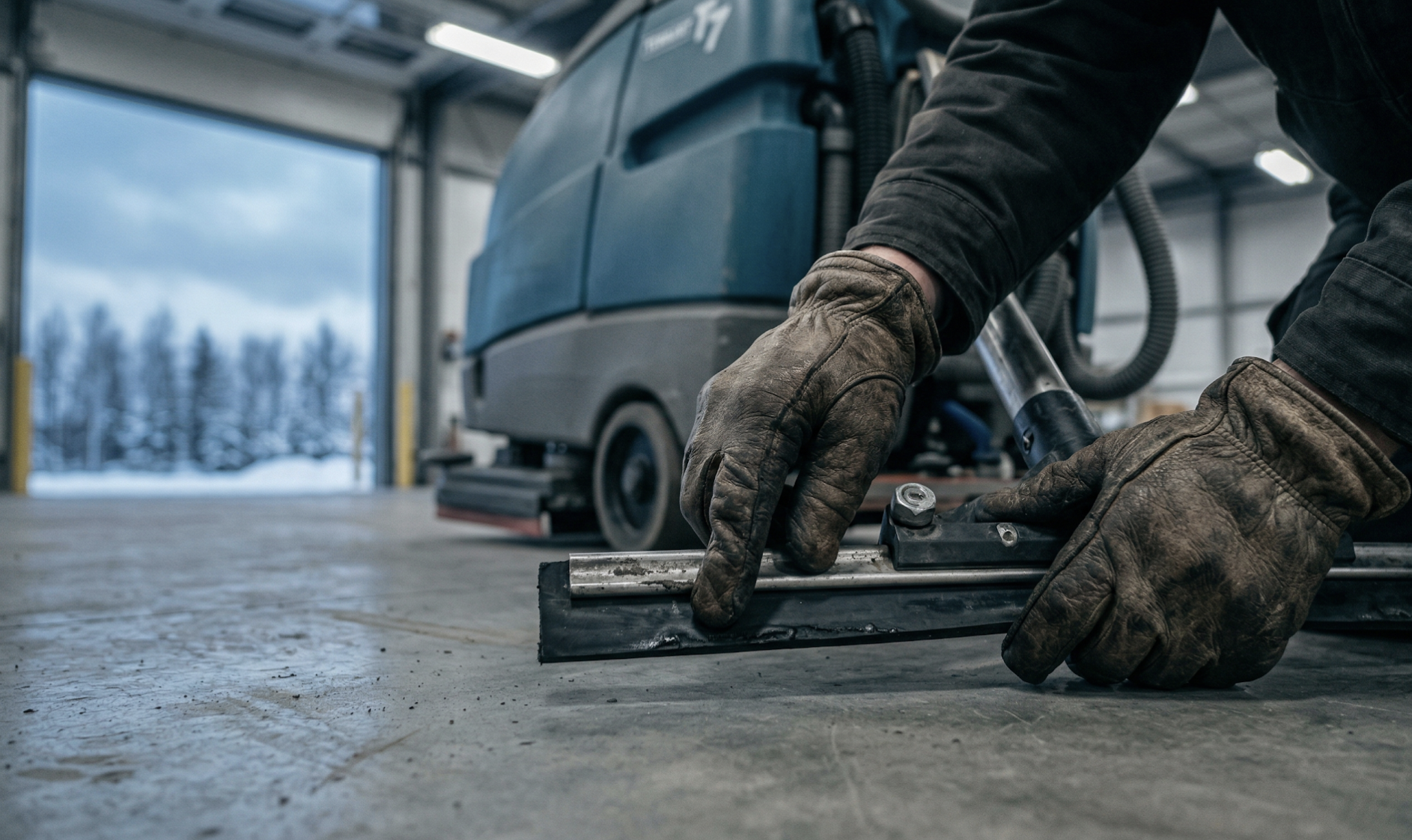
Salt crystals and coarse debris from winter floors are much harder on squeegee blades than typical indoor dirt. After each use, remove the squeegee assembly, flip it, and wipe both edges thoroughly with a clean rag. Debris trapped in the back edge causes streaking and skipping — issues that look like blade problems but are actually just buildup.
Check Blade Alignment and Pressure
A squeegee blade that isn't making full, even contact with the floor will leave water behind regardless of suction strength. If you're seeing streaks, wet tracks, or inconsistent pickup, check alignment before assuming the blade is worn. The blade should contact the floor evenly across its entire width. Adjust the down-pressure and angle per your machine's specifications.
Inspect Blades for Wear and Replace as Needed
Squeegee blades have two usable edges. When one edge wears out, flip the blade to use the other. Once both edges are worn, cracked, or torn, replace the blade entirely. Under regular use in a commercial or industrial setting, most blades need replacement every three months. In winter, with the added abrasion from ice melt granules and tracked-in grit, you may need to replace sooner.
Protect Brushes and Scrub Pads
Sweep Debris Before Scrubbing
Winter floors near entryways carry a heavy load of salt, sand, and moisture — much more than other seasons. Running your floor scrubber over that debris without a preliminary sweep accelerates wear on brushes and pads and increases the likelihood of clogging the recovery system. A quick pass with a dust mop or sweeper before scrubbing takes two minutes and extends the life of your equipment significantly.
Remove, Rinse, and Dry Brushes and Pads After Use
Leaving wet brushes or pads mounted on the machine between shifts allows chemical residue and debris to sit against the bristles or pad surface, accelerating breakdown. After each use, remove them, rinse off any cleaning solution or debris buildup, and let them dry completely before the next shift. This applies to carpet extractors as well — wet pads stored on the machine develop odor and mold quickly in winter conditions.
Inspect for Wear
Worn brushes don't just clean less effectively — they put additional strain on the motor, because the machine compensates for reduced scrubbing action by pressing harder. Check bristle length and stiffness regularly. If cleaning performance has dropped noticeably and your technique and chemical dilution haven't changed, the brushes are likely the culprit.
Empty the Debris Tray Consistently
Winter brings significantly more tracked-in material than any other season — salt, sand, gravel, and moisture all make their way in from outside, especially near entry mats and building entrances. A full debris tray creates back pressure in the vacuum system, reduces water pickup efficiency, and can cause blockages in the hose connecting the tray to the recovery tank. Empty the tray after every use. Don't wait for the machine to start performing poorly — by that point, you may already have a partial blockage to clear.
Proper Winter Storage When the Machine Won't Be Used for a While
Drain and Clean All Tanks
Never store cleaning equipment with water sitting in the tanks. Even a small amount of residual water can freeze and crack the tank wall or block a fitting. Drain completely, then wipe the interior with a dry cloth. Leave the tank caps off during storage to allow any remaining moisture to evaporate.
Remove or Maintain Batteries During Long-Term Storage
If your machine will sit unused for more than two weeks, either remove the battery and store it in a climate-controlled space, or put it on a maintenance charger to prevent deep discharge. A battery that drops to near-zero charge and sits there — especially in cold conditions — can suffer permanent capacity loss. Prevent damage before it happens.
Store on a Flat, Clean Surface
Keep the machine upright with the squeegee and pad driver raised off the floor to prevent flat spots and deformation. Store in a dust-free, temperature-controlled area if at all possible. Leave tank openings accessible to air-dry. Avoid covering the machine tightly with plastic sheeting, which traps moisture — use a breathable cover instead.
Winter Floor Cleaning Equipment Maintenance Checklist
Use this as a quick-reference guide at the end of every shift or week during the winter months:
After Every Use
- Drain both the solution tank and recovery tank completely
- Empty the debris tray
- Remove and rinse brushes and pads; let dry before remounting
- Clean the squeegee assembly; wipe both blade edges
- Charge the battery fully before the next shift
Weekly
- Inspect squeegee blades for wear; rotate or replace as needed
- Check hoses, fittings, and gaskets for cracks or leaks
- Inspect battery terminals for corrosion; check cable connections
- Top off wet cell batteries with distilled water (only when fully charged)
Monthly
- Flush the solution system with hot water and an approved alkaline detergent
- Inspect brush condition and replace if performance has declined
- Check suction system — hoses, filters, and float shut-off
Pre-Season (Before Winter Begins)
- Inspect both tanks for hairline cracks or residue buildup
- Verify equipment is stored in a temperature-controlled location
- Test suction and confirm the float shut-off filter is clear
- Confirm you have antifreeze on hand if cold storage is unavoidable
When to Call a Professional for Service
Most winter maintenance is straightforward and can be handled in-house. But some problems point to issues that go beyond routine upkeep:
- Persistent suction loss after you've cleared all visible blockages and confirmed the recovery tank lid is sealing — this may indicate a damaged motor or internal hose failure.
- Unusual sounds from the motor during operation, especially grinding or high-pitched whining, which can signal bearing wear or debris in the motor housing.
- Battery not holding charge after proper maintenance and a full charge cycle — if runtime has dropped significantly, the battery may need professional testing or replacement.
- Visible cracks in tanks that appear mid-season — these won't self-resolve and can compromise cleaning solution delivery and recovery.
If your machine is showing any of these signs, continued use risks making the problem worse and more expensive. PS Janitorial carries a full range of floor scrubber parts, floor scrubbers, and refurbished machines — and if your current equipment is nearing the end of its service life, our team can help you find the right replacement for your facility's needs. Reach out before a maintenance issue becomes a full replacement on an emergency timeline.