The Right Scrubbing Pattern for Your Facility Layout and Why It Matters
Choosing a scrubbing pattern is a decision, not an afterthought. A mismatched pattern wastes time, leaves dirty zones behind, and puts unnecessary wear on your equipment. This article walks facility managers through the main scrubbing patterns, how different layouts demand different approaches, and what variables should drive the final call.
Why Your Scrubbing Pattern Has a Direct Impact on Cleaning Results
Even the best floor scrubbers underperform when the operator follows the wrong path. The pattern you choose directly affects three outcomes: coverage consistency, time efficiency, and floor surface protection. Facility managers often blame the machine when the real issue is the route.
Common pain points like missed edge zones, water pooling in dead ends, and excessive overlapping passes are almost always a pattern problem, not an equipment problem. This matters across every type of operation: warehouses and logistics managers running high-traffic environments, retail space operators dealing with irregular floor plans, and healthcare facilities held to strict sanitation standards are all vulnerable to the same root cause. The cleaning process only produces clean floors consistently when the path is matched to the space.
The Most Common Scrubbing Patterns and When to Use Each
The Straight-Line (Lane) Pattern
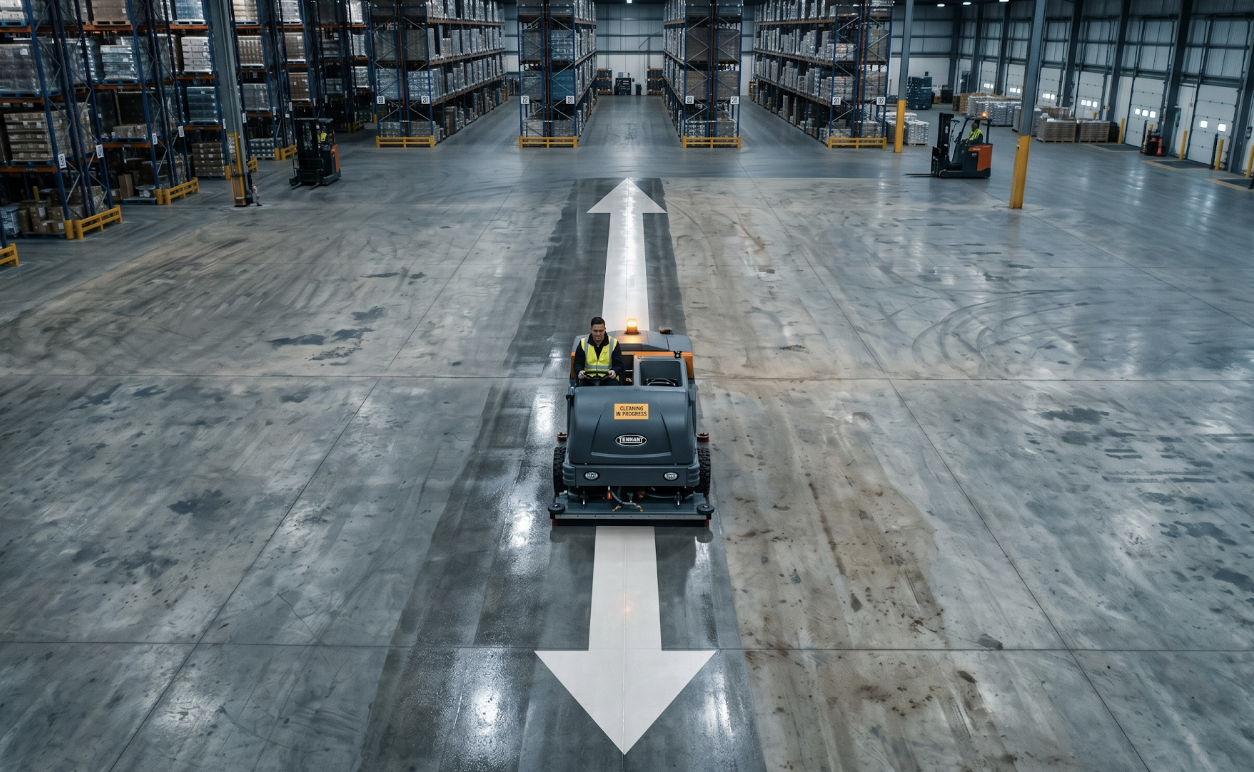
The straight-line pattern is the most widely used approach and works best in open, rectangular spaces with minimal obstacles. The operator moves in parallel lanes from one end of the floor to the other, overlapping each pass slightly to avoid leaving unclean strips between runs.
This pattern is ideal for warehouses, distribution centers, and large open retail floors. One important consideration is the turning radius required at the end of each lane. Ride on scrubbers need more room to complete the turn cleanly, while walk-behind models can reverse out of a lane if space is tight. Matching lane width to the machine's cleaning path width reduces the total number of passes and keeps the cleaning process efficient.
The Perimeter-First Pattern
The perimeter-first approach means running the edges and corners of the space before moving inward to the open center. This works well in facilities where walls, shelving units, or equipment racks create a defined boundary around the floor.
The key benefit is that dirty water and loosened grime from the edges does not get dragged into an area you have already cleaned. This pattern is commonly used in manufacturing floors, loading docks, and any space where edge buildup tends to be heavier than the center. It also ensures that the parts of the floor most prone to grease and debris accumulation are addressed before the main cleaning run begins.
The Figure-Eight or Loop Pattern
The loop or figure-eight pattern keeps the scrubber in continuous motion by following a path that curves back on itself rather than stopping and reversing at the end of each lane. This reduces wear on the squeegee from repeated stops and restarts, and it keeps cleaning solution distributed more evenly across the floor.
It works particularly well in facilities with long central corridors, such as hospital wings, hotel lobbies, and school hallways where the layout naturally encourages a flowing path. For industrial facilities with wide cleaning paths down main production corridors, the loop approach also supports equipment longevity by reducing the mechanical stress of repeated direction reversals.
The Zone-Based Pattern
Zone-based cleaning divides the facility into distinct sections and assigns the most appropriate pattern to each one. This is especially useful in mixed-use facilities where one area is a wide-open warehouse, another is a narrow parts aisle, and a third is a break room or entrance lobby.
Each zone gets cleaned according to its own layout and soil load rather than forcing a single pattern across an inconsistent floor plan. Zone-based cleaning also makes partial cleans during operating hours far more manageable since you can target specific sections without shutting down the entire floor. For facility managers responsible for larger commercial spaces with varied traffic patterns and contamination levels, this approach gives you the most control over cleaning frequency and resource allocation.
How Facility Layout Should Drive Your Pattern Choice
Open Warehouses and Distribution Centers
Wide aisles, minimal fixed obstacles, and high square footage are a strong match for the straight-line pattern paired with ride on scrubbers. The goal is to set your lane width to roughly match the scrubber's cleaning path width so you cover the floor in the fewest number of total passes.
Starting from the far end and working toward the exit also keeps you from driving the machine back over areas you have just cleaned. In logistics facilities where floor maintenance directly affects smooth operations, this kind of systematic approach also reduces the risk of wet floor hazards in active traffic zones. For a deeper look at which machines perform best in these environments, see our guide on the best floor machines for warehouse cleaning.
Manufacturing Floors with Fixed Equipment
Machinery bases, conveyor lines, and workstation clusters break up the floor plan in ways that make a pure straight-line pass impossible. A perimeter-first approach followed by a modified lane pattern between equipment runs is the most reliable method for cleaning around these obstacles without stopping mid-pass.
In most manufacturing environments, narrow-path walk-behind floor scrubbers are better suited to working around fixed equipment than ride on units, which need more clearance to maneuver. Forcing the wrong machine into these spaces creates missed zones, slows the cleaning process, and increases the risk of contact with fixed infrastructure.
Retail Spaces and Showrooms
Display fixtures, shelving gondolas, and service stations create irregular zones that break up any single pattern. A zone-based approach works best in retail space environments, treating each section of the floor as its own cleaning unit.
Heavily trafficked entrance areas often need to be cleaned more frequently and with more care than low-traffic display zones, so separating them in your plan saves both time and cleaning solution on lower-priority sections. Cleaning frequency should reflect actual foot traffic rather than a uniform schedule applied across the entire footprint.
Healthcare Facilities and Institutional Buildings
Long corridor-heavy layouts are a natural fit for loop or figure-eight patterns that keep the machine moving without constant direction changes. Strict hygiene standards in healthcare facilities mean thorough edge cleaning is non-negotiable, so the perimeter of each corridor section should be addressed before the center run.
The correct cleaning solution and consistent overlap between passes are especially important here since leaving any unclean strip on a healthcare floor carries real sanitation consequences. In these environments, cleaning performance is not just a maintenance metric; it directly affects air quality and infection control outcomes. Every pass needs to be executed with attention to detail rather than speed.
Narrow-Aisle Environments
Parts storage facilities, cold storage warehouses, and library stacks often have aisles too narrow for a standard scrubber to complete a turn at the end of each run. In these cases, the straight-line pattern needs to be adapted: clean each aisle individually and back the machine out rather than attempting to turn.
Walk-behind scrubbers are almost always the correct tool in these environments. Attempting to force a ride on scrubber into narrow aisles leads to missed edges, damaged racking, and slower overall cleaning times. Selecting the right specialized equipment for the space is not optional; it is a prerequisite for any pattern to work correctly.
Key Variables That Affect Which Pattern Works Best for Your Space
Scrubber Type: Walk-Behind vs. Ride-On
Walk-behind units offer tighter maneuverability and are the right call for cramped or obstacle-heavy layouts. Ride on scrubbers cover ground faster but need adequate turning space at the end of each lane to execute any lane-based pattern properly.
When the wrong machine is matched to the space, operators improvise patterns that create missed spots, extend cleaning time, and produce inconsistent results across the floor. Understanding how walk-behind floor scrubbers work and how they differ from ride-on units is one of the most practical steps you can take before committing to a machine for a specific layout.
Aisle Width and Turning Radius
Turning radius is a hard constraint on pattern selection. If the available space at the end of a lane does not allow the machine to complete a clean turn, either the pattern needs to change or a different machine is needed. Attempting to force a turn in too-tight a space results in missed strips along the wall and potential damage to the squeegee assembly or brush deck.
Foot Traffic Patterns and Peak Hours
High-traffic zones like shipping lanes, loading docks, and entrance corridors should be prioritized at the start of the cleaning run. Building your pattern around how people and equipment actually move through the space means cleaned areas have the best chance of staying clean long enough to dry before being re-entered.
Cleaning against the flow of traffic movement leads to floors being walked on before they are dry and forces re-cleaning of the same zones. In high traffic environments, pattern sequencing is just as important as pattern selection.
Floor Surface Type and Condition
Concrete, epoxy-coated floors, ceramic tile, and rubber flooring each respond differently to scrubbing pressure, cleaning solution concentration, and pass speed. A pattern that works well on sealed epoxy may need to be slowed down significantly on uncoated concrete to give the solution enough dwell time to break down embedded grime.
Always factor the surface type into both your pattern speed and the number of passes planned for each zone. Cleaning operations that treat all surfaces identically tend to either underclean porous or rough floors or waste solution on surfaces that need less attention.
Debris Type and Soil Load
Heavy grease, fine dust, and food residue each require different solution strengths and scrubbing speeds. Rather than applying a single soil load assumption across the entire floor, zone your cleaning plan around where contamination is actually heaviest.
A single pass at standard speed may be sufficient in low-traffic storage areas while high-contamination zones near loading docks or production lines may need a slower pass or a second run to reach an acceptable result. Loose debris that was not swept before the scrubbing run also compromises cleaning quality, clogs brushes, and reduces cleaning performance regardless of how well-chosen the pattern is.
Preparing the Floor Before You Start the Pattern
No scrubbing pattern performs well on a floor that has not been properly prepared. Loose debris clogs brushes, scatters under the machine, and reduces cleaning quality regardless of how methodical the path is.
Before any scrubbing run, the floor should be swept or vacuumed to remove surface debris, any heavily soiled spots should be pre-treated, and obstacles like pallet jacks, carts, or loose materials should be cleared from the path. A well-prepared floor lets the scrubber do its job rather than spending brush capacity on material a broom could have handled in minutes. In industrial facilities where production activity continuously generates loose debris, this prep step is not optional; it is part of the cleaning process itself. For a broader overview of what these machines are actually doing during each pass, our article on what a scrubber machine does breaks down the full mechanical process.
Operator Habits That Undermine Even a Good Pattern
The pattern only performs as well as the operator executing it. The most common execution errors are skipping overlapping passes to save time, rushing through edge zones, failing to adjust scrubber settings when moving between zones with different soil loads, and not checking that the squeegee is picking up water cleanly.
Moving too quickly or applying incorrect brush pressure compromises cleaning quality and accelerates component wear. If an operator is consistently finishing faster than expected, it is often a sign that corners are being cut rather than that the floor is genuinely cleaner. Our tips for using floor scrubbers covers these operational details in depth, including speed settings, pad pressure, and after-use maintenance steps that directly affect how well the machine performs on the next run. Consistent oversight of operator technique is part of what separates facilities with reliable cleaning performance from those dealing with recurring floor maintenance issues.
Building a Cleaning Schedule Around Your Pattern
Establishing a consistent floor scrubbing schedule based on foot traffic levels, floor type, and seasonal conditions is essential for long-term floor maintenance. The schedule should be built around zones, with higher-traffic areas scrubbed more frequently than low-use storage sections.
During winter months or periods of heavy outdoor debris tracking, increase the cleaning frequency for entrance areas and main corridors. Regular light cleaning on a reliable schedule consistently outperforms occasional intensive deep cleaning when it comes to preserving floor surface condition and keeping safety hazards under control. For facility managers overseeing multiple zones with different use patterns, a zone-driven schedule also makes it easier to allocate resources, track what has been cleaned, and identify areas where more frequent cleaning is needed before problems develop.
The right scrubbing pattern for your facility layout and why it matters comes down to one principle: the decision should be driven by the space, not by habit or convenience. Match the pattern to the layout, the machine to the aisle, and the schedule to actual traffic, and your floor scrubbers will deliver consistent results across every zone you maintain.