
What Causes Foam In A Floor Scrubber Tank?
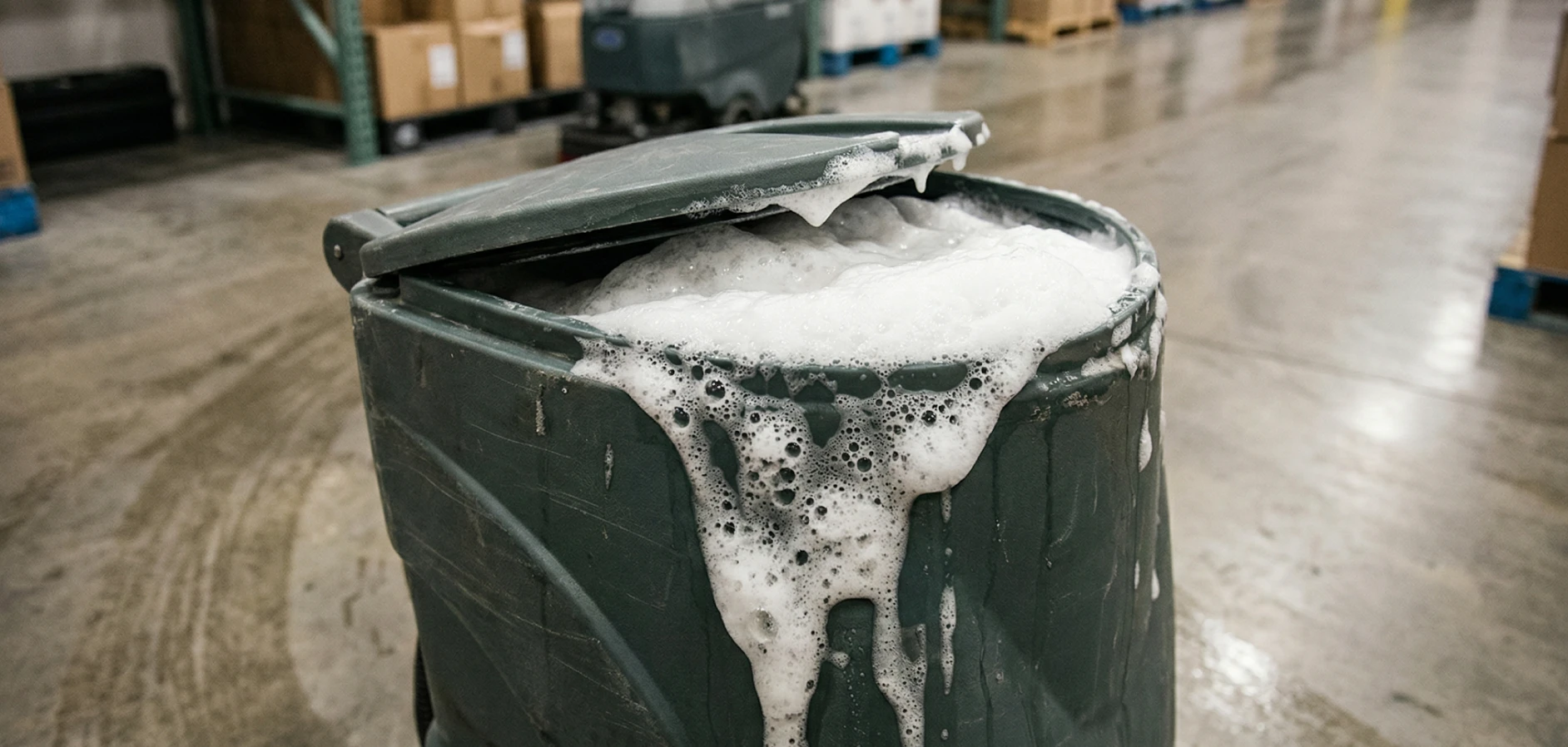
What Is Foam in a Floor Scrubber Tank — and Why Does It Matter?
If you've ever popped the lid on your floor scrubber's recovery tank and found it packed with suds instead of dirty water, you already know something is off. A thin layer of foam sitting on top of the recovered water is perfectly normal — it's a byproduct of the cleaning process, and it tells you the machine is doing its job. But when foam starts taking over the tank, overflowing into hoses, or cutting off suction mid-job, that's a warning sign you shouldn't ignore.
To understand why foam is a problem, it helps to know how a floor scrubber is laid out. Your machine has two separate tanks: the solution tank, which holds the mix of clean water and detergent that gets dispensed onto the floor, and the recovery tank, which vacuums up the dirty water, debris, and spent cleaning solution left behind. These systems are meant to stay separate. Foam forms when surfactant-laden water enters the recovery tank and agitates — and if it builds up fast enough, it can travel places it was never meant to go, including straight into your vacuum motor. That's where a nuisance becomes an expensive repair.
The Most Common Causes of Foam in a Floor Scrubber Tank
Using Too Much Detergent
More soap does not mean a better clean — it means more foam, more residue, and more waste. Excessive detergent usage is the single most common cause of foam buildup in the recovery tank, and it almost always comes down to an operator eyeballing the amount rather than measuring it. There's a persistent assumption that a heavily foaming solution tank means the chemical is working harder, but suds have nothing to do with cleaning power. The actual work is done by the detergent's active ingredients reacting with soil — not by the volume of bubbles you can see.
Most floor scrubber detergents are designed to be diluted at ratios anywhere from 1:32 to 1:128 depending on the product and soil level. Overdosing at even 1.5x the recommended amount can dramatically increase surface tension interactions in the recovery tank, turning recovered dirty water into a foaming mess within minutes.
Using the Wrong Type of Detergent
Not every cleaning solution belongs in a floor scrubber. General-purpose soaps, dish soaps, mop bucket cleaners, and household detergents are formulated with high concentrations of surfactants designed to produce visible lather — because consumers associate foam with effectiveness. That's fine in a mop bucket or a sink. In an auto scrubber, it's a serious problem.
Scrubber-specific detergents are engineered with low-foaming surfactant profiles that clean effectively without overwhelming the recovery system. If someone grabbed a bottle of whatever was under the janitorial closet shelf and poured it in the solution tank, that's likely your culprit. Cleaning products that aren't rated for use in auto scrubbers should never go into the solution tank, full stop.
Adding Water in the Wrong Order
This one catches a lot of operators off guard because it seems like a small detail. If you add detergent to the solution tank first and then pour water on top of it, the incoming stream agitates the concentrated soap and starts creating foam before the machine has even touched the floor. You're essentially giving the detergent a head start at doing exactly what you don't want it to do.
The correct method is simple: water first, detergent second. Pouring detergent gently into an already-filled tank minimizes agitation and keeps start up foam from forming inside the solution tank from the moment you begin.
Detergent Residue Buildup in the Tank
Even when operators follow the correct dilution and use the right product, foam can still appear if the recovery tank isn't being rinsed out properly after each use. Detergent residue left to dry on the interior walls of the tank doesn't just sit there harmlessly — it reactivates the next time water hits it. What this means in practice is that the residue from yesterday's job becomes an additional, unintended chemical dose in today's session, compounding with the fresh detergent you just added.
Over multiple cleaning sessions without proper rinsing, this creates a cumulative foam buildup effect. Operators who follow every instruction correctly may still see foam simply because the tank hasn't been cleaned thoroughly in weeks. Regular maintenance of the recovery tank interior isn't optional — it's part of the machine's routine.
Dirty or Pre-Soaped Floors
Sometimes the foam has nothing to do with what you put in the machine. Floors that were previously mopped with high-foaming household cleaners, or rubber and porous tile surfaces that have absorbed detergent over months of repeated mopping, can release surfactants back into the water during scrubbing. That liberated soap gets vacuumed directly into the recovery tank, where the agitation of the suction system causes it to foam.
This is especially common in facilities that recently switched from traditional mopping to a floor scrubber. The machine is essentially pulling up years of chemical residue that mopping never fully rinsed away — and the recovery tank pays the price.
Surfactants from Cleaning Products on the Floor
Beyond soap residue from mopping, floors in commercial environments often have traces of other cleaning products on their surface — degreasers, strippers, waxes, and floor finishes all contain surfactants that lower surface tension and can generate foam when they enter your recovery system. This type of surfactant foam tends to be light, white, and fine-bubbled, similar in appearance to dish soap suds. If you've just stripped a floor or applied a new coat of finish and then run the scrubber shortly after, foaming occurs even though your dilution and detergent type are both correct.
Why Excess Foam in the Recovery Tank Is Dangerous
Damage to the Vacuum Motor
The vacuum motor is the most expensive single component in most floor scrubbers. It's designed to move air — not liquid, and certainly not foam. Most machines include a float safety mechanism positioned inside the recovery tank that's supposed to cut power to the vacuum before liquid can reach the motor. The problem is that foam rises much faster than water, and it's light enough to travel further before tripping the float. In cases of severe foam buildup, the foam can bypass the float entirely and enter the vacuum motor directly. Once foam reaches the motor, moisture damage sets in quickly, and the result is typically a failed motor that needs to be replaced rather than repaired. If you're already dealing with motor issues, PS Janitorial's repair and parts services can help you get back up and running.
Triggering the Float Shutoff Too Early
Even when foam doesn't reach the motor, it creates a separate operational problem. The float mechanism — often a simple ping-pong ball style assembly — can't distinguish between actual water level and foam volume. As foam fills the recovery tank, the float rises as if the tank were full and cuts off suction, even though there may be very little actual liquid in the tank. For operators, this means stopping every few minutes to empty a tank that's barely a quarter full of dirty water, drastically slowing down the cleaning process and extending job time.
Reduced Cleaning Performance
When suction gets interrupted or weakened by foam, the machine stops picking up water efficiently. Dirty water stays on the floor longer, leading to wet streaking, residue trails, and floors that don't look clean after a pass. If you're leaving wet floors behind or seeing squeegee lines on a surface that should be dry, foam interference is one of the first things to check. The scrubber can't do its job if the recovery side of the system is compromised.
How to Prevent Foam in a Floor Scrubber Tank
Always Use a Low-Foam Detergent Designed for Floor Scrubbers
When evaluating a detergent, look specifically for language like "low-foam," "auto scrubber formula," or "formulated for automatic scrubbers" on the label. These products are engineered with surfactant packages designed to clean effectively at the concentrations used in a scrubber while producing minimal foam in the recovery tank. If a product doesn't mention auto scrubbers anywhere on its label, it likely wasn't designed with recovery tank dynamics in mind — and it may behave unpredictably once it's being vacuumed back up at high velocity.
Follow the Manufacturer's Dilution Ratio
The dilution ratio printed on your detergent isn't a suggestion — it's the result of the manufacturer's testing at different concentrations, soil levels, and water hardness conditions. Using less detergent than recommended can underperform on tough soils; using more doesn't improve results and directly increases foam risk. When in doubt, err on the side of less detergent rather than more. A clean floor achieved with a precise, correct dose is always better than a foamy tank achieved with an overdose.
Fill the Solution Tank Correctly (Water First, Then Detergent)
Make water-first filling a non-negotiable habit for everyone who operates the machine. It takes the same amount of time as the wrong method and costs nothing extra — but it prevents foam from forming inside the solution tank before a single pass has been made. Post a reminder near the fill area if you have multiple operators using the same machine.
Add a Defoamer to the Recovery Tank
An industrial defoamer — a few ounces added directly to the recovery tank before you start — is one of the easiest ways to proactively control foam, especially on floors with heavy soil loads, high surfactant contamination, or if you're operating a ride-on floor scrubber where greater agitation during movement tends to amplify the problem. Defoamers work by disrupting the surface tension of foam bubbles, collapsing them before they can accumulate. They're inexpensive, widely available, and worth keeping on the cart as a standard item.
Clean and Rinse the Recovery Tank After Every Use
After each job, empty the recovery tank completely, then rinse the interior with clean water before storing the machine. For tanks with stubborn wax residue or heavy buildup from extended use without cleaning, a solution of diluted ammonia and water can help break down accumulated film. Don't stop at the tank itself — rinse the recovery hoses, clean the float assembly, check the vacuum filter for debris, and wipe down the squeegee blades. If any components are worn or damaged during this process, replacement parts are available for most major brands including Tennant and NSS. A complete post-use rinse routine is the most reliable way to prevent residue from compounding into a recurring foam problem.
Pre-Sweep or Pre-Clean Heavily Soiled Floors
If you're working on a floor that has significant soil buildup, surfactant contamination from prior cleaning products, or a history of high-foam mopping chemicals, consider doing a first pass with the squeegee raised and suction turned off, or run a dry sweep before scrubbing. This removes loose debris and some surface-level chemical residue before the scrubber's recovery system has to deal with it. On floors where foaming occurs consistently despite correct detergent use, this prep step can make a noticeable difference in how the recovery tank behaves during the actual scrub pass.
Foam vs. Normal Dirty Water: How to Tell the Difference
Knowing what's acceptable versus what's a problem saves you from unnecessary stops — and from ignoring something that genuinely needs attention. A thin layer of small bubbles sitting on the surface of otherwise liquid, murky dirty water in the recovery tank is normal. That light foam is just the byproduct of dirty, surfactant-containing water being vacuumed at speed, and it will dissipate quickly when the machine stops.
What's not normal: foam that fills a significant portion of the tank volume, foam that's visible at hose connections or around the recovery tank lid, suction that cuts out early with a tank that's less than half full of actual liquid, or foam that's dense, white, and persistent rather than thin and transient. If the foam looks more like a wash tank at a car wash than a light surface froth, it's time to stop and address the cause rather than push through the job.
Keep Your Floor Scrubber Running Clean — and Running Long
Foam in a floor scrubber tank almost always traces back to the same root cause: detergent. Too much of it, the wrong kind, or leftover residue that wasn't rinsed out after the last job. The good news is that all of those causes are completely preventable with a few consistent habits — using a low-foam detergent rated for auto scrubbers, following the dilution ratio on the label, filling the solution tank water-first, and rinsing out the recovery tank after every single use.
Add a defoamer to your supply kit for high-demand jobs, and pre-sweep heavily soiled floors before scrubbing. These steps require almost no extra time, cost very little, and protect the vacuum motor — the most expensive component on the machine — from the kind of moisture damage that foam buildup causes. Smooth operation over the long haul isn't complicated. It just takes the right products and a consistent routine.
If your machine is already showing signs of wear from repeated foam damage, or you're overdue for a tune-up, PS Janitorial carries floor scrubber parts, repair services, and a full inventory of new and refurbished machines to keep your operation running at full capacity.