What Do Professionals Use to Clean Floors?
Professionals use a combination of commercial grade equipment and cleaning solutions matched to the specific floor surface, along with a consistent cleaning routine that most homeowners never think to follow. Auto scrubbers, floor buffers and burnishers, and commercial vacuums do the heavy lifting, while pH balanced cleaning solutions protect the finish underneath.
If you manage a facility with hardwood floors, tile floors, laminate floors, or large stretches of concrete, understanding what professional cleaners actually rely on can help you get closer to that same result.
This page breaks down the equipment, the chemicals, and the techniques that separate a quick pass with a mop from a true professional floor cleaning routine, using the same lineup of machines you will find across PS Janitorial's full catalog.
What Do Professionals Use to Clean Floors? (Quick Answer)
Professional cleaners rely on five core categories of tools: automatic floor scrubbers for large open areas, floor buffers and burnishers for shine and finish restoration, commercial vacuum cleaners for removing loose dirt before any wet cleaning begins, microfiber mop systems for daily maintenance, and cleaning solutions chosen to match the pH needs of each floor type.
Each tool has a specific job, and skipping one step in that lineup is usually what causes streaking, dulling, or premature wear on a floor.
Professional Floor Cleaning Equipment
Unlike the spray bottle and mop head you might reach for at home, commercial floor care depends on purpose built machines that cover far more square footage, apply consistent pressure across every pass, and pull soil out of floor surfaces that a wet mop simply cannot lift on its own.
Training and maintenance matter just as much as the machine itself, since even the best equipment underperforms in untrained hands.
Automatic Floor Scrubbers
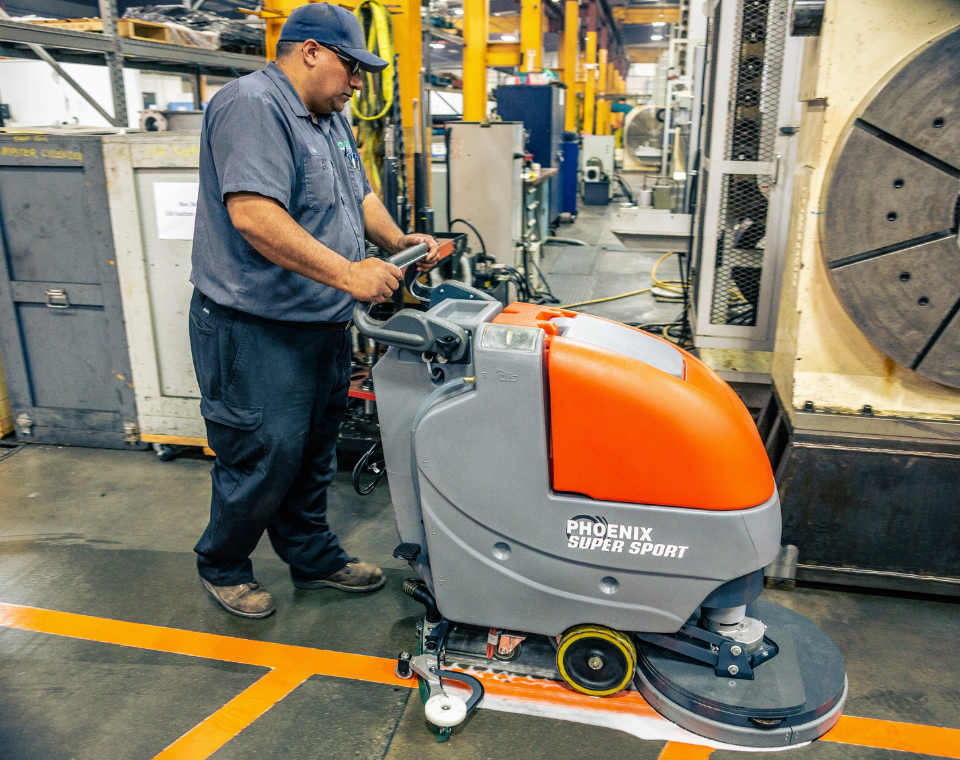
Automatic scrubbers apply cleaning solution, agitate it with rotating brushes or pads, and vacuum up the dirty water in a single pass, which is why professionals reach for them in warehouses, retail stores, and schools instead of a bucket and string mop.
This one pass efficiency is what allows a single operator to clean thousands of square feet in a shift. Browse PS Janitorial's floor scrubbers to see the walk behind and ride on models used across these facility types.
Floor Buffers and Burnishers
A floor buffer runs at a lower speed and is used with a wet cleaning solution for scrubbing, polishing, and stripping old finish, while a burnisher spins at a much higher speed and is used dry to bring an existing finish up to a high gloss shine.
Buffers typically run in the low hundreds of RPM for scrubbing and stripping work, while burnishers can exceed 1,500 RPM to produce that mirror like finish. VCT and terrazzo floors are the classic use case for burnishing, since both surfaces hold a polish exceptionally well once the right pad speed is dialed in. See PS Janitorial's floor buffers and burnishers for both wet scrubbing and dry polishing machines.
Commercial Vacuums and Sweepers
Removing loose dirt before any wet cleaning begins is one of the most consistent habits among professional cleaners, since wet mopping over dry soil just turns grit into an abrasive paste that scratches the floor surface.
Backpack vacuums cover carpeted transition areas quickly, wide area vacuums handle open hard floors, and walk behind floor sweepers pick up loose debris across warehouse and retail aisles before a scrubber ever touches the ground.
Microfiber Mops and Flat Mop Systems
Flat head microfiber mop systems have mostly replaced the traditional string mop and bucket in commercial settings, and for good reason. Microfiber mop pads trap dust, hair, and microscopic dirt more effectively than cotton string ever could, they use less cleaning solution per pass, and the pads are removable and washable rather than disposable.
This matters most on water sensitive floors like hardwood and laminate, where a barely damp mop protects the finish that a soaking wet mop would damage. A dual bucket mop wringer, which keeps clean solution separate from the dirty water coming off the floor, is a small detail that keeps a whole facility from being cleaned with increasingly dirty water.
Steam Cleaners
Steam mops and steam cleaners sanitize while they clean, which makes them a strong choice for tile and grout lines that trap bacteria and grime deep in the surface. High heat kills most common pathogens without leaving a chemical residue behind, which is valuable in food service and healthcare settings. Steam is not appropriate everywhere though.
Sealed hardwood floors and some laminate floors can warp or cloud under sustained heat and moisture, so professionals reserve steam for ceramic tile floors, natural stone tile, and grout rather than every surface in a building.
Professional Grade Floor Cleaning Solutions
A one size fits all household cleaner is rarely part of a professional cleaning routine. Instead, cleaning solutions must match the specific flooring material for effectiveness, since the wrong pH can strip a finish, dull a polish, or leave mineral deposits behind.
Professional cleaning solutions also tend to be more concentrated than what you find on a retail shelf, which changes both the results and the dilution instructions.
Neutral pH Cleaners
Professional cleaners use pH neutral cleaners for daily maintenance of sealed hardwood floors, VCT, and other finished floors, since a neutral formula cleans without slowly breaking down the protective coating on top.
This is the same category that covers polyurethane finished hardwood floors, where preserving that top layer is the entire point of routine cleaning.
Alkaline Degreasers
Concrete floors, warehouse surfaces, and kitchens dealing with heavy grease buildup call for an alkaline degreaser instead of a neutral formula.
These stronger solutions cut through grease and ground in grime that a gentler cleaner would barely touch, and they are a staple in industrial and food service settings where floor surfaces take a beating every shift.
Disinfectants and Sanitizers
Healthcare facilities, food service kitchens, and schools rely on EPA registered disinfectants, and the technical detail that separates this from home cleaning is dwell time.
A disinfectant has to remain wet on the surface for a specific number of minutes to actually kill bacteria and viruses in high traffic areas, and wiping it up too soon leaves the job only partially done. Hospital grade disinfectants are formulated specifically around this requirement.
Floor Finishes, Sealers, and Wax
Applying a floor finish or wax is only half the process. Once the coating is down, a buffer or burnisher has to bring it to full shine, which is why finish application and floor machines are really two halves of the same job.
Stripping and recoating, meaning the full removal of an old finish with a floor stripping machine before a new coat goes down, is the periodic deep clean that keeps floors shining well after routine mopping stops making a visible difference.
How Professionals Clean Different Floor Types
The type of flooring in a building dictates almost every decision that follows, from the cleaning solution on the cart to the mop head in the bucket. Professional cleaners rarely use the same process across different types of flooring in the same building.
VCT and Vinyl Flooring
VCT holds up well to a full strip and wax cycle, followed by routine auto scrubbing between deep cleans and periodic burnishing to keep the gloss looking fresh. This cycle is one of the more predictable maintenance routines in commercial floor care, which is part of why VCT remains common in schools and retail spaces.
Concrete and Epoxy Floors
Concrete and epoxy floors call for a degreasing solution paired with an auto scrubber running a stiffer pad, since these surfaces see more grease, oil, and heavy foot or forklift traffic than almost any other floor type. This is exactly the setting where PS Janitorial's warehouse and industrial customers spend most of their floor care budget.
Hardwood Floors
Hardwood floors need a neutral pH cleaner and a barely damp microfiber mop, never standing water. Excess water and excess moisture are the two things most likely to warp boards or cloud a polyurethane finish, so professional cleaners wring the mop head almost dry before it ever touches wood.
A quality mop head, like the kind found on a Libman Wonder Mop, still needs to be paired with the right cleaning solution to avoid leaving a dull film behind.
Tile and Grout
Tile floors clean up well with hot water and a mild soap for routine maintenance, while steam or an alkaline cleaner tackles grout lines that have collected months of dirt and grime.
Natural stone flooring needs extra caution here, since acidic cleaners can etch stone surfaces, so sealant reapplication on a regular schedule protects natural stone tile the way a finish protects hardwood.
The Professional Floor Cleaning Process, Step by Step
- Sweep or dry mop the area to remove loose dirt before any liquid touches the floor.
- Pretreat any tough stains or areas with heavier dirt and grime buildup.
- Scrub the floor using the cleaning solution and equipment matched to that specific floor surface.
- Rinse or extract the dirty solution rather than letting it sit and dry into the floor.
- Dry the floor fully to prevent slip hazards and mineral deposits from forming.
- Buff or burnish if the floor type and finish call for that final step.
Techniques That Set Professional Cleaning Apart
Equipment alone does not guarantee a spotless result. The technique behind how that equipment gets used is just as much a part of a professional cleaning routine as the machines themselves.
Zone Cleaning
Professionals typically work in sections, or zones, rather than cleaning an entire floor in one continuous pass. Working zone by zone keeps the cleaning solution at consistent strength, prevents any one area from drying before it gets addressed, and keeps coverage even across the whole space.
Dry Soil Removal Before Wet Cleaning
Skipping the dry vacuum or dry mop step before wet cleaning is one of the most common mistakes in floor care, professional or otherwise. Loose dirt that gets pushed around by a wet mop instead of removed first turns into a gritty paste that can scratch laminate floors, hardwood, and other soft surfaces.
Correct Dwell and Dry Time
Rushing the rinse or dry stage causes streaking, leaves a hazy film behind, and creates a genuine slip hazard in commercial spaces with heavy foot traffic.
Giving a cleaning solution its full dwell time and a floor its full dry time before reopening the area to traffic is a commercial specific concern that goes well beyond anything a home cleaning routine has to consider.
Choosing the Right Commercial Equipment for Your Facility
Matching equipment to your facility starts with three questions: how much square footage needs coverage, what floor surfaces are involved, and how much traffic that space sees in a given day.
A small office might only need a compact scrubber and a battery powered buffer, while a warehouse with concrete floors and daily forklift traffic needs a wider scrub path, a higher capacity vacuum, and a burnisher built for constant use rather than occasional touch ups. Getting this match right the first time saves you from replacing undersized equipment within a year of buying it.
Frequently Asked Questions
What do janitors use to clean floors?
Janitors typically use a combination of automatic scrubbers, buffers or burnishers, commercial vacuums, and microfiber mop systems, paired with cleaning solutions matched to the floor type they are working on.
What is the best commercial floor cleaner for tile?
A neutral cleaner works well for routine tile cleaning, while an alkaline solution or steam cleaner handles grout lines and stubborn stains that build up over time.
Do professionals use bleach on floors?
Bleach has a place on sealed tile and some concrete surfaces where disinfection matters most, but professionals avoid it on natural stone, hardwood, and many laminate floors, since it can discolor or damage those surfaces over time.
How often should commercial floors be scrubbed?
High traffic areas often need daily scrubbing, while lower traffic spaces can go several days between full scrubs, with dry vacuuming and spot cleaning of minor spills handled in between.
Shop Professional Floor Cleaning Equipment
If your current cleaning routine relies on a mop and a spray bottle, the equipment covered on this page is the next step toward a facility that consistently looks professionally maintained. PS Janitorial carries floor scrubbers and floor buffers and burnishers built for the exact floor types and facility sizes covered above, so you can put together the right tools for your space.