What Is Brush Pressure and Why It Matters More Than You Think
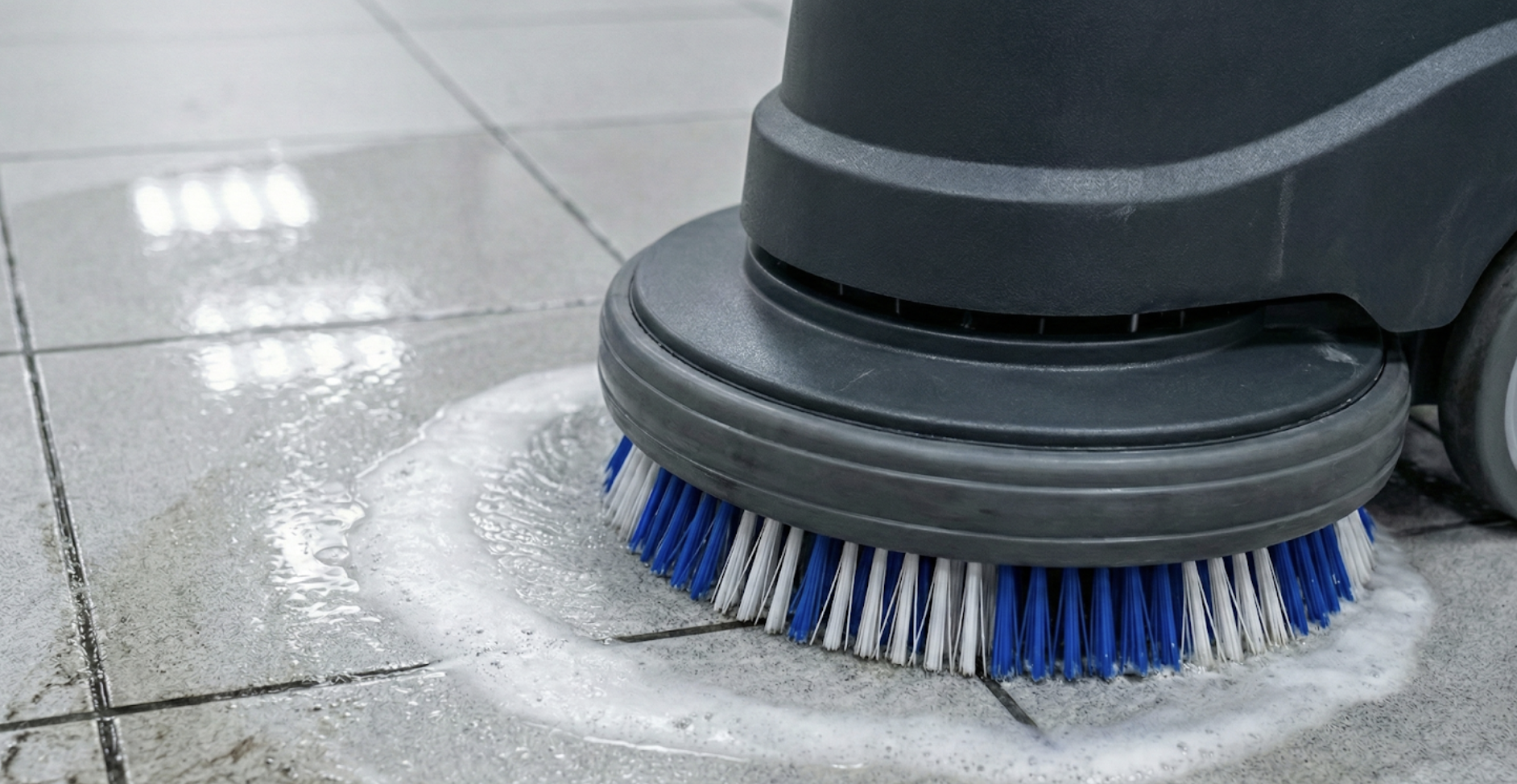
When facility managers and cleaning professionals talk about floor care equipment, conversations tend to center on machine size, battery life, or tank capacity. Brush pressure rarely makes the headline — but it should. Whether you're operating a floor scrubber in a commercial kitchen or buffing a hospital corridor, brush pressure is one of the single most impactful variables determining your cleaning results, your floor's lifespan, and your operating costs.
Here's what you need to know.
What Is Brush Pressure?
Brush pressure — sometimes called "down pressure" — refers to the amount of force a floor machine's brush or pad presses against the floor surface during operation. It's typically measured in pounds (lbs) and can range from as little as 50 lbs on lighter consumer-grade buffers to over 200 lbs on heavy-duty industrial scrubbers.
On most modern floor scrubbers and auto-scrubbers, brush pressure is either fixed by the machine's weight distribution or adjustable via a manual or electronic control system. On floor buffers and burnishers, the deck weight and handle angle both influence how much pressure reaches the floor.
In short: brush pressure determines how hard the cleaning tool works against your surface.
Why Brush Pressure Matters
- Cleaning Effectiveness
- Too little pressure and the brush skims the surface without fully agitating embedded dirt — especially in textured, porous, or grouted floors. Too much pressure can cause the brush to "hydroplane" instead of making proper contact. The right pressure creates optimal friction between bristles and floor to loosen and lift contamination.
- Floor Surface Compatibility
- Different floors have different tolerances for abrasion. Excessive pressure can scratch, wear, and damage softer/coated floors. Match pressure to your floor type for preventative maintenance.
- Brush and Pad Wear
- Too much pressure degrades brushes and pads faster, increasing costs. Too little means more passes and more labor. The right pressure extends consumable life and reduces costs.
- Motor and Machine Strain
- Higher pressure means more resistance, which strains your equipment and shortens its lifespan.
- Operator Safety and Ergonomics
- Too much pressure can make machines harder to control, tiring the operator and creating safety risks.
How to Determine the Right Brush Pressure
There's no universal setting. The right brush pressure depends on:
- Floor Type — Harder surfaces can handle more pressure; softer or coated surfaces may be damaged by too much.
- Soil Level — Heavier soils require more pressure; lighter soils need less.
- Brush or Pad Type — Aggressive brushes and stiff bristles combined with high pressure can quickly damage a floor. Softer pads require less pressure.
General rule: Start low, check your results, and increase gradually as needed. You're looking for effective soil removal without surface damage or excessive foam (a sign of over-scrubbing).
Brush Pressure by Equipment Type
- Floor Scrubbers — Most professional-grade scrubbers offer adjustable pressure (50–180 lbs). For daily maintenance on VCT or smooth concrete, 80–120 lbs is common. Heavy-duty cleaning may call for more.
- Floor Buffers — Single-disc buffers rely on machine weight and operator technique. Tipping the handle forward increases pressure.
- Auto-Scrubbers — Many models allow preset pressure settings for consistent results among staff.
- Floor Burnishers — High-speed machines are sensitive to pressure. Their job is to restore finish, not scrub; excess pressure can burn or streak.
Common Brush Pressure Mistakes to Avoid
- Defaulting to maximum pressure. More pressure is not always better and often just wears out equipment faster.
- Ignoring the floor type. Always consult the manufacturers’ guidelines and operator manual before setting pressure.
- Setting it and forgetting it. Adjust your brush pressure when changing floor types, chemicals, brushes/pads, or soil conditions.
- Compensating for worn brushes with more pressure. Replace worn brushes; increased pressure only speeds up wear elsewhere.
Ready to Get the Right Machine for the Job?
Brush pressure is a foundational variable in professional floor care — one that directly affects cleaning quality, surface integrity, equipment longevity, and your bottom line. Understanding and properly controlling it separates reactive cleaning from proactive, professional maintenance.
At PS Janitorial, we carry a full range of floor scrubbers, floor buffers, and floor burnishers built for professional performance. Our team can help you match the right equipment — with the right pressure capabilities — to your specific facility and floor type.
Looking for professional-grade performance on a budget? Check out our refurbished and used floor machines — thoroughly inspected, field-ready, and available at a fraction of the cost of new equipment.
Have questions about which machine is right for your application? Contact us today or browse our full equipment lineup.