What To Look For When Buying A Used Commercial Floor Scrubber
A used commercial floor scrubber can cut your equipment cost by 40 to 60 percent. It can also turn into a $6,000 machine parked in a supply closet with a dead battery pack, a cracked recovery tank, and no parts source. The difference between those two outcomes is almost never the brand on the hood. It is whether the machine was properly inspected, serviced, and rebuilt before it was sold to you.
If you manage a facility, run a building service contractor crew, oversee warehouse operations, handle custodial work for a school district, maintain a church campus, or run a small manufacturing plant, buying used is one of the smartest equipment decisions available to you. Floor scrubbers are built to run for a decade or more, and plenty of excellent machines reach the secondhand market simply because a fleet contract ended or an organization upsized. The frame, the tanks, and the motors have years of service left in them.
This guide gives you three things: a hands on inspection checklist you can take with you, the specs that actually matter for your building, and the red flags that should end a deal on the spot. Work through it in order and you will know exactly what you are buying before money changes hands. You will also see why a professionally refurbished machine already clears most of this list before it ever reaches you.
Is a Used Commercial Floor Scrubber Worth It?
Yes, and the numbers are not close. A refurbished commercial floor scrubber delivers the same cleaning path, the same brush pressure, and the same run time as a new unit for roughly half the money. The machine that scrubs your floors does not know what you paid for it.
The real question is not used versus new. It is as is versus refurbished. An as is machine hands you an unknown remainder and hopes you do not look too closely. A refurbished machine has already been torn down, inspected, repaired, fitted with new batteries and wear parts, and tested under load before it was listed. Same discount, none of the guesswork.
When Buying Used Makes Sense
- Your capital budget is tight and a new machine would push the purchase into next fiscal year.
- Your cleaning frequency is under three days per week, so hours accumulate slowly.
- You need a backup or a second machine to cover a growing route.
- You clean seasonally or operate a single location with predictable square footage.
- You want to test whether autoscrubbing fits your operation before committing to new.
- A machine failed and you need a replacement on short notice.
When You Should Insist on Refurbished, Not As Is
There are situations where an as is marketplace machine is the wrong tool and a refurbished unit with a warranty is the right one. Buying refurbished is still buying used. You keep the discount and you drop the risk.
- You run daily mission critical routes with no tolerance for downtime.
- You operate in a compliance driven environment such as food processing or healthcare.
- You have no in house maintenance capability and need a service tech you can call.
- You need the machine working on day one, not after a month of sourcing parts.
- Your purchase has to be justified to a board, a district office, or a client.
Used vs Refurbished vs Reconditioned: The Terms Matter
Used means sold as is. Whatever is wrong with it becomes yours at the moment of sale. Refurbished means the machine was inspected, worn components were replaced, and it was tested under load before listing. Reconditioned or factory certified usually adds new batteries, new squeegees, a full service, and a limited warranty.
Refurbished is where the value lives. You capture nearly the full discount off new while a technician absorbs the risk that an as is buyer takes on personally. A properly refurbished machine arrives with a fresh battery pack, new wear parts, and a warranty, which means your first year is spent cleaning floors instead of chasing repairs.
None of these terms are regulated, so the label alone means nothing. A seller can pressure wash a tired machine and call it refurbished. Ask exactly which components were replaced, who performed the work, and what the refurbishment process actually involves. A real refurbisher will answer in detail and put it in writing on the invoice. A reseller will change the subject.
Start With Your Facility, Not the Listing
The most expensive mistake in used equipment is buying the wrong class of machine because the price looked good. Define the building first, then shop.
Square Footage Cleaned Per Shift
This single number drives machine class, cleaning path, and tank size. As a starting point, under 10,000 square feet favors a compact or standard walk behind floor scrubber. From 10,000 to 30,000 square feet, a standard or self propelled walk behind usually wins. Above 30,000 square feet of open floor, a ride on floor scrubber starts to pay for itself, and past 50,000 square feet the case is close to automatic.
These are starting points, not rules. Layout overrides them constantly. A 40,000 square foot building carved into offices and corridors is walk behind territory. Self propelled walk behind models also reduce operator fatigue without the turning radius penalty of a rider.
Floor Type and Soil Load
Sealed concrete, VCT, epoxy, polished tile, terrazzo, and quarry tile all behave differently under a deck. Vinyl composition tile needs a gentler pad and a finish safe chemical. Concrete generally needs higher brush pressure to release embedded grease and debris. Textured kitchen tile often needs a different pad grade entirely.
Match the deck to the surface. Cylindrical decks handle textured concrete, grout lines, and light debris pickup because the brushes sweep as they scrub. Disc decks deliver heavier down pressure on flat finished floors and give you better cleaning quality on wax and epoxy.
Aisle Width, Doorways, and Elevators
Measure your narrowest working aisle and every doorway on the route before you shop. Add elevator weight capacity for multi level sites. A ride on that cannot make tight turns in your aisles is slower in practice than a right sized walk behind, and it will scar your racking while it learns that lesson.
Charging Space and Power Availability
You need a dedicated outlet, ventilation if the pack is wet lead acid, and floor space for the machine to sit while charging. Confirm all three before a freight truck arrives with a machine that has nowhere to plug in.
The Used Floor Scrubber Inspection Checklist
This is the part that separates a smart buy from a gamble. Work through all ten items in order and do not skip ahead to the cosmetics.
Use it two ways. If you are buying as is from a marketplace or an auction, you are the only inspector the machine will ever get. If you are buying refurbished, use the same list to confirm the work was actually performed, because a dealer who does real refurbishment will welcome every question on it.
|
Component |
What To Check |
Walk Away Signal |
|
Batteries |
Date codes, terminals, runtime under load |
Seller refuses a timed run test |
|
Hour Meter |
Brush hours and vacuum hours |
Meter missing or reset to zero |
|
Squeegee |
Blade wear, frame straightness, casters |
Bent frame from rack impact |
|
Vacuum Motor |
Suction strength, bearing noise, filters |
Rising whine or weak pickup |
|
Tanks |
Cracks, warping, odor, gasket seals |
Any crack in a molded tank |
|
Brush Deck |
Even wear, lift function, pressure range |
Grinding noise under load |
|
Frame |
Welds, bumpers, rust, wheel condition |
Cracked welds or fresh paint |
1. Battery Pack Condition (Check This First)
Battery condition is the biggest single risk on any used machine, and it is the most common thing sellers wave off. Ask for the manufacture date codes stamped on each battery. Inspect terminals for corrosion and check that cables are tight without being over torqued. On wet lead acid packs, pull the caps and look at electrolyte levels and any white crystalline sulfation on the plates.
Ask directly whether the machine was ever left discharged between uses. Storing a lead acid pack in a discharged state causes sulfation, and sulfation is what turns a three year battery into a one year battery. Our guide to extending floor scrubber battery life covers the maintenance habits that separate the two.
Then insist on a runtime demonstration under load. A resting voltage reading tells you almost nothing. A well maintained pack should hold several years of service before capacity drops noticeably, while a heavily used pack near end of life may give you less than a year. Battery runtime also varies with floor condition and brush pressure, so watch the gauge while the deck is actually scrubbing. Replacement packs commonly run several hundred dollars for a compact walk behind and can reach a few thousand for a large ride on, so price that risk into your offer before you negotiate.
This is the clearest argument for buying refurbished rather than as is. A refurbished machine should ship with a new battery pack and charger already installed, which removes the largest unknown in the entire transaction and resets the clock on the most expensive wear item the machine has.
2. Hour Meter Reading
The hour meter is usually on the control panel or accessible through a diagnostic menu. Under 500 hours is light use. From 500 to 1,500 hours is moderate and normal. Machines with over 1,500 to 2,000 hours should be expected to need significant maintenance on vacuum motors, brush motors, and seals.
Many machines log brush hours and vacuum hours separately. Check both, because a machine driven long distances with the deck up will show misleading totals. A missing meter, a meter reading zero on a visibly worn machine, or a seller who cannot explain the number is a reason to stop.
3. Squeegee Assembly and Water Pickup
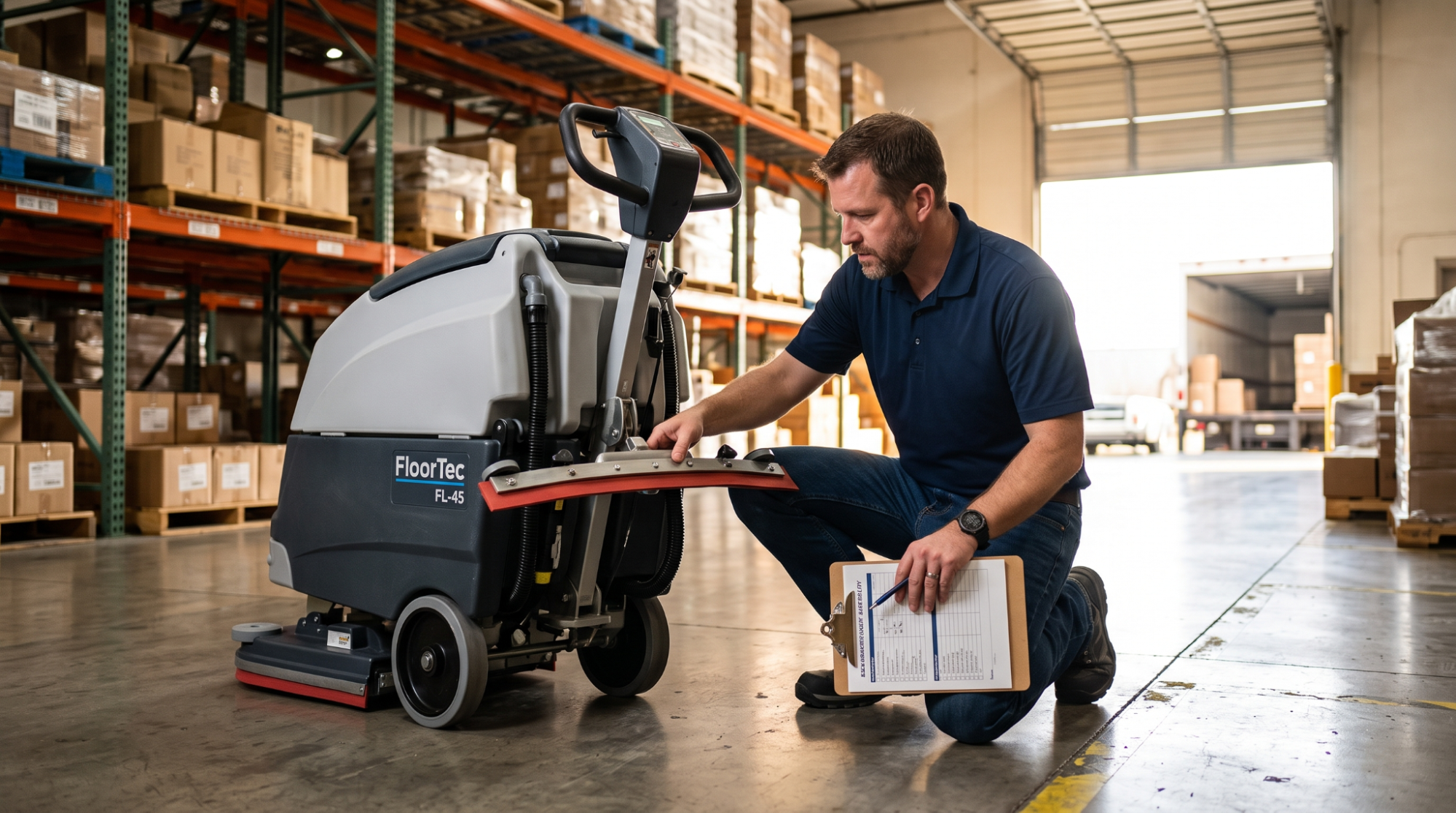
Squeegee blades are cheap. The assembly, casters, and mounting bracket are not. Check blades for nicks, hardening, and uneven wear across their length. Sight down the squeegee frame and look for the gentle bow that comes from backing into pallet racking.
Then run the real test. Wet a section of floor and make one pass. The floor behind the machine should be dry enough to walk on immediately. Streaks or standing water point to a tired vacuum motor, a blocked hose, a failed tank seal, or squeegee deflection, and each of those carries a different repair bill.
4. Vacuum Motor and Recovery System
Start the vacuum and listen. Bearing whine, an inconsistent pitch, or a motor that surges all signal wear. Inspect the vacuum filter and confirm the float shutoff actually closes when the recovery tank fills. Check vacuum hoses along their full length for cracks and soft spots that leak suction. Vacuum motors are a common wear item past 1,500 hours and replacement is a meaningful cost.
5. Solution and Recovery Tanks
Look for cracks, warping, chemical staining, and stress marks around mounting points. A cracked tank on either side is a serious problem and often exceeds the value of a cheap machine.
Then smell the recovery tank. A persistent sour odor means dirty water sat in it for weeks at a time. That tells you how the rest of the machine was treated. Check the drain hose for kinks and dry rot and confirm the gasket seals are pliable, not flattened.
6. Brush Deck, Motors, and Down Pressure
Run the deck with brushes or pads installed and listen for grinding. Check brush bristle length and pad driver wear, since excessive wear reduces cleaning quality even on a mechanically sound machine. Cycle the deck lift up and down several times and confirm down pressure adjusts through its full range. Uneven brush wear across the deck usually means a bent deck or a worn lift actuator.
7. Drive System and Wheels
On self propelled and ride on models, test traction motor response in forward and reverse and confirm the brake holds on a slope. Look for flat spots on tires and wheels, and check steering play at the wheel. On a ride on, sit down and verify the seat switch and every safety interlock function as designed.
8. Frame, Chassis, and Impact Damage
Cosmetic scuffs on a working machine are normal and should not scare you. Bent bumpers, cracked welds, rusted frame members, and clear rack strike damage are different. Structural damage tells you the machine was run hard by operators who were never trained on it, and that history rarely stops at the frame.
9. Control Panel, Wiring, and Error Codes
Press every button and confirm every function responds. Open the panel and look for aftermarket splices, taped connections, and wiring that does not match factory routing. Pull any stored fault codes, ask the seller to clear them, then run the machine again and see what comes back.
10. Leaks Under the Machine
Park the machine on dry cardboard for 20 minutes with the solution tank full. Water on the cardboard points to a tank crack, a failed valve, or a bad fitting. On larger ride ons, any hydraulic fluid is a serious cost item and a reason to renegotiate or leave.
Documentation and History You Should Demand
Maintenance and Service Records
Good records look like dated service entries listing the parts replaced and the technician who performed the work. A documented maintenance history is usually worth paying more for, because it converts an unknown into a known. If there are no records at all, you are pricing a mystery and your offer should reflect that.
Previous Operating Environment
A machine that ran a climate controlled school hallway is not the same machine as one that ran a food processing plant or a foundry floor. Ask where it worked, which chemicals went through the solution tank, how many shifts per day it ran, and whether it lived indoors. Aggressive chemistry and constant grease exposure age seals, hoses, and tanks faster than hours alone suggest.
Serial Number and Model Verification
Confirm the serial plate is intact, legible, and matches the paperwork. Use the serial to verify the model year with the manufacturer and to confirm parts are still supported. A missing or defaced serial plate makes warranty claims, parts lookup, and resale all harder.
Parts Availability and Service Support
Confirm Wear Parts Are Still Stocked
Before you buy, verify that squeegee blades, brushes and pad drivers, filters, batteries, hoses, and gaskets are available for that exact model. If a common wear part is back ordered or discontinued, the machine is a liability regardless of price. Check availability against a real supplier catalog such as our floor scrubber parts inventory and confirm that deep cycle batteries in the right size and voltage are in stock.
Discontinued and Orphaned Models
Brands exit the market. Models get discontinued and parts support quietly ends a few years later. A machine from a defunct manufacturer may run fine today and become unrepairable the first time a control board fails. If a model has been out of production for the past few years and no aftermarket support exists, treat the purchase price as the entire lifespan of the machine.
Who Fixes It When It Breaks
Ask who services the machine locally and what their typical response time is. Ask whether the seller supports the machine after the sale or disappears once the check clears. A private party sale on a marketplace gives you zero recourse, while a dealer with a repair and service operation gives you somewhere to call at 6 a.m. when the deck will not drop.
Should You Buy Used or Consider a Rental or Lease?
Buying is not the only option, but it is usually the cheapest one. For a machine you will run regularly, renting stops making sense fast. A few months of rental payments often approach the full purchase price of a refurbished unit that you then own outright, with no return date and no per hour billing.
Leasing new gives you a predictable monthly cost with service included, which appeals to organizations that prefer operating expense to capital expense. Run the five year total before you sign, because lease payments on a new machine can exceed the cost of buying two refurbished units over the same period.
Here is a simple rule. If you clean on any regular schedule, buy refurbished and stop paying for the same machine twice. If you need equipment for a defined project or a single season with no ongoing route, rent and keep the capital.
Frequently Asked Questions
How many hours is too many on a used floor scrubber?
Under 500 hours is light use and 500 to 1,500 hours is moderate. Past 1,500 to 2,000 hours, expect wear on vacuum motors, brush motors, and seals. Hours matter far less on a refurbished machine, because those wear components have already been inspected and replaced before the sale.
How much does it cost to replace floor scrubber batteries?
Replacement cost depends on pack voltage, amp hour rating, and chemistry. A compact walk behind pack commonly runs several hundred dollars, while a large ride on pack can reach a few thousand. Batteries are the largest hidden cost on an as is machine, which is why refurbished units should include a new battery and charger.
Can you get a warranty on a used commercial floor scrubber?
Yes. Refurbished machines from an equipment dealer typically carry a limited warranty covering the components that were replaced, and strong dealers back the whole machine. Private party sales and auctions almost never include coverage. Confirm warranty length, what it covers, and whether labor is included, in writing on the invoice.
How long does a commercial floor scrubber last?
A well maintained commercial floor scrubber commonly delivers 10 or more years of service, with batteries, brushes, pads, and squeegees replaced along the way. That long service life is exactly why refurbished machines are such good value: a rebuilt unit still has most of its working life ahead of it.
What is the difference between a refurbished and a used floor scrubber?
Used means sold as is with no work performed, so every fault becomes yours at purchase. Refurbished means the machine was inspected, worn components and batteries were replaced, and it was tested under load before sale. For a modest price difference, refurbished removes nearly all the risk of buying used.
Why does a used floor scrubber leave water on the floor?
Standing water usually traces to four causes: worn or nicked squeegee blades, a cracked vacuum hose leaking suction, a failing vacuum motor, or a bad recovery tank seal. A bent squeegee frame that holds the blade off the floor is also common on used machines. Test water pickup before buying, not after.
Is it cheaper to repair an old floor scrubber or buy a used one?
Compare the repair quote against a refurbished replacement of the same class. If repairs exceed roughly half that price, or if parts are discontinued, buying refurbished wins because you get a rebuilt machine with a new battery pack and a warranty. Routine work such as squeegees and brushes is always worth doing.
Get Help Choosing the Right Machine for Your Facility
You do not have to work through this alone. Send us your facility type, the square footage you clean per shift, your floor material, your soil type, and how often you clean, and our team will point you toward the right machine class and cleaning path instead of the loudest listing.
Every machine we sell goes through our own refurbishment process before it ships. Our technicians inspect, clean, and repair each unit, replace the components that do not meet our standards, and include a new battery and charger, free shipping to a commercial destination, and the best warranty in the industry. That is the checklist above, already completed, with someone standing behind it.
Browse our refurbished floor scrubbers, compare walk behind floor scrubbers against ride on floor scrubbers, or contact PS Janitorial and tell us what you are cleaning. We will match you to a machine that fits the building and the budget.