Can You Use a Floor Scrubber on Carpet?
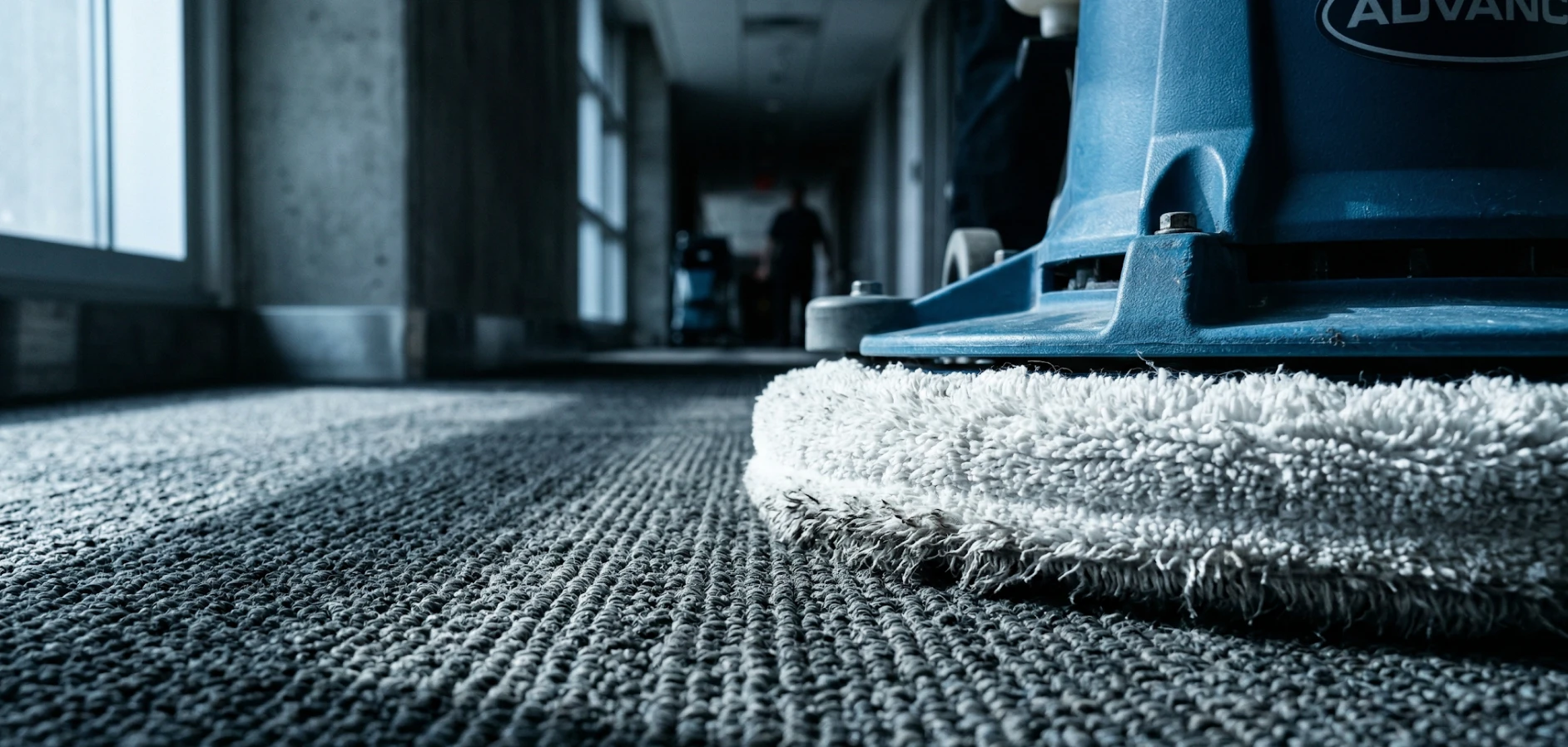
The Short Answer: It Depends on the Machine and the Carpet
Standard floor scrubbers are engineered for hard floors — and using one on carpet without the right setup can cause real damage. That said, certain machines with carpet-compatible settings and attachments can handle carpeted floors safely and effectively. If you're managing a large facility and wondering whether your scrubber can pull double duty, this guide walks you through exactly when it works, when it doesn't, and how to do it right.
How Floor Scrubbers Work (And Why Carpet Complicates Things)
A floor scrubber operates on a fairly straightforward principle: a clean water tank dispenses solution onto the floor, rotating brushes or pads scrub the surface, and a rear squeegee directs the dirty water into a recovery tank. On a smooth, sealed hard floor, that cycle is efficient and controlled — water sits on the surface, gets agitated, and gets picked up cleanly.
Carpet breaks that logic at almost every step.
Why Most Floor Scrubbers Are Built for Hard Floors
The default settings on a standard floor scrubber — brush stiffness, water volume, scrubbing pressure — are calibrated for tile, vinyl, concrete, and similar surfaces. These materials can withstand aggressive scrubbing without absorbing excess moisture or suffering fiber damage. A hard floor scrubber doesn't need to be gentle; it needs to be thorough.
That's exactly what makes it problematic on carpet without modification.
What Makes Carpet Different
Carpet fibers absorb moisture rather than letting it pool on the surface, which means overwetting is a constant risk. Too much solution soaks through to the backing, dramatically extending drying time and creating conditions where mold can develop — especially in low-airflow environments. High-pile or delicate fibers are also vulnerable to physical abrasion from stiff brushes that would glide harmlessly over tile. The structure of carpet simply demands a different approach than the one a standard machine is built to deliver.
When a Floor Scrubber Can Be Used on Carpet
Using a scrubber on carpet isn't inherently wrong — it's a matter of using the right equipment in the right context. In commercial settings, it's actually a fairly common practice when managed properly.
Commercial Settings Where This Is Common
Office buildings, hotels, conference centers, and event venues often have large expanses of carpet that require more than routine vacuuming but don't always need the intensive treatment of a full extraction system. For interim maintenance — refreshing appearance between deep cleans, addressing light soiling across a wide area — a carpet-compatible scrubber fills that gap efficiently.
Types of Carpet That Can Handle It
Low-pile commercial carpet is the best candidate. It's denser, more resilient, and dries faster than residential options. High-pile, looped, or delicate decorative carpet is a different story — the risk of fiber distortion and moisture retention is significantly higher, and those surfaces are generally better served by purpose-built carpet cleaning equipment.
Choosing the Right Floor Scrubber for Carpet
Not all floor scrubbers are suitable for carpet use, and selecting the wrong machine is where most problems start.
Look for Carpet-Compatible Machines
Some scrubbers are specifically designed — or configurable — for carpet. When evaluating options, look for bonnet pad compatibility, soft brush attachments, and machines that are explicitly rated for carpet use by the manufacturer. A machine built exclusively for hard floor care shouldn't be your first choice here.
Avoid Heavy-Duty or Stiff Brushes
Heavy-duty brushes designed to cut through grime on concrete or strip finish from tile are too abrasive for carpet fibers. Running them across carpet can cause permanent wear — matting, fraying, or fiber distortion that no amount of cleaning will reverse. Soft brushes or bonnet pads are the appropriate alternatives for carpet applications.
Adjustable Settings Matter
Fixed industrial settings are a red flag for carpet use. You need a machine that lets you dial down brush speed, reduce scrubbing pressure, and limit water flow — all three. Overwetting and over-agitation are the two most common causes of damage, and both are preventable only if your machine gives you meaningful control over its output. Electric powered floor scrubbers are often a practical choice here, as many models offer adjustable settings well-suited to mixed-surface environments.
Step-by-Step: How to Use a Floor Scrubber on Carpet
Even with the right machine, technique determines results. Follow this process to clean effectively without causing damage.
Step 1 — Vacuum First
Pre-vacuuming removes loose debris, dirt, and surface particulates before the scrubber touches the carpet. This isn't optional — it lets the machine focus on embedded soil and stains rather than pushing surface debris around or grinding it deeper into the fibers.
Step 2 — Spot Test in an Inconspicuous Area
Before you commit to cleaning the entire carpet, run the machine in a small, hidden section — a closet corner, behind a door, under furniture. This confirms that your cleaning solution and machine settings won't cause discoloration or damage you'll have to explain later. It takes five minutes and can save a significant headache.
Step 3 — Pre-Treat Stains
Apply a carpet-specific stain remover to any heavily soiled or stained spots before running the scrubber over the area. Let it dwell according to the product instructions. Over-scrubbing stains without pre-treatment tends to spread them laterally or push them further into the fiber — neither of which is progress.
Step 4 — Use a Carpet-Safe Cleaning Solution
Your cleaning solution matters as much as your machine. All-purpose floor chemicals formulated for hard surfaces can damage carpet fibers or leave residue that attracts dirt over time. Use a cleaner specifically formulated for carpet, and confirm it's compatible with your machine's dispensing system.
Step 5 — Set the Machine Correctly
Lower the brush speed. Reduce scrubbing pressure. Dial back water flow. These adjustments are non-negotiable on carpet — the settings that make a scrubber highly effective on hard floors are the same ones that cause damage on carpet if left unchanged. Configure the machine for the surface you're cleaning, not the surface it was designed for.
Step 6 — Clean in Overlapping Passes
Work methodically from one end of the space to the other, overlapping each pass by a few inches. This ensures complete coverage and eliminates dry strips between passes. Rushing or skipping sections leads to uneven results that are visible once the carpet dries.
Step 7 — Manage Moisture Carefully
Use only as much solution as necessary to clean the area. The goal is controlled moisture — enough to activate the cleaning process and suspend soils, but not so much that the carpet backing becomes saturated. If you're seeing water pool or seep up around your passes, you're applying too much.
Step 8 — Allow Adequate Drying Time
Keep foot traffic off the carpet until it's fully dry. Depending on carpet density, ambient humidity, and how much solution was applied, drying can take anywhere from a few hours to overnight. Accelerate the process with fans, air movers, or by running your building's HVAC system — airflow is your biggest ally here.
What Happens If You Use the Wrong Floor Scrubber on Carpet
The consequences aren't abstract. Aggressive brushes cause fiber damage that shows up as matting or premature wear — and that damage is permanent. Overwetting saturates the backing and creates conditions for mold growth that may not be visible until the problem is well established. Over-scrubbing stains spreads them rather than lifting them. And in worst-case scenarios, carpet fibers can get caught in the machine's mechanism, causing damage to both the carpet and the scrubber itself.
None of these outcomes are difficult to avoid — but they all require using the right equipment and technique from the start.
Floor Scrubber Maintenance After Cleaning Carpet
The cleaning process doesn't end when you park the machine. After using your scrubber on carpet, clean the tanks thoroughly — both the solution tank and the dirty water recovery tank. Rinse the brushes or bonnet pads to remove any trapped fibers or residue, and flush the hoses if your machine has them. Carpet cleaning tends to leave more particulate debris in the system than hard floor work, and residue buildup shortens machine lifespan if it's not addressed through regular maintenance.
When to Use a Different Machine Altogether
A floor scrubber — even one set up correctly for carpet — isn't the right tool for every situation. Recognize when a different approach is warranted:
- Commercial carpet extractors are the better choice for deep stain removal, heavily soiled carpet, or situations where you need to flush and extract cleaning solution from deep within the pile. If you're unsure how they work, our guide on how to use a carpet extractor walks through the full process.
- Carpet bonnet machines are built specifically for surface-level carpet maintenance and are a lower-risk option for routine upkeep between deep cleans.
- Vacuums remain the backbone of regular carpet care and should be part of any maintenance program regardless of what other equipment you use.
If your carpet is high-pile, delicate, or in poor condition, start with one of these rather than adapting a scrubber to a job it wasn't built for.
Find the Right Floor Scrubber for Your Facility
The biggest variable in whether a floor scrubber works on carpet isn't technique — it's the machine. Selecting equipment that matches your actual floor types is the foundation of an effective cleaning program, and getting that decision wrong costs more in repairs and replacements than it saves upfront.
At PS Janitorial, we carry a full range of floor scrubbing machines suited to different facility needs — whether you're working exclusively on hard floors or managing a mixed environment that includes carpet. Not sure whether a walk-behind or ride-on scrubber is right for your space? We've got that covered too. Browse our catalog or reach out and we'll help you match the right machine to your facility.