Floor Scrubber Brush vs Pad: Which Should You Use?
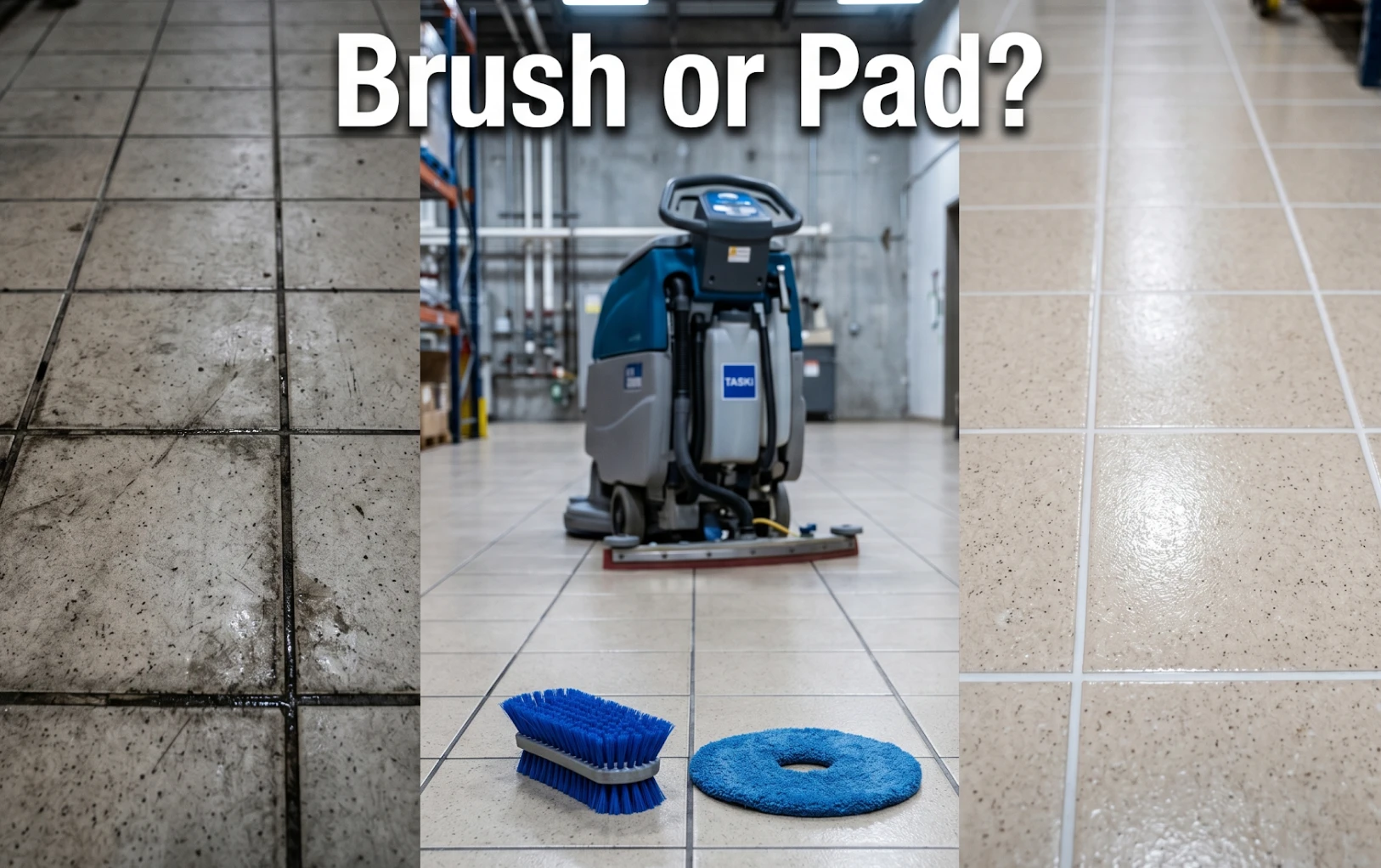
When you run a floor scrubber, the attachment doing the actual cleaning work is either a brush or a pad. The machine itself matters, but that brush or pad is what contacts the floor, and choosing the wrong one leads to poor results, damaged surfaces, or faster wear on your consumables. This guide breaks down exactly how brushes and pads differ, which floors and soil types call for each, and how to make the right call for your facility.
What Is a Floor Scrubber Brush?
A floor scrubber brush is a rigid or semi-rigid cylindrical or disc attachment made from bristle materials like nylon or polypropylene. The bristles protrude from a base plate and physically agitate the floor surface as the scrubber rotates. Some brushes are smooth-bristled for light-duty work, while others are impregnated with abrasive grit particles like silicon carbide to tackle heavy-duty buildup.
Brushes attach directly to the scrubber's drive block and are sized to match the machine's scrub path. The key spec to pay attention to is bristle stiffness, which determines aggressiveness, and grit value if the brush contains abrasive media. A brush is always going to give you more mechanical reach than a pad because the bristles extend into surface irregularities rather than skimming over them.
What Is a Floor Scrubber Pad?
A floor scrubber pad is a flat, circular disc made from nonwoven synthetic fiber. Pads attach to a pad driver that connects to the scrubber's drive block. The texture and density of the fiber determines how aggressively the pad cleans. Most commercial pads follow a color-coding system that makes it easy to select the right aggressiveness for the task at hand.
The standard pad color guide runs roughly as follows: white pads are the least aggressive and suited for polishing and buffing, red pads handle light scrubbing, blue pads cover everyday maintenance cleaning, green pads step up to heavy-duty scrubbing and top coating, and brown or black pads are the most aggressive and used for stripping old floor finish and deep remediation work. The color system is consistent across most major pad manufacturers, so once you understand the hierarchy, sourcing replacements is straightforward.
Floor Scrubber Brush vs Pad: Key Differences
The fundamental difference is surface contact. A brush bristle is a pointed, flexible filament that pushes down and into texture, grout lines, and surface pores. A pad is a flat surface that relies on friction and abrasive fiber to clean smooth or near-smooth flooring. Neither is universally superior. The right choice depends entirely on your floor type and the soil you are removing.
Scrubbing brushes tend to last longer than scrubber pads, particularly when used on rough or uneven surfaces where a pad would shred quickly. A quality polypropylene or nylon brush can be rinsed, dried, and reused hundreds of times across a long service life, which reduces ongoing supply costs. Pads are disposable consumables that need regular replacement, but they carry a lower upfront cost per unit and are easy to swap between tasks by simply changing the pad color.
From a cleaning chemistry standpoint, both work with the detergent solution dispensed by the scrubber in roughly the same way. The agitation from either attachment helps break up soil and lift it into suspension so the squeegee and vacuum system can recover the dirty water. If you ever run into performance issues with your machine, using the wrong attachment for your floor type is one of the most common floor scrubber problems operators encounter.
Best Floor Types for Brushes
Concrete Floors
Concrete is the strongest argument for brushes. The porous, rough surface of concrete will destroy pads quickly and the uneven profile demands bristles that can flex and penetrate the floor surface. For standard concrete maintenance, polypropylene brushes provide solid scrubbing power. For concrete with heavy soil buildup, machinery grease, or significant staining, a gritted brush with silicon carbide abrasive delivers the aggressive cleaning that pads simply cannot match. Polished or epoxy-coated concrete is an exception here, where softer brush types or pad drivers are the better call to protect the surface finish. For a deeper look at the best machines built specifically for concrete, see our guide to the best concrete floor cleaning machines for warehouse spaces.
Ceramic and Porcelain Tile with Deep Grout Lines
Grout is the defining challenge with tile floors. Pads sit flat and pass right over grout lines without cleaning them. A medium-stiffness brush pushes its bristles down into the grout channel and agitates stubborn dirt out. For glazed tiles, medium brushes clean effectively without damaging the glaze. For matte or lightly textured tiles where grout lines are minimal, pads can work well depending on the maintenance level required.
Rubber Floors
Rubber floors, common in gyms, play areas, and some industrial settings, have an elastic, textured surface that benefits from bristle cleaning. Nylon brushes are particularly well suited here because their softer texture cleans without degrading the rubber's surface properties or non-slip texture over time. Floor pads on rubber flooring wear out fast and can sometimes bond to the surface in ways that cause drag or machine stress.
Epoxy Non-Slip Floors
Epoxy coatings with added aggregate for traction need brushes that are effective yet gentle enough not to wear down the non-slip profile. Soft to medium brushes work best depending on soil level. Using a brush that is too stiff on an epoxy non-slip floor can gradually erode the texture that makes the coating safe, so matching bristle hardness to the required cleaning aggressiveness is important.
Best Floor Types for Pads
Vinyl Composition Tile (VCT)
Vinyl composition tile is the prototypical pad floor. It is smooth, flat, and often finished with acrylic floor wax or polish. Scrubber pads are designed for exactly this application. A blue pad handles routine scrubbing to remove light soil and maintain the finish. A green pad steps up for heavier buildup or when you need to prep the smooth surface before applying a new coat of finish. A black pad is used with a stripping solution when the old finish needs to come off entirely before recoating. Running a brush on VCT risks scratching the finish and the tile underneath, so keep brushes away from these delicate finishes. For machine recommendations specific to this floor type, see our roundup of the best floor scrubbers for VCT floors.
Terrazzo Floors
Terrazzo is a smooth, polished surface made from embedded stone chips in a cementitious or epoxy binder. Pads are almost always the correct choice here because smooth flooring like this is incompatible with stiff bristles, which can scratch the high-gloss shine. White or red pads maintain the polish, while blue pads handle routine scrubbing without compromising the surface.
Vinyl Sheet Flooring and Sealed Hardwood
Any smooth sealed surface falls into pad territory for routine maintenance. These floors do not have the texture or grout lines that benefit from bristle action, and a soft scrub pad with the correct cleaning chemistry is gentler and more effective for these delicate floors. Nylon scrubbing brushes can be used on vinyl sheet flooring for deeper cleaning, but the standard maintenance approach relies on pads.
Can You Use Both on the Same Machine?
Yes. Most walk-behind floor scrubbers and auto scrubbers are compatible with both brushes and pads. Disc brushes and cylindrical brushes connect directly to the drive block, while pads attach via a pad driver accessory. Switching between them typically takes under a minute. This flexibility is one reason many facilities keep both on hand, using brushes for rough or textured areas and pads for smooth finished floors in the same building.
When switching to a new brush or pad type you have not used before, always test on a small inconspicuous area first. Verify the machine's pressure and speed settings are dialed in appropriately for the new attachment. Different brushes and pads carry different levels of aggressiveness, and running at the wrong settings can damage the floor or the machine. Our detailed guide on choosing the right floor scrubber brush or pad covers additional tips on matching attachments to specific conditions.
Cost Considerations
The upfront cost of quality scrubbing brushes is higher than a pad. However, new brushes spread that cost across a much longer service life, particularly on rough surfaces where they outperform pads. For facilities with mostly smooth finished flooring, pads are the more cost-effective consumable because they are inexpensive per unit and perform well on the surfaces they are designed for.
If you are managing a mixed-floor facility with both concrete or tile and smooth finished flooring, the practical approach is to budget for both. The savings from not destroying pads on concrete and not causing damage to VCT with brushes will outweigh the cost of maintaining two types of attachments. Refurbished floor scrubbers often come with pad drivers already included, making it easy to get started with pads while you source the right brushes for harder floor areas.
Quick Reference: Brush vs Pad by Floor Type
| Floor Type | Recommended Attachment | Notes |
|---|---|---|
| Concrete (rough or uncoated) | Brush | Grit brush for heavy buildup |
| Concrete (polished or epoxy coated) | Soft brush or pad | Avoid stiff bristles on coated surfaces |
| Ceramic or porcelain tile with grout | Brush | Medium bristle for glazed tile |
| Rubber flooring | Brush | Nylon bristles preferred |
| Epoxy non-slip flooring | Soft to medium brush | Match bristle stiffness to soil level |
| VCT | Pad | Color-match pad to task |
| Terrazzo | Pad | Soft pads to protect polish |
| Vinyl sheet / sealed hardwood | Pad | Routine maintenance only |
Which Should You Choose?
For rough, textured, or uneven floors with grout lines or heavy industrial soil, a brush is almost always the better choice. For smooth finished floors being maintained with regular cleaning or stripped and recoated on a schedule, pads are the right tool. Most commercial cleaning operations benefit from having both available and training operators on which attachment belongs on which floor.
If you are outfitting a new machine or upgrading your cleaning program, our team at PS Janitorial can help you identify the right brush type and pad selection for your specific floor surfaces and soil conditions. Browse our full lineup of floor scrubbers, electric powered scrubbers, and battery-powered scrubbers, or contact us for expert guidance.