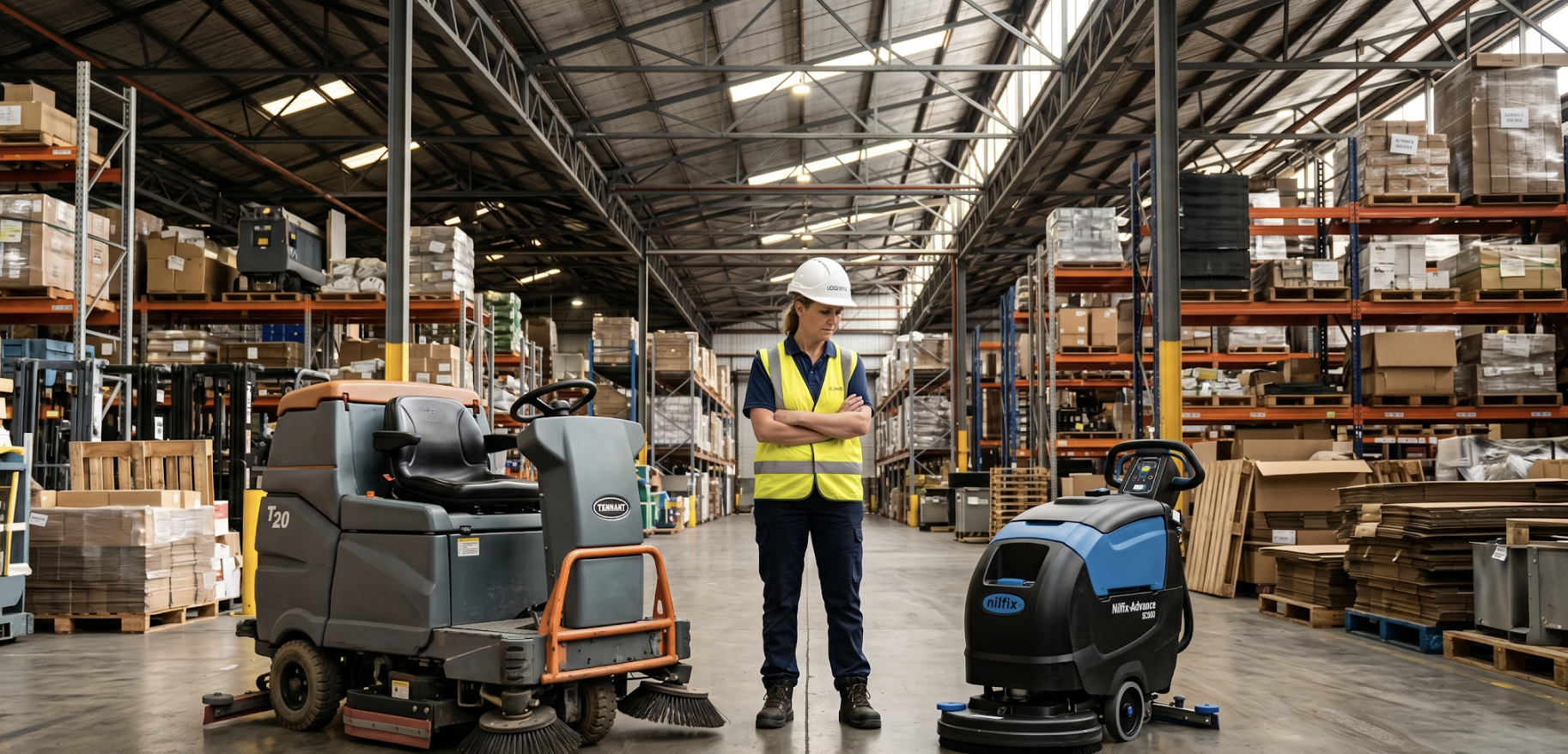
High Pressure Scrubber vs Low Pressure Scrubber
What Is a High Pressure Floor Scrubber?
A high pressure floor scrubber is a heavy-duty cleaning machine designed to deliver elevated water pressure, typically above 1,000 PSI, alongside mechanical scrubbing action to break down and remove severe soiling from industrial and commercial floors. These machines are built specifically for environments where standard cleaning methods fall short, including manufacturing plants, warehouses, loading docks, and food processing facilities. If you are evaluating your equipment options and your floors face contamination that resists routine cleaning, understanding how high pressure scrubbers work is the right place to start.
How High Pressure Scrubbers Work
The cleaning process combines pressurized water delivered through precision nozzles or a rotating spray bar with the simultaneous action of scrubbing pads or brushes agitating the floor surface. That combination of high pressure water, chemical solution, and physical scrubbing action lifts embedded contaminants that low pressure machines leave behind. Solution flow rates are measured to maintain consistent chemical concentration across the surface, brush or pad pressure is calibrated by PSI or RPM depending on the unit, and dirty water is recovered through an integrated vacuum system that pulls the waste liquid off the floor immediately after the cleaning pass.
Common Applications for High Pressure Scrubbers
High pressure scrubbers are deployed most often in warehouses, auto dealerships, manufacturing floors, loading docks, food processing plants, aircraft hangars, and parking garages. These are settings where floors accumulate oil, grease, rubber marks, chemical spills, or heavy industrial dust at a rate that demands aggressive cleaning action. If your facility falls into any of these categories, standard scrubbing equipment is likely working harder than it should to produce results a high pressure machine would achieve in a single pass.
Types of Floors That Benefit Most from High Pressure Cleaning
Unsealed concrete, epoxy-coated industrial floors, textured safety flooring, and rough warehouse surfaces respond best to high pressure cleaning. These floor types are durable enough to handle elevated water pressure without surface damage, and their texture and porosity actually require it to dislodge contaminants that have settled into the material. Porous and uneven surfaces trap dirt, oil, and debris at a depth that brushes alone cannot reach, making the pressure component of the cleaning system a functional necessity rather than a preference.
What Is a Low Pressure Floor Scrubber?
A low pressure floor scrubber relies on mechanical scrubbing action, cleaning solution, and lower water pressure, typically under 1,000 PSI or gravity-fed solution flow, to clean floor surfaces. This is the most common category of commercial floor scrubbing equipment, and it covers the majority of walk-behind and ride-on scrubbers used in retail, hospitality, and healthcare settings. If your facility handles routine maintenance cleaning rather than severe industrial soiling, a low pressure machine is almost certainly what your operation is already using or needs.
How Low Pressure Scrubbers Work
Low pressure scrubbers dispense cleaning solution directly onto the floor at low pressure or through gravity flow. Rotating brushes or pads scrub the surface while the machine moves forward, and a squeegee blade at the rear vacuums up the dirty water into a recovery tank. The cleaning efficiency of these machines comes primarily from brush contact pressure, pad type, chemical dwell time, and operating speed rather than water pressure. The right combination of those variables makes a low pressure scrubber highly effective on the surfaces it is designed for.
Common Applications for Low Pressure Scrubbers
Grocery stores, hospitals, schools, office buildings, hotels, and airports are the most common environments for low pressure scrubbers. These facilities require consistent daily or weekly maintenance rather than heavy-duty soil removal. Low pressure machines are optimized for exactly that kind of scheduled floor care program, and their design reflects it with efficient solution use, controlled recovery, and safe operation on a wide range of finished floor surfaces.
Types of Floors That Benefit Most from Low Pressure Cleaning
Polished concrete, vinyl composite tile (VCT), hardwood, luxury vinyl plank, sealed stone, and terrazzo are best served by low pressure scrubbing. These surfaces are susceptible to damage from excessive water pressure, and gentler cleaning preserves surface coatings, finishes, and structural integrity over time. If your floors have any kind of applied finish or protective sealer, low pressure is not just the preferred option, it is the responsible one.
High Pressure vs Low Pressure Scrubber: Key Differences at a Glance
Both scrubber types share the goal of clean floors, but they differ significantly in how they achieve that result. The table below gives you a quick side-by-side reference before diving into detailed use case comparisons.
| Feature | High Pressure Scrubber | Low Pressure Scrubber |
|---|---|---|
| PSI Range | Typically 1,000 PSI and above | Typically under 1,000 PSI or gravity fed |
| Water Consumption | Higher per square foot | Lower per square foot |
| Cleaning Speed | Faster on heavily soiled surfaces | Faster on lightly soiled surfaces |
| Floor Type Compatibility | Unsealed concrete, textured, rough surfaces | Polished, coated, finished, or delicate surfaces |
| Soiling Severity Handled | Heavy grease, chemical buildup, caked residue | Light to moderate surface soiling |
| Operator Skill Required | Moderate to high | Low to moderate |
| Machine Cost Range | Higher initial investment | Lower initial investment |
| Maintenance Complexity | Higher, pump and nozzle dependent | Lower, brush and squeegee focused |
Which Scrubber Performs Better on Heavily Soiled Industrial Floors?
For lightly soiled environments, either machine can do the job. On heavily soiled industrial floors, the distinction becomes critical, and the answer matters for your budget, your results, and the condition of your floor over time. This section addresses the practical performance differences you need to understand before committing to equipment.
Removing Oil, Grease, and Chemical Buildup
Oil, grease, and chemical residue bond to floor surfaces at a molecular level over time, particularly on porous concrete. High pressure water penetration breaks that bond more effectively than brush agitation alone. Hot water high pressure scrubbers are even more effective for petroleum-based contamination, since heat accelerates the breakdown of hydrocarbon bonds. Low pressure scrubbers can address light grease with the right chemistry, but they struggle with heavy accumulation and typically require repeated passes that still leave residue in the pores of the concrete.
Cleaning Concrete, Warehouse, and Factory Floors
Industrial concrete floors present specific physical challenges: rough texture, expansion joints, surface pitting, and traffic patterns from heavy foot and forklift use. These conditions trap contaminants in ways that require pressurized water to flush out completely. A high pressure scrubber cleaning a warehouse aisle achieves deeper extraction in a single cycle compared to a low pressure machine making the same pass. The pressure component reaches into the texture of the concrete in a way that brush contact pressure alone cannot replicate.
Handling Caked-On Dirt and Industrial Residue
Dried mud tracked in from loading docks, compacted dust from manufacturing processes, and dried product spills in food plants all require water pressure to rehydrate and break apart the surface layer before scrubbing becomes effective. Without that initial pressure penetration, brushes are pushing against a hardened layer rather than lifting contaminants away from the floor. High pressure scrubbers handle these conditions consistently. Pre-treatment with a degreaser or emulsifying chemical can sometimes allow a low pressure machine to manage moderate residue buildup, but it adds time and cost to a job that a high pressure unit would complete in one pass.
When a Low Pressure Scrubber Is the Right Choice
Not every industrial or commercial environment needs high pressure, and using excess pressure on the wrong floor type causes costly damage. The goal is to match the machine to the environment, not to default to the most aggressive option available.
Polished Concrete and Coated Floor Surfaces
High pressure water can strip floor coatings, erode polish, and damage epoxy or urethane sealers if applied at too high a PSI or directed incorrectly at the surface. For any floor with an applied protective finish, a low pressure scrubber is the right tool because preserving that finish is just as important as the cleaning result. Manufacturers of decorative concrete and coated floor systems typically specify low pressure cleaning in their maintenance guidelines, and ignoring that specification voids warranties and accelerates surface wear.
Food Service and Pharmaceutical Facilities
In food processing and pharmaceutical environments, high pressure water can aerosolize contaminants and spread bacteria across a wider area, creating cross-contamination risks that are difficult to control. Regulatory guidelines in these settings generally recommend controlled low pressure scrubbing combined with validated chemical programs designed to sanitize at the contact level rather than disperse particles into the air. A low pressure scrubber with the appropriate sanitizing chemistry is the compliant and safer choice where contamination control is a top priority.
Daily Maintenance Cleaning Routines
Most industrial facilities do not require high pressure cleaning every day. A tiered cleaning program works more efficiently: low pressure scrubbers handle daily or nightly maintenance passes to remove surface soiling before it builds up, while high pressure scrubbers are deployed on a weekly, monthly, or as-needed schedule for deep cleaning cycles. This approach extends floor life, reduces water consumption, lowers chemical costs, and protects surfaces from unnecessary wear caused by daily high pressure exposure.
Factors to Consider Before Choosing a Pressure Scrubber
The right machine depends on several factors working together, not a single variable like PSI. Before making a purchase decision, evaluate all of the following criteria as a combined picture of your facility's actual needs.
Floor Material and Condition
Assess floor type and current condition carefully. Hardness, porosity, existing coatings, age, and damage history all influence which scrubber will clean effectively without causing additional harm. If you are unsure of your floor's pressure tolerance, consult the floor manufacturer or installer for specifications before selecting equipment. The cost of a wrong machine selection compounds quickly when floor repair enters the equation.
Type and Severity of Soiling
Think in terms of a soiling severity scale. Light surface dust and routine foot traffic map to low pressure machines. Heavy grease, chemical contamination, or caked industrial residue map to high pressure. Mismatching the machine to the soiling level leads to either inadequate cleaning results or unnecessary surface wear, and both outcomes cost more than selecting the right equipment from the start.
Facility Size and Cleaning Frequency
Larger facilities with high square footage benefit from ride-on floor scrubbers regardless of pressure type. Smaller facilities can use walk-behind floor scrubbers effectively within their cleaning program. Frequency also matters: daily low pressure cleaning prevents buildup and keeps surfaces manageable, while infrequent cleaning in a high-soil environment almost always requires high pressure intervention to restore the surface to a safe and presentable condition.
Indoor vs Outdoor Use
High pressure scrubbers are better suited for outdoor areas such as loading docks, parking decks, and exterior concrete where water runoff is manageable. Indoor use of high pressure equipment requires adequate drainage infrastructure and potentially water recovery systems to prevent flooding or slip hazards. Low pressure scrubbers are generally safer and more practical for enclosed indoor environments where controlling water distribution is part of the operational requirement.
Water Recovery and Drainage Requirements
High pressure scrubbers use significantly more water per square foot than low pressure models. Your facility needs to account for water recovery tank capacity, floor drain proximity, and wastewater disposal regulations when selecting high pressure equipment. In facilities without adequate drainage, high pressure scrubbing creates safety hazards and potential compliance issues that offset any cleaning efficiency gains.
Can You Use Both? Combining High and Low Pressure in Your Cleaning Program
A hybrid approach makes sense for facilities that deal with both routine maintenance and periodic heavy soiling. Structure the program so low pressure scrubbers handle daily general maintenance passes and high pressure scrubbers are deployed on a scheduled rotation for deep cleaning cycles. Many large industrial facilities already operate both machine types and assign them to specific zones or tasks based on soil load and floor type. Investing in both rather than defaulting to one is often the most cost-effective and surface-safe approach over the long term.
Maintenance Tips for High Pressure and Low Pressure Scrubbers
Regardless of pressure type, scrubber performance degrades quickly without proper maintenance. Regular upkeep extends machine life, ensures consistent cleaning results, and prevents costly breakdowns during operations.
High Pressure Scrubber Maintenance Checklist
For high pressure machines, your maintenance routine should include inspecting and replacing nozzles for wear since worn nozzles reduce pressure output and uneven spray patterns lower cleaning efficiency, checking pump seals and pressure output regularly, cleaning the spray bar and verifying even water distribution across the surface, flushing the solution tank to prevent chemical residue buildup, inspecting hose connections and fittings for leaks, and testing safety pressure relief valves. Log maintenance intervals and note any PSI drops as an early indicator of pump or seal deterioration that will worsen without intervention. For replacement components, browse the PS Janitorial floor scrubber parts catalog or contact the repairs team if a machine requires professional service.
Low Pressure Scrubber Maintenance Checklist
For low pressure scrubbers, replace brushes or pads on schedule based on floor wear and hours of use, clean and inspect the squeegee blade for cracks or uneven wear since blade degradation directly reduces water recovery, drain and rinse the solution and recovery tanks after each use to prevent bacterial growth and chemical residue from accumulating, check the vacuum motor and suction path for blockages, and inspect wheels and drive systems for debris buildup. If your squeegee is leaving water behind even after replacement, review the floor scrubber squeegee troubleshooting guide for step-by-step diagnostics. Recovery tank maintenance is frequently overlooked and is one of the leading causes of odor complaints and reduced suction performance in facilities with high cleaning frequency.
Which Floor Scrubber Is Right for Your Facility?
Here is a direct recommendation by facility type:
| Feature | High Pressure Scrubber | Low Pressure Scrubber |
|---|---|---|
| PSI Range | Typically 1,000 PSI and above | Typically under 1,000 PSI or gravity fed |
| Water Consumption | Higher per square foot | Lower per square foot |
| Cleaning Speed | Faster on heavily soiled surfaces | Faster on lightly soiled surfaces |
| Floor Type Compatibility | Unsealed concrete, textured, rough surfaces | Polished, coated, finished, or delicate surfaces |
| Soiling Severity Handled | Heavy grease, chemical buildup, caked residue | Light to moderate surface soiling |
| Operator Skill Required | Moderate to high | Low to moderate |
| Machine Cost Range | Higher initial investment | Lower initial investment |
| Maintenance Complexity | Higher, pump and nozzle dependent | Lower, brush and squeegee focused |
Match the machine to the environment and the soil load, and your cleaning program will produce consistent, cost-controlled results without compromising your floors.
Shop Industrial Floor Scrubbers at PS Janitorial
PS Janitorial carries a full selection of industrial floor scrubbers, including both high pressure and low pressure models suited for commercial and industrial applications across a wide range of floor types and facility sizes. Whether you are outfitting a warehouse, maintaining a production facility, or building a tiered cleaning program from scratch, the PS Janitorial team can help you identify the right machine for your specific conditions.
Browse the complete floor cleaning equipment catalog or reach out directly if you want guidance on pressure ratings, machine sizing, or floor compatibility before you buy.