How Walk Behind Floor Scrubbers Reduce Cleaning Costs
What Is a Walk Behind Floor Scrubber and How Does It Work?
A walk behind floor scrubber is a self-contained cleaning machine that scrubs, applies solution, and recovers dirty water in a single pass. Unlike a mop and bucket or a floor buffer, it handles the full cleaning cycle without manual wringing, re-soaking, or a second crew member following behind to dry the floor. Facility managers in retail, healthcare, warehouses, and commercial buildings use them because they clean more ground faster and at a lower total cost than traditional methods.
The Cleaning Cycle: Scrub, Apply Solution, and Recover in One Pass
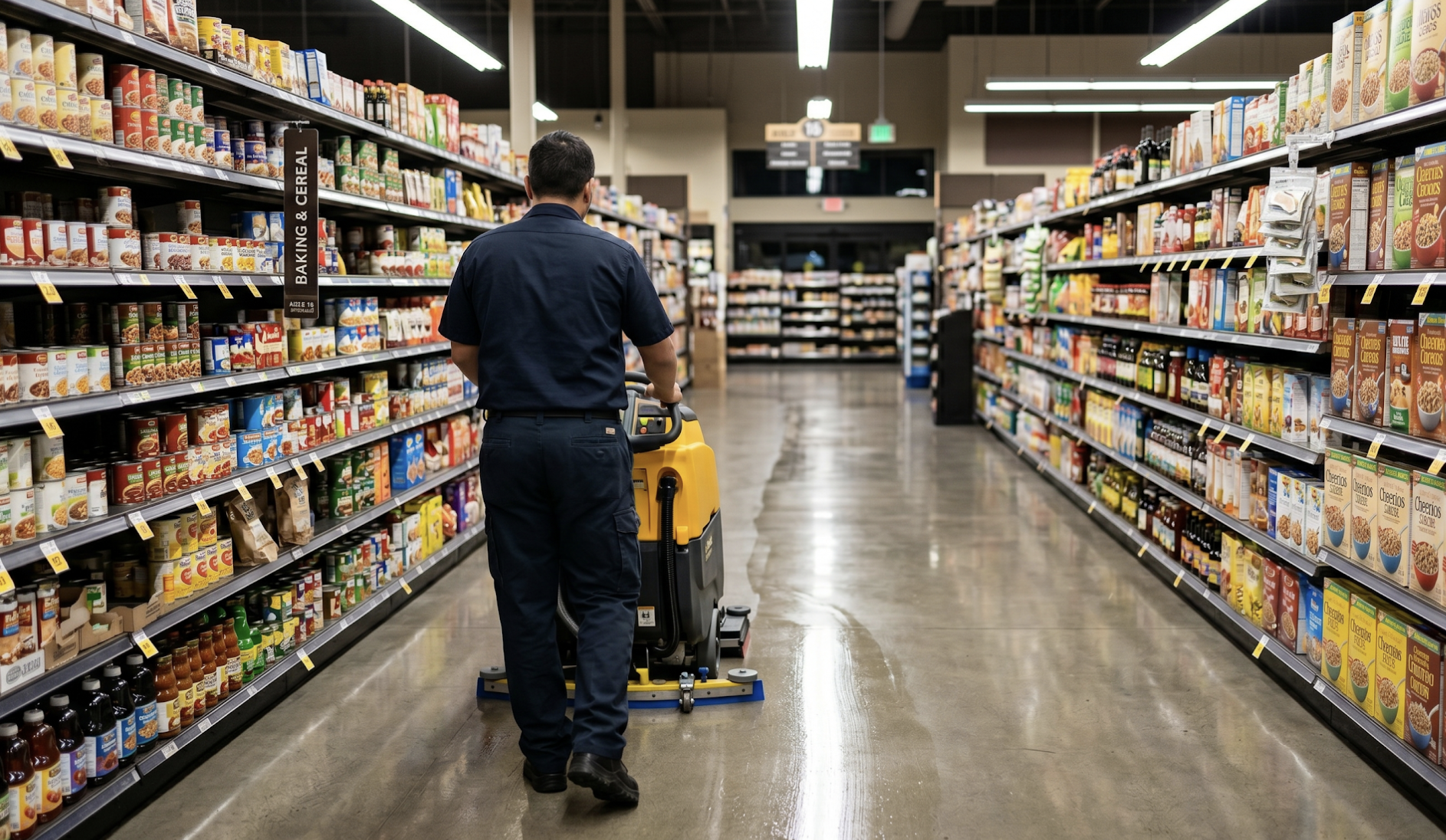
Here is what happens every time you push one of these machines forward. The solution tank releases a controlled amount of cleaning solution onto the floor ahead of the rotating brushes or pads. The brushes agitate and lift dirt, grease, and debris. The squeegee blade immediately behind the brush deck channels the resulting dirty water into the recovery tank. The entire sequence happens in one pass, which means the floor is nearly dry before you have moved on to the next row. That eliminates the wet floor hazard that follows traditional mopping and removes the need for a second person trailing the operator with signage and a dry mop.
Walk Behind vs. Ride On Floor Scrubbers: Which One Is Right for You?
Ride on scrubbers cover large spaces faster and are built for open warehouses or manufacturing facilities with wide unobstructed aisles. They cost significantly more upfront, require more storage space, and are difficult to maneuver in tight spaces or around numerous obstacles like shelving and equipment. Walk behind models cost less, fit through narrow doorways, and handle small to medium square footage efficiently. If your facility is under roughly 30,000 square feet or has congested layouts, a walk behind machine is almost always the more cost effective choice. For a deeper look at how the two types compare across real-world scenarios, see our guide on walk behind vs. ride on floor scrubbers.
How Walk Behind Floor Scrubbers Reduce Labor Costs
Labor is typically the largest line item in any cleaning operation budget. Equipment that lets one operator do the work that previously required two or three people directly shrinks that number. Walk behind scrubbers deliver exactly that kind of labor savings, across multiple dimensions.
One Operator Can Do the Work of Multiple Staff Members
A single operator running a walk behind scrubber simultaneously handles solution dispensing, scrubbing, and water recovery. That is a task that once required one person mopping, one managing the bucket, and potentially a third placing wet floor signs and doing follow-up drying. With a walk behind machine, one person manages it all with minimal effort. The staff you free up from floor cleaning can be redirected to restocking, customer service, or other higher-value tasks that directly support your operation.
Faster Coverage Means Fewer Paid Hours Per Cleaning Shift
Manual mopping covers roughly 2,000 to 3,000 square feet per hour under real-world conditions. Walk behind scrubbers consistently cover more ground in the same time, often two to three times as much depending on the model and layout. More square footage per hour means the job finishes faster, which directly reduces total labor costs per cleaning cycle. Over the course of a week or month, that adds up to a meaningful reduction in paid hours without any drop in output.
Consistent Results Eliminate the Need for Rework
Manual mopping leaves streaks, missed strips, and pooled moisture that often require a second pass. Walk behind scrubbers apply solution evenly and scrub at a consistent pressure on every run, so the floor gets done right the first time. Eliminating rework removes wasted labor hours, keeps operators on schedule, and reduces the supervisory time needed to inspect and correct substandard cleaning results.
Reduced Physical Strain Cuts Down on Worker Injury and Absenteeism
Mopping large areas daily is physically taxing and contributes to musculoskeletal injuries of the back, shoulders, and wrists. Walk behind scrubbers are designed with self-propelling drives that move the machine forward with the operator guiding rather than pushing. That ergonomic design reduces the physical load on the operator significantly. Fewer injuries means lower workers compensation costs, less absenteeism to cover, and reduced turnover, all of which show up in your bottom line as injury related cost reductions.
Flexible Scheduling Minimizes Overtime Expenses
Because walk behind scrubbers work so quickly, cleaning tasks fit into tighter windows such as shift changes, lunch breaks, or short operational pauses. You no longer need to bring in an after-hours crew or pay overtime rates just to get floors cleaned. That is especially valuable in facilities that operate multiple shifts or have limited downtime between business hours, where every extra hour on the clock carries a premium cost.
Beyond Labor: Additional Cost Savings Walk Behind Scrubbers Deliver
Labor savings are the most visible benefit, but they are not the only one. Walk behind scrubbers also lower supply costs, protect your floor investment, and carry lower maintenance expenses than larger ride on models.
Lower Chemical and Water Usage Compared to Traditional Mopping
Walk behind scrubbers use controlled dispensing systems that release only as much cleaning solution as the floor actually needs. Traditional mopping tends to overuse both water and chemicals, particularly when staff members are not monitoring usage closely. Precise water flow and chemical dosing reduce how much product you go through per cleaning cycle. Lowering water and chemical consumption adds up to real supply cost savings over the course of a year, and it makes the operation more eco friendly by reducing chemical runoff.
Extended Floor Lifespan Reduces Long-Term Repair and Resurfacing Costs
Dirt, grit, and debris left on floors act as an abrasive underfoot and wear down surface coatings over time. Consistent cleaning removes that buildup before it causes damage to concrete, tile, VCT, and epoxy surfaces. Avoiding premature resurfacing or recoating projects saves significant cost in both materials and the labor to complete them. The long term savings from protecting your floors can easily exceed the initial investment in the scrubber itself.
Lower Equipment Maintenance Costs vs. Larger Ride On Models
Walk behind scrubbers have simpler mechanical designs and fewer moving parts than ride on machines. Most routine maintenance such as rinsing tanks, replacing squeegee blades, and checking brush or pad condition can be done by in-house staff without calling a service technician. That keeps repair costs predictable, reduces equipment downtime, and eliminates the scheduling delays that come with waiting for outside service. If you run into performance issues down the line, our guide on common floor scrubber problems and how to fix them covers the most frequent causes and solutions.
The Best Facilities and Industries for Walk Behind Floor Scrubbers
Walk behind scrubbers are not the right tool for every environment, but they are the ideal choice for a wide range of facility types where tight spaces, moderate square footage, and budget efficiency are priorities.
Retail Stores and Grocery Chains
Retail environments have narrow aisles, high foot traffic, and strict hygiene standards. Walk behind models are compact enough to navigate between shelving and display units, and their fast water recovery performance keeps floors safe while the store remains open or during brief overnight cleaning windows. Safer floors also mean fewer slip and fall incidents, which carry their own injury related expenses and liability costs.
Schools and Healthcare Facilities
Schools and medical facilities require frequent cleaning across hallways, cafeterias, and common areas without relying on a large cleaning crew. Walk behind scrubbers deliver consistent sanitary results efficiently across these high-use surfaces. Many models now offer low-noise operation, making them practical during low-traffic hours without major disruption to patients, students, or staff.
Warehouses and Light Industrial Spaces
Warehouses and light manufacturing facilities deal with grease, concrete dust, and heavy debris that mops cannot clean effectively. Walk behind scrubbers with stiff brushes and higher solution flow rates handle industrial floors well and are maneuverable enough to work around racking, pallets, and equipment. Industrial environments put floor cleaning machines through hard use, and the durability of a well-built walk behind unit holds up to that demand.
Offices and Commercial Buildings
Large commercial office buildings with tile or polished concrete in lobbies, break rooms, and common areas benefit from the speed and consistent cleaning quality walk behind scrubbers deliver. A single operator can cover multiple floors efficiently, reducing the staffing burden on building management teams and keeping overall productivity high.
Key Features to Look for When Buying a Walk Behind Floor Scrubber
Not all walk behind scrubbers are built the same. The right machine for your facility depends on your floor type, square footage, and how frequently you clean.
Tank Capacity and Runtime
Tank size determines how long the machine can run before you need to stop and refill the solution tank or empty the recovery tank. Larger tanks mean fewer interruptions and more ground covered per session. Match tank capacity to your facility size so operators are not constantly stopping mid-clean to service the machine, which defeats part of the efficiency advantage.
Brush Type and Pad Compatibility
Different floor types require different brush or pad configurations. Stiff nylon or grit brushes work best on rough concrete and industrial floors. Softer pads are better for polished tile, VCT, and epoxy coatings. Look for a machine that allows quick pad and brush swaps so the same unit can handle multiple surface types across your facility without purchasing additional equipment.
Battery Powered vs. Corded Models
Battery powered scrubbers offer freedom of movement across large areas without cord management. Most batteries provide two to three hours of runtime, which covers small to medium facilities in a single charge. Corded models work well for smaller spaces where power outlets are accessible and runtime is not a concern. For small businesses operating in compact footprints, corded electric floor scrubbers often represent the more cost effective entry point.
Squeegee Design and Water Recovery Performance
The squeegee blade channels dirty water off the floor and into the recovery tank after the brushes pass. A well-designed squeegee leaves floors nearly dry after a single pass, which is critical for safety and allows areas to reopen quickly. Look for machines with adjustable squeegee pressure and straightforward blade replacement, since worn blades are the most common cause of poor water recovery and wet floors after cleaning.
Walk Behind Floor Scrubber Best Practices to Maximize ROI
Purchasing the right scrubber is only half the equation. How you operate and maintain the machine directly affects the value you get from it over time.
Daily Maintenance Habits That Protect Your Investment
After every use, operators should rinse the recovery tank to prevent bacterial buildup and odor, clean the squeegee blades, and rinse the solution tank if a chemical was used. Letting dirty water sit in the recovery tank is one of the fastest ways to shorten the machine's service life. A consistent five-minute post-cleaning routine protects the equipment and ensures it is ready to perform at full efficiency for the next operator.
Choosing the Right Cleaning Solution for Your Floor Type
Using the wrong chemical can damage floor coatings, leave residue that attracts more dirt, or cause excessive foaming that clogs the recovery tank. Always use a low-foam, pH-appropriate cleaning solution matched to your specific floor type. For most hard floor surfaces, a neutral pH cleaner is the safest default option and works well across a wide range of materials without risk of surface damage.
Operator Training Tips for Consistent Cleaning Results
Walk behind scrubbers are easy to learn, but technique still affects results. Operators should overlap each pass slightly to avoid missed strips, move at a steady pace to give the brushes enough contact time with the floor, and check squeegee pressure before starting each session. Brief, consistent training prevents the habits that lead to streaky floors, wasted solution, and the need to clean an area twice. When operators know what good results look like and how to achieve them, the machine delivers on its full potential to save time and reduce overall cost.
Ready to Cut Cleaning Costs? Browse Walk Behind Floor Scrubbers at PS Janitorial
A walk behind floor scrubber is one of the most direct investments you can make to reduce what you spend on cleaning. It trims labor costs by letting one operator cover ground that used to require a full crew. It lowers supply costs through precise chemical and water dispensing. It protects your floors from the kind of wear that leads to expensive resurfacing. And it does all of this while delivering consistent cleaning quality that manual methods simply cannot match, shift after shift.
Whether you are equipping a retail store, a school, a warehouse, or a commercial office building, the right machine exists for your space and your budget. PS Janitorial carries a full selection of new and professionally refurbished walk behind floor scrubbers built for commercial and industrial use. If you want to explore every option before deciding, browse our floor scrubbers or take a look at our refurbished floor scrubbers for high-performance machines at a fraction of new equipment pricing. When you are ready to talk specifics about your facility, our team is here to help you find the right fit.