What Are the Best Forklifts for Outdoor Use?
What are the best forklifts for outdoor use? Rough terrain forklifts and pneumatic tire forklifts lead the list, because large treaded tires, high ground clearance, and powerful engines keep loads moving where smooth floor machines struggle. The right pick still depends on your surface, your loads, and your fuel. This guide covers what makes a forklift truck suited to outdoor operations, the best types, OSHA classes, fuel choices, top brands, buying tips, and safety and maintenance habits. If you are ready to compare machines now, explore our forklifts for every application.
What Makes a Forklift Right for Outdoor Use
Outdoor environments often present variable weather and uneven surfaces. Forklifts for outdoor use require specific configurations, and the buying criteria shift compared with warehouse forklifts that spend their days on flat concrete. Three factors matter most.
Ground Clearance and Stability
Gravel, dirt, slopes, and soft ground punish a low frame. High ground clearance prevents undercarriage damage from rough terrain, and a sturdy frame keeps the machine steady when one wheel drops into a rut. Rough terrain forklifts are designed for stability on uneven ground, and some models add stability systems that help manage tipping risk on turns and grades. If your yard has any slope at all, treat stability as a buying requirement, not a bonus.
Pneumatic Tires vs Cushion Tires
Pneumatic tires are air filled and treaded. They absorb shock and bite into loose surfaces, so pneumatic tires provide better traction on uneven surfaces like gravel and dirt. Cushion tires are solid rubber, sit lower to the ground, and turn in tight spaces, which makes them a strong fit for smooth indoor floors but a poor fit for rough ground. If a machine will spend most of its time outside, choose pneumatic.
Weather Protection and Visibility
Rain, heat, and dust affect your operators as much as your equipment. Weather resistant cabins protect operators from harsh elements, and canopy or enclosed cab options let you match protection to your climate. Working lights matter when shifts run into early mornings or evenings, and a good overhead guard is vital operator safety equipment outdoors, where falling debris and uneven loads are more common.
Best Types of Forklifts for Outdoor Use
Here is the ranked answer. These types are listed in the order most outdoor operations should consider them, starting with the machines built specifically for the job.
Rough Terrain Forklifts
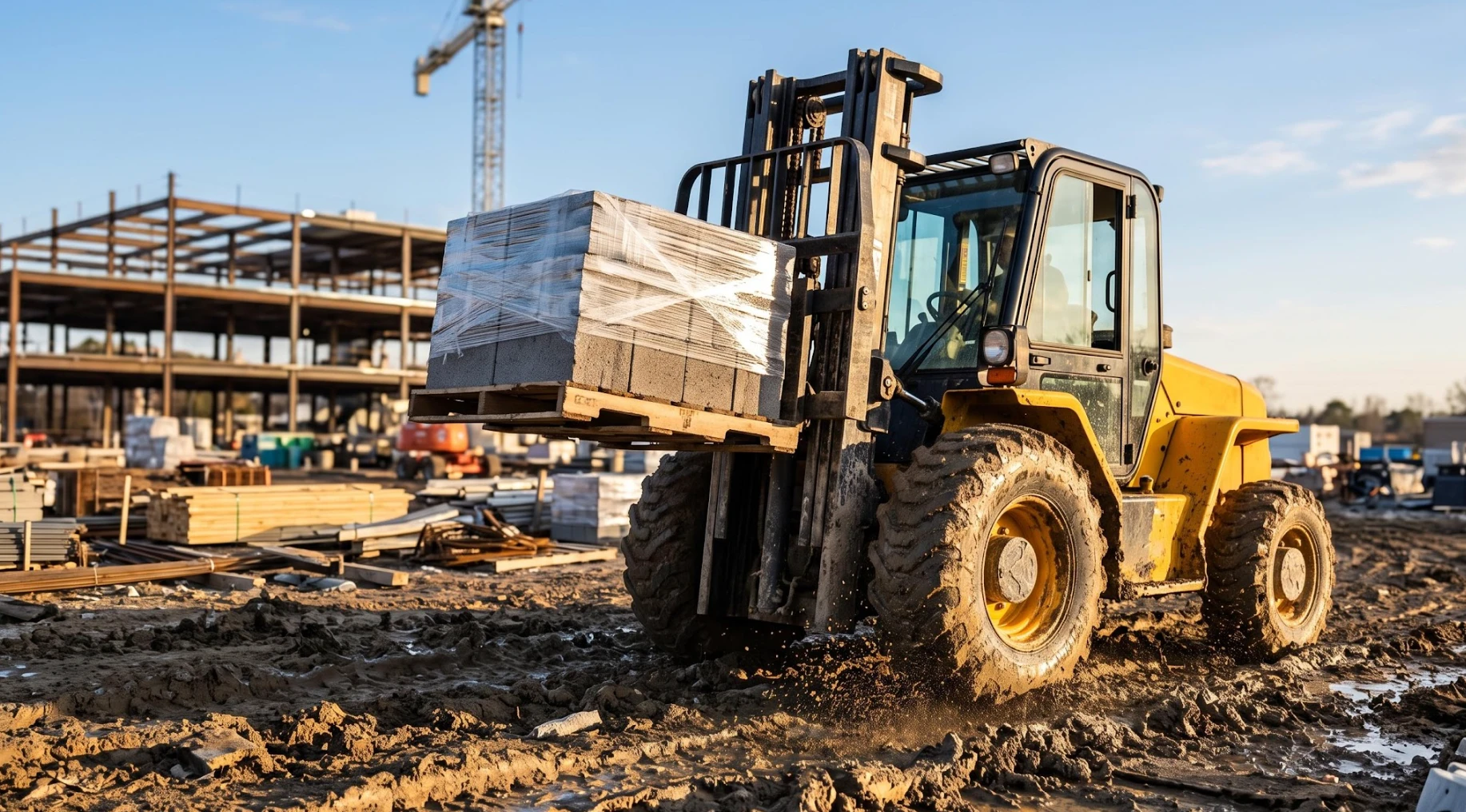
Rough terrain forklifts have large, heavily treaded tires and typically use powerful diesel engines for heavy loads. They are essential for transporting materials across rugged job sites, from construction sites to lumberyards. Four wheel drive improves performance on uneven surfaces, and terrain adaptability is the main reason these machines exist. The limits are size and cost. They need room to maneuver, they are overkill for a paved lot, and they are not built for narrow aisles or indoor work.
Pneumatic Tire Counterbalance Forklifts
This is the all round choice. Pneumatic tire counterbalance forklifts handle gravel, dirt, and loading areas effectively, and they work well on paved yards, loading docks, and mixed surfaces where you move between asphalt and packed ground. Many run on internal combustion engines, which suit heavy outdoor loads. A good example is this 5,000 lb pneumatic tire diesel forklift. If your site is mostly flat and you want one machine that can also step inside a warehouse doorway, this type is usually the best value.
Telehandlers
Telescopic handlers combine elements of a forklift and a crane. An extendable boom gives you reach over obstacles and up to higher levels, which is why they show up on construction and agricultural sites. Common attachments include pallet forks, buckets, and work platforms, so one machine can cover several tasks. They cost more to run and need more operator skill than a standard counterbalance truck, so they make sense when you truly need the reach.
Side Loaders
Side loaders carry long loads like timber, pipe, and steel. The forks extend from the side, so the load rides alongside the machine instead of out in front, and you can travel through open yards with long material that would be awkward on a conventional forklift. They shine in lumber and steel yards and are less useful for general pallet work.
Can You Use an Electric Forklift Outdoors?
Sometimes, with honest limits. Electric forklifts are ideal for indoor environments due to zero emissions, and electric models are quiet. Outside, they face rain exposure, rough surfaces that cut into battery runtime, and less torque on slopes. They still make sense on smooth paved areas such as a covered loading dock or a flat lot that connects two buildings. Electric pallet jacks and other electric warehouse equipment belong indoors or on clean pavement, not in mud or gravel.
Which OSHA Forklift Classes Work Best Outside
OSHA groups powered industrial trucks into seven classes. For outdoor work, Classes IV, V, and VII matter most. Class VII forklifts are specifically built for rough terrain use, while Classes I to III are mostly electric and designed for indoor floors.
| Class | Power Source | Tire Type | Outdoor Suitability |
|---|---|---|---|
| Class IV | Internal combustion | Cushion | Limited. Works on smooth pavement only. |
| Class V | Internal combustion | Pneumatic | Strong. Good for paved yards, docks, and mixed surfaces. |
| Class VII | Diesel | Large pneumatic | Best. Built for rough terrain and job sites. |
| Classes I to III | Electric | Mostly cushion | Mostly indoor. Use outside only on smooth, dry pavement. |
Diesel vs Propane vs Gas: Choosing a Fuel for Outdoor Forklifts
Internal combustion forklifts are preferred for outdoor work requiring high torque, and the fuel you choose shapes power, runtime, and cost of ownership.
Diesel engines deliver the most torque and are built for heavy lifting, so diesel forklifts are the standard for rough terrain work. They hold up well to long shifts, but they produce more emissions and should be used where ventilation is adequate. Propane burns cleaner and refueling is simple, since you swap a tank instead of filling one. It gives you flexibility to work in both open and ventilated covered areas, though with less power than a comparable diesel. If propane fits your operation, look at this 4,000 lb LP forklift as an example of what is available. Gasoline is the least common of the three, and it can make sense if fuel availability at your site favors it.
Choose diesel for rough terrain, heavy loads, and open job sites. Choose propane for mixed indoor and outdoor operations, such as a warehouse with a busy yard. Choose gasoline only if it matches the fuel you already handle.
Best Forklift Brands for Outdoor Work
If you are comparing forklift brands, several top forklift manufacturers have strong reputations for outdoor and rough terrain models. Toyota has been the top selling forklift brand since 2002, and Toyota forklifts are a common benchmark for dependable forklifts. Hyster has over 90 years of experience in the forklift industry, and Hyster Yale products cover a wide range of outdoor applications. Komatsu forklifts are designed for rugged outdoor environments. Caterpillar forklifts, sold under the Cat lift trucks name, are known for their durability and safety features. Linde is part of the KION Group, the second largest industrial truck manufacturer. Crown forklifts are also widely used, with a strong lineup of electric and warehouse equipment.
Brand matters less than fit. Compare the best forklift brands on capacity, parts support, and service access near you before you decide.
Best Outdoor Forklift by Application
Your job type drives the right machine. A lumberyard and a loading yard both operate outside, but they ask very different things of a forklift.
| Application | Recommended Type | Tire | Fuel |
|---|---|---|---|
| Construction sites | Rough terrain forklift or telehandler | Large pneumatic | Diesel |
| Lumberyards | Rough terrain forklift or side loader | Pneumatic | Diesel |
| Landscape and nursery yards | Pneumatic tire counterbalance forklift | Pneumatic | Propane or diesel |
| Scrap and recycling yards | Rough terrain forklift | Pneumatic | Diesel |
| Warehouse loading yards | Pneumatic tire counterbalance forklift | Pneumatic | Propane |
How to Choose the Best Outdoor Forklift for Your Business
Use this checklist to narrow the field. Work through each item before you request quotes, and you will avoid the most common mismatches.
Lift Capacity and Load Center
Load capacity affects forklift choice, and some models can lift over 20,000 pounds. Match rated lift capacity to your heaviest and bulkiest loads, then add a safety margin. Check the load center too, since a long or oddly shaped load behaves like a heavier one when its weight sits farther from the mast.
Terrain and Surface Conditions
Asphalt is forgiving and works with most pneumatic tire forklifts. Gravel and packed dirt call for good tread and ground clearance. Mud and grass push you toward four wheel drive and a rough terrain machine. If your surface changes with the season, buy for the worst condition you will face.
Mast Height, Forks, and Attachments
Choose lift height for the racks, trucks, or stacks you actually reach. Fork length should match your pallets or materials, and attachments such as fork extensions or clamps can make one machine handle several loads. Buy the attachments you will use weekly, not the ones you might use once.
New vs Used Outdoor Forklifts
New forklifts come with the latest features and a fresh start on wear, while used forklifts cost noticeably less up front and can be a smart way to add an outdoor machine without a big upfront spend. Rough terrain and four wheel models sit at the higher end of the price range, and custom parts can raise the final cost further. If you are weighing new or used forklifts, browse used forklifts and inspect tires, mast chains, hydraulic hoses, and the engine before you commit, and ask for service records and hour readings. If you need to spread out the cost, review our financing page.
Operator Comfort and Safety Features
Operator comfort affects productivity as much as horsepower. Look for adjustable seating, ergonomic controls, and good visibility, and favor simple controls if you have many different operators. Advanced safety features, including operator restraint systems, backup alarms, and operator assist systems on some models, reduce fatigue and accidents on long shifts.
Outdoor Forklift Safety and Maintenance
Outdoor operation raises both risk and upkeep. Weather, slopes, and abrasive dust all work against you, so a firm safety routine and regular inspections pay for themselves.
Operator Training and OSHA Requirements
OSHA requires employers to train and evaluate forklift operators before they work on their own, with a refresher evaluation at least every three years. Rough terrain equipment is covered, and construction sites can add their own requirements, so confirm what applies to your operation. For a refresher on the basics, read this step by step guide to operating a forklift.
Working on Slopes and in Bad Weather
Keep loads low and tilted back while you travel. On grades over 10 percent, drive with the load facing uphill, and never turn on a slope. In rain, slow down and allow more stopping distance, because wet ground changes how a loaded machine brakes. In wind, reduce speed with tall or wide loads, and in low visibility, use lights and a spotter. If conditions make safe handling doubtful, stop work.
Maintenance Tips for Tires, Filters, and Cooling Systems
Dust, mud, and heat wear parts faster outdoors, and maintenance costs rise if you ignore them. Check tire pressure and look for cuts and embedded debris. Inspect air filters often and replace them when dirty, since a clogged filter strains the engine. Keep the radiator and cooling system clear of mud and chaff, and watch coolant and hydraulic fluid levels. A short daily walkaround catches problems before they become downtime.
Shop Forklifts at PS Janitorial
Ready to find the right machine for your yard or job site? Browse the forklift categories at PS Janitorial to compare options, or contact our team if you want help matching a forklift to your application.
Frequently Asked Questions About Outdoor Forklifts
Here are quick answers to the questions we hear most about outdoor forklifts.
What is the best forklift for outdoor use?
Rough terrain forklifts are the best choice for uneven ground and job sites. If your yard is mostly paved, a pneumatic tire counterbalance forklift is the more practical all round pick.
What type of forklift is best for rough terrain?
A rough terrain forklift is built for it, with large treaded tires, high ground clearance, and a powerful diesel engine. Four wheel drive adds traction in mud and loose soil.
Can electric forklifts be used outside?
Yes, but only in limited conditions. Electric models work best on smooth, dry pavement and covered areas, and they struggle on gravel, mud, and slopes.
What is the difference between pneumatic and cushion tire forklifts?
Pneumatic tires are air filled and treaded, so they grip and absorb shock on rough outdoor surfaces. Cushion tires are solid rubber and sit lower, which suits smooth indoor floors and tight spaces.
Are diesel or propane forklifts better for outdoor work?
Diesel is better for heavy loads and rough terrain because of its torque. Propane burns cleaner and suits mixed indoor and outdoor use, with less power than diesel.
Do you need certification to operate a rough terrain forklift?
Yes. OSHA requires employers to train and evaluate every operator, and that includes rough terrain equipment. Construction sites may add further requirements, so check the rules for your job.