
What Is Sulfation and Why Is It Killing Your Floor Scrubber Batteries?
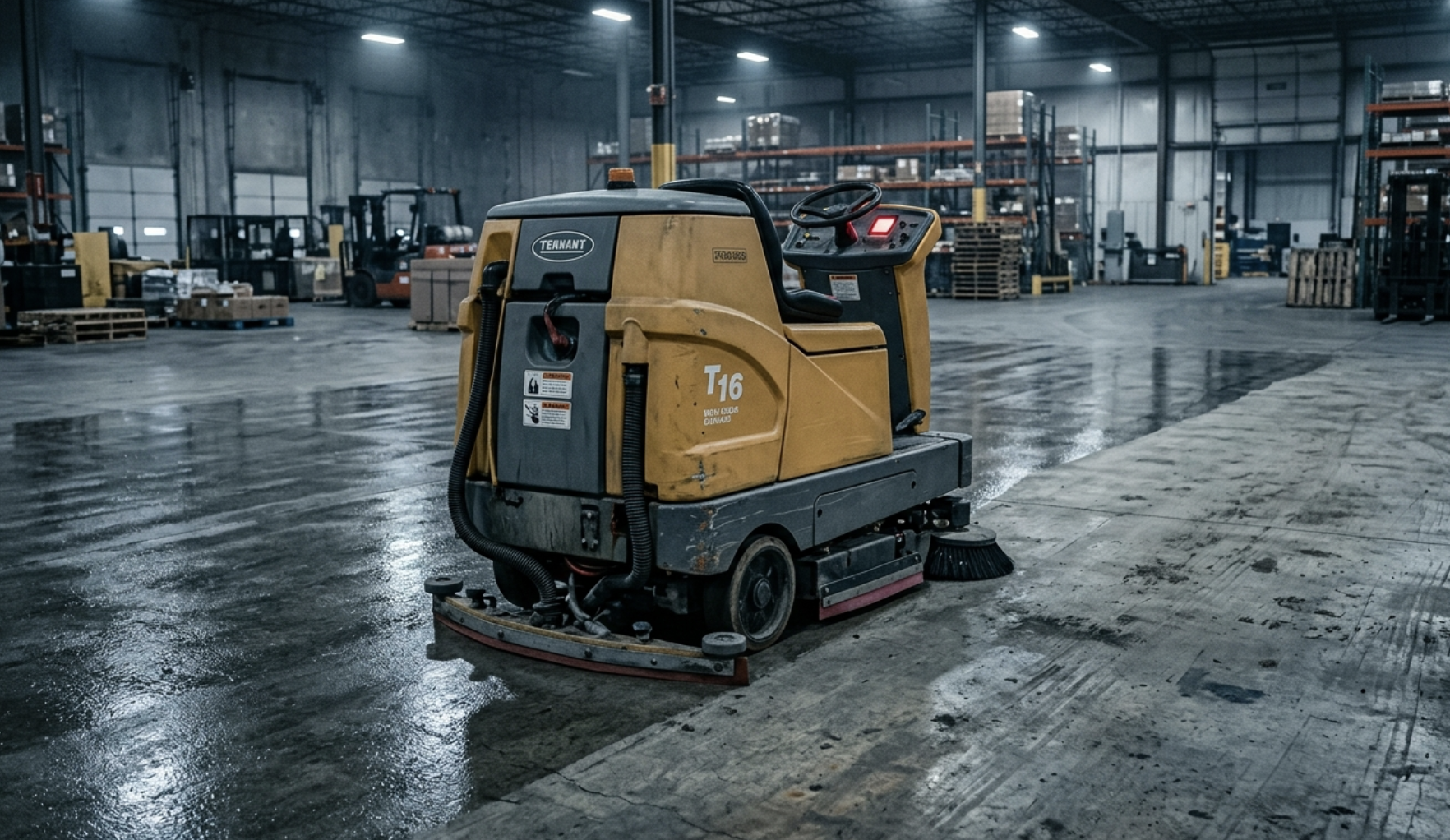
Your floor scrubber was running great when you first got it. Now it dies halfway through the shift, you're recharging mid-job, and the machine just doesn't perform the way it used to. Most of the time, the machine itself is not the problem. The battery is. And in the majority of cases, the root cause is a single, largely preventable condition called sulfation. This article covers what sulfation is, why it happens, how to recognize it, and exactly what you can do to stop it from cutting your battery's life short.
What Is Sulfation in a Floor Scrubber Battery?
Floor scrubbers rely on lead-acid batteries to power their motors, brushes, and drives. During normal operation, when the battery discharges, lead sulfate crystals form on the battery's internal lead plates. This is a completely natural part of the chemical reaction between the electrolyte solution and the plates. Under normal conditions, those crystals dissolve during the recharging cycle and the battery resets for the next use.
The problem starts when that recharging process is interrupted, delayed, or incomplete. When lead sulfate crystals are not fully dissolved, they begin to harden on the plates. Over time, this hardened buildup reduces the surface area available for further chemical reactions, which directly shrinks the battery's capacity to hold and deliver a charge. Left untreated, sulfation continues to build until the battery can no longer function at all. Battery sulfation is the single most common cause of early battery failure in lead-acid batteries, and it is almost entirely the result of how the battery is used and maintained, not a manufacturing defect.
Why Floor Scrubbers Are Especially Vulnerable to Sulfation
Unlike a car battery that recharges continuously while the vehicle runs, a floor scrubber battery is deeply discharged during every shift and depends entirely on the operator plugging it in at the right time. There is no passive recovery mechanism. On top of that, commercial cleaning environments introduce conditions that accelerate the problem, from warm storage rooms and inconsistent charging schedules to long periods of inactivity between uses. Any one of these factors alone can degrade battery performance significantly. In combination, they make sulfation nearly inevitable without the right habits in place.
Incomplete or Interrupted Charging
Incomplete charging is one of the most direct causes of sulfation. Pulling the plug before the charge cycle finishes means the battery starts every shift already below full capacity. It never fully dissolves the sulfate crystals from the previous discharge, and the buildup compounds over time. Using a smart charger that signals when the cycle is complete removes this guesswork entirely and protects against both undercharging and the creeping damage that follows.
Sitting Discharged Between Shifts
The moment a battery is discharged, the clock starts. Even leaving a depleted battery sitting for a few hours without charging begins to accelerate crystal formation. Leaving it overnight is enough to cause meaningful damage. The longer it sits without being plugged in, the more the sulfate crystals have time to harden on the plates and reduce the usable capacity of the battery going into the next shift.
High Storage Temperatures
Heat significantly speeds up the rate at which a battery self-discharges. For every 10 degrees above room temperature, the self-discharge rate roughly doubles. Batteries stored in warm janitorial closets, near boiler rooms, or in loading docks that heat up during summer are under constant stress even when the machine is not being used. High ambient temperature is one of the most underappreciated causes of degraded battery life in commercial floor scrubbers.
Overcharging
Overcharging a battery is just as damaging as undercharging. Excessive charge generates heat buildup, accelerates electrolyte loss from the cells, and contributes directly to internal plate damage. It also creates conditions that promote sulfation and can cause the battery case to swell. A quality automatic charger that ends the cycle when the battery is full prevents both problems at once.
The Two Types of Battery Sulfation
Not all sulfation is the same. Understanding the difference determines whether anything can realistically be done to save the battery or whether replacement is the only viable path forward.
Soft (Reversible) Sulfation
If a sulfated battery is caught early, an experienced technician can sometimes address it through a carefully controlled overcharge process that helps dissolve the crystals before they fully harden. This is not a DIY repair. The process involves elevated temperatures and voltage levels that require experience to manage safely. The window to act is narrow, and success is not guaranteed, but early intervention does give the battery a real fighting chance.
Hard (Permanent) Sulfation
When a battery has sat in a low state of charge for an extended period, sometimes weeks or months, the lead sulfate crystals harden completely into a non-reactive layer on the plates. At this stage, restoration is highly unlikely. No charger, additive, or pulse device on the market can fully reverse this kind of damage. Replacement is almost always the only practical path forward, which is why catching the early signs matters so much.
How to Tell If Your Floor Scrubber Battery Is Sulfated
One of the tricky things about a sulfated battery is that it often looks completely normal from the outside. The signs show up in how the machine performs and how the battery behaves during charging, not in any obvious visible damage.
Signs During Operation
The most noticeable early sign is a shorter runtime per charge. If your floor scrubber used to clean an entire facility on a single charge but now cuts out halfway through, battery capacity has dropped. Other signs include a noticeable loss of scrubbing power, the machine slowing on inclines it previously handled without issue, and the consistent need to recharge mid-shift. These are not signs the machine is broken. They are signs the battery is struggling to deliver what it once could.
Signs During or After Charging
A deteriorating battery often charges differently than a healthy battery. Watch for charge cycles that take significantly longer than normal, excessive heat coming from the battery during charging, and a sulfur or rotten egg smell near the battery compartment. That smell indicates the battery is gassing excessively from internal breakdown, which is a serious warning that should not be ignored.
Physical Signs
A swollen or bulging battery case is a serious warning sign and typically indicates damage from overcharging or prolonged heat exposure. Visible white or blue-green corrosion around the battery terminals that returns quickly after cleaning suggests the battery is venting acid. A visible drop in the electrolyte level below the plates in a flooded battery is also a red flag that warrants immediate attention.
How to Test with a Multimeter
A basic multimeter check gives you a quick read on where things stand. Check the standing voltage when the battery is fully charged and has rested for at least an hour. A healthy flooded lead-acid battery should read at or above 12.6 V. AGM batteries follow a similar threshold, and a reading below 12.4 V on either battery type points to chronic undercharging, which is one of the clearest hallmarks of sulfation damage.
What Happens to Your Floor Scrubber When Sulfation Goes Untreated
Sulfation does not stay contained. As crystal buildup grows, the effects compound and spread across every aspect of battery performance. A well-maintained lead-acid battery in a floor scrubber should last three to five years. Poor maintenance, and specifically unchecked sulfation, can cut that lifespan by 30 to 50 percent, meaning a battery that should last four years might fail in under two.
The operational impact in a commercial cleaning environment is significant. Reduced runtime means more mid-shift charging stops and less floor coverage per shift. Longer charge times cut into turnover between uses. Increased heat during charging creates safety concerns and puts added stress on the charger itself. Battery failure at the wrong moment means unplanned downtime and an emergency battery replacement that disrupts a cleaning contract. None of that is necessary when the root cause is preventable.
How to Prevent Sulfation in Your Floor Scrubber Batteries
The good news is that sulfation is almost entirely preventable. For a deeper look at deep cycle battery maintenance practices for floor scrubbers, we have a full guide worth bookmarking. The habits that protect a lead-acid battery are straightforward, and most of them take only a few minutes per day.
Charge Immediately After Every Use
This single habit does more to extend battery life than anything else. The moment a shift ends, plug the machine in. Do not leave a discharged battery sitting overnight. Every hour a depleted battery goes without charging is an opportunity for sulfate crystals to begin hardening on the plates and reducing capacity over the long term.
Always Complete the Full Charge Cycle
Never pull the plug mid-cycle. A battery that is repeatedly partially charged never reaches full capacity and sulfates progressively over time. If your current charger does not indicate when the cycle is complete, it is worth upgrading to an automatic smart charger that handles this reliably.
Keep Voltage Above 12.4 Volts During Storage
If the machine will be out of service for any stretch of time, apply a maintenance charge before storing it. For machines sitting unused for more than 10 days, top up the charge to prevent the voltage from dropping to a level that accelerates sulfation. A battery that drops too low during storage may not fully recover even after charging is resumed.
Store in a Cool Location
Avoid storing your floor scrubber near heat sources, in direct sunlight, or in areas that regularly exceed 80 degrees Fahrenheit for extended periods. A cool, dry storage area minimizes the self-discharge rate and slows the conditions that allow sulfation to take hold.
Maintain Proper Water Levels in Flooded Lead-Acid Batteries
The electrolyte water inside a flooded battery should sit approximately one quarter inch above the plates. If it drops below the plates, the exposed sections dry out and stop functioning, permanently reducing capacity. Always check water levels after a full charge cycle, not before, because charging causes the electrolyte to expand. Use only distilled water. Tap water contains minerals that contaminate the electrolyte solution and accelerate plate damage over time.
Run a Monthly Equalization Charge
An equalization charge is a controlled overcharge that balances the cells inside the battery and breaks down early sulfate buildup before it has a chance to harden permanently. Most quality chargers include an equalization setting. Running it once a month as part of a routine maintenance schedule keeps the cells performing evenly and extends overall battery life, particularly in flooded lead-acid batteries used in daily operations.
Keep Battery Terminals Clean
Corrosion on battery terminals increases electrical resistance, which forces the battery to work harder and deliver less power to the machine. Wipe terminals down after each use with a dry cloth. Once a month, clean them with a baking soda solution mixed with water to neutralize acid corrosion, rinse thoroughly, and apply a thin layer of terminal grease or petroleum jelly to slow future buildup. It takes five minutes and makes a measurable difference over time.
Can You Reverse Sulfation Once It Has Started?
Sometimes, but only under the right conditions and only with professional help. If soft sulfation is caught early, an experienced technician can attempt to address it through a carefully regulated overcharge process. This is not something to attempt without experience, as it involves elevated voltage and temperature levels that can cause additional battery issues or create safety risks if mishandled.
Permanent sulfation is not recoverable. Once the crystals have fully hardened after an extended period of low-charge storage, no treatment will restore the battery to usable condition. This is why preventing battery sulfation through consistent daily habits is always the more practical and cost-effective approach. Waiting to see if a battery recovers on its own is not a strategy, it is just delayed battery replacement.
When to Replace Your Floor Scrubber Battery
Some batteries reach the point where maintenance is no longer enough. Knowing when to replace your deep cycle batteries rather than continue servicing a failing one saves time, money, and prevents damage to other components like the charger and motor.
Replace your floor scrubber battery if any of the following are true: the battery will not hold a charge past two hours of runtime under normal use, the case is visibly swollen or bulging, corrosion returns to the battery terminals within days of cleaning, a rotten egg smell persists during or after charging, or the machine consistently underperforms regardless of charge level. Batteries fail for a reason, and a battery replaced at the right time is always cheaper than one that damages downstream components or forces unplanned downtime in the middle of a cleaning contract.
Shop Floor Scrubbers and Replacement Batteries at PS Janitorial
Sulfation is a preventable problem, and the right equipment makes prevention easy. At PS Janitorial, we carry a full range of battery-powered floor scrubbers, replacement deep cycle batteries, and smart chargers designed to keep your machines running at peak performance shift after shift. If you need a drop-in battery replacement for your current machine or are ready to upgrade to a new scrubber built for demanding commercial environments, browse our new and refurbished floor scrubber catalog to find the right fit for your facility.