Why Pre Sweeping Before You Scrub Matters and How to Do It Right
Your floor scrubber runs perfectly. The chemicals are mixed to the right ratio, the squeegee is adjusted, and the brush is fresh. Yet when you step back and look at the floor, it is streaky, dull, and somehow not as clean as it should be. If this sounds familiar, the problem probably has nothing to do with your machine at all. It is a missing step that happens before the scrubber ever touches the floor: pre sweeping. In this article, you will learn why pre sweeping before you scrub matters so much for floor cleaning results, and you will get a clear, step by step process for doing it right every time.
What Is Pre Sweeping and Why Does It Come Before Scrubbing
Pre sweeping simply means removing loose dust, dirt, and debris from a floor before you run a wet process like scrubbing over it. It sounds like an obvious step, and yet it is the one most commonly skipped when a facility is trying to save a little extra time. Even a floor that looks clean to the eye usually has a thin layer of grit, pet hair, tracked in dirt, or a bit of spilled cereal from the break room settling into corners and along baseboards. This buildup happens within hours in most businesses, not days. Since a scrubber is designed to clean with water and chemical, not to prepare floors for cleaning, that dust and debris needs to be swept or picked up first so the machine can actually do the job it was built for.
What Happens When You Skip Pre Sweeping
Skipping this simple prep step does not just risk a slightly less polished result. It creates a chain of problems that affect the floor, the equipment, and the efficiency of the entire cleaning job. The three risks below are the ones you are most likely to run into if you go straight from a dirty floor to a wet scrub.
Streaking and Squeegee Damage
When you scrub over a floor covered in loose debris, that material gets pulled directly under the squeegee blade as the machine passes. Instead of a clean, even pickup of water, you get streaking left behind, since the blade cannot form a tight seal against the floor with grit caught underneath it. Over time, larger pieces of debris can nick the rubber edge of the blade or wear it down unevenly, which means more frequent squeegee replacements and increasingly inconsistent water pickup with every pass.
Mud, Grinding, and Floor Finish Damage
Dry dirt and dust do not simply disappear once water hits them. They turn into mud, and that mud gets pushed around the floor rather than lifted away, which usually means running multiple passes just to get back to where you started. Worse, small pebbles, sand, or grit can get trapped and ground into the floor finish underneath the pad or brush. This dulls the shine you worked hard to build and accelerates wear on the finish itself, shortening the time between refinishing jobs.
Extra Wear on Your Equipment
Unswept debris does not just damage the floor. It puts added strain on the brushes, pad drivers, and other moving parts of your scrubber. Grit works its way into bearings and drive mechanisms, shortening the lifespan of components that are expensive to replace and increasing your overall maintenance costs. If your scrubber has been leaving streaks or acting up lately, it is worth checking whether debris buildup is a contributing factor before assuming it is a mechanical failure. Our 5 step troubleshooting checklist for a floor scrubber leaving streaks walks through the most common causes.
The Benefits of Pre Sweeping Before You Scrub
Once you flip the script and make pre sweeping a habit, the benefits show up almost immediately. You get a brighter, more consistent finish, a healthier environment with less airborne dust, and a cleaning job that takes less time overall because you are not redoing passes.
A Better, More Consistent Clean
Removing dust and debris first means your scrubber's chemical and water solution can actually reach the floor surface instead of being blocked, diluted, or absorbed by loose dirt. The result is a more uniform finish across the entire room, with none of the patchy spots that come from a scrubber trying to clean through a layer of grime it was never designed to handle. Pre sweeping also helps mitigate airborne dust, which supports better indoor air quality for anyone working in or visiting the space.
A Stronger First Impression for Your Facility
Shining, streak free floors make all the difference in how visitors and customers perceive your business, whether you run a retail store, a healthcare facility, or a hospitality space. A dull, streaky floor sends the opposite message, even if the rest of the space is spotless. Pairing a dedicated sweeper with your scrubber speeds up this entire routine, since the two machines are designed to work together rather than asking one machine to do both jobs at once.
How to Pre Sweep Before You Scrub the Right Way
Here is a simple, five step checklist your team can follow before every scrubbing session to prepare floors properly and protect both the finish and the equipment.
Step 1: Remove Mats and Rugs
Pull up any mats or rugs and clean them separately rather than running a scrubber over them. Most scrubbers are designed for hard flooring, and mat edges can snag brushes or damage the machine. This also gives you a chance to shake out or vacuum trapped dirt that a mat tends to hold onto.
Step 2: Clear Obstacles and Movable Furniture
Move rolling shelves, displays, chairs, and any other furniture out of the cleaning path. This ensures the entire floor gets covered rather than leaving untouched patches around obstacles, and it keeps your scrubbing route efficient instead of forcing constant stops and detours.
Step 3: Scrape Off Gum and Sticky Residue
Sticky messes will not lift with sweeping or scrubbing alone. Gum, spilled soda residue, or other stuck on grime needs to be manually scraped beforehand, or the scrubber will simply spread it around and create new streaking rather than removing it.
Step 4: Sweep or Dust Mop the Entire Area
This is the core step in the whole process. Depending on the size of the space, use a walk behind sweeper, a floor sweeper machine, or a dust mop to clear the entire area of dust, dirt, and debris, including corners and edges where material tends to settle. Even floors without visible dirt should be swept, since fine dust accumulates in a way that is easy to miss but still causes streaking and clogging issues later. For larger commercial spaces, a dedicated floor sweeper covers ground far more efficiently than a broom, and it picks up large debris that a broom tends to push around instead of collecting. Browse our full lineup of industrial floor sweepers to find the right size for your facility.
Step 5: Post Wet Floor Signage Before You Begin Scrubbing
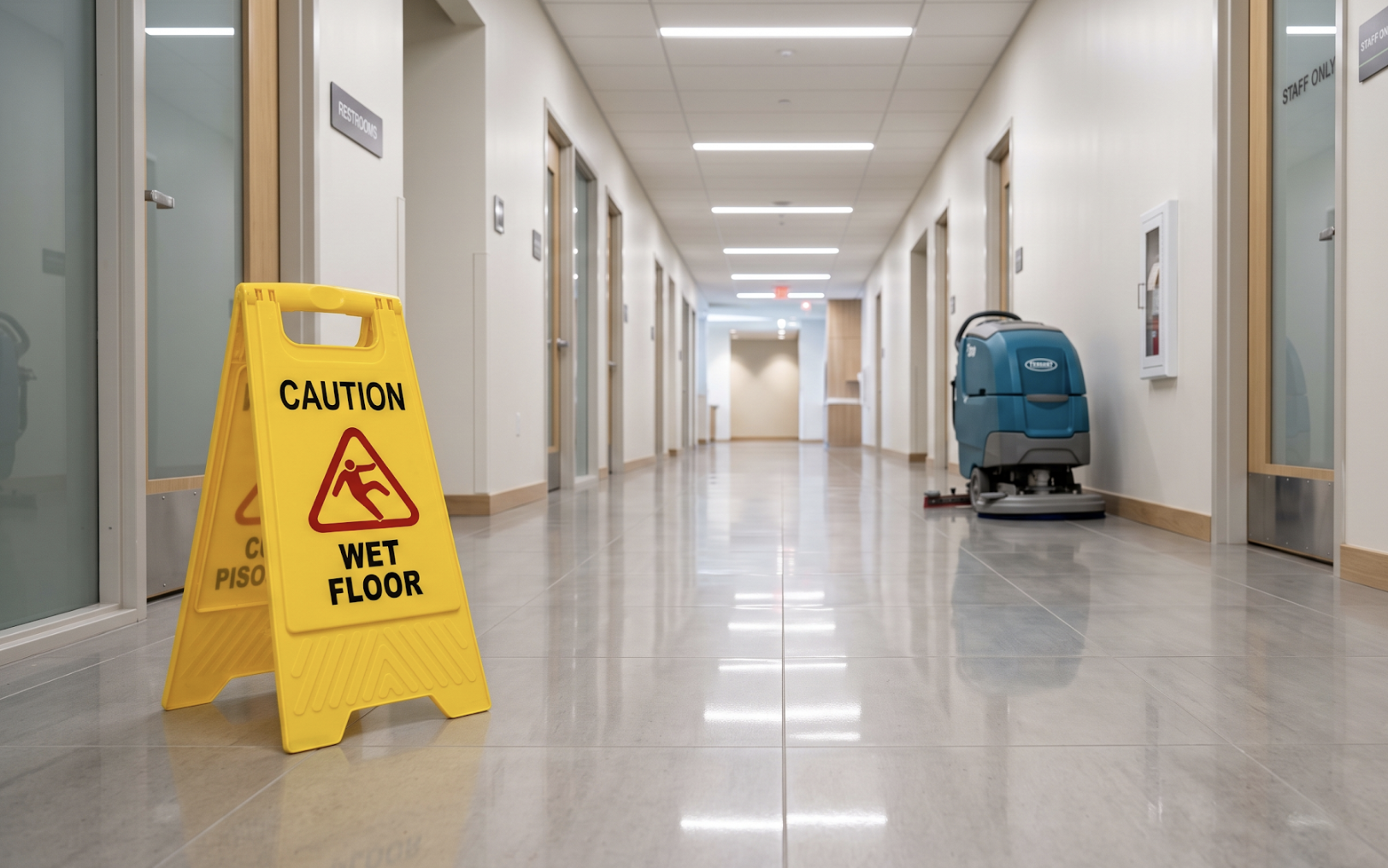
Before you start the wet scrubbing process, place visible caution signage at entrances and high traffic areas. Slip and fall incidents remain one of the leading causes of workplace injury, and a few seconds spent setting up signage protects both visitors and your team.
Choosing the Right Equipment for Pre Sweeping and Scrubbing
Matching your equipment to your facility's square footage makes this entire two step process far easier. A sweeper and scrubber sized appropriately for your space means less time spent on each job and a more thorough result than trying to make one machine, or a broom and mop, handle everything. Using a dedicated sweeper alongside your scrubber can save a meaningful amount of manual cleaning time compared to sweeping by hand, since the machine covers large areas with a wide, efficient path. Take a look at our full range of floor scrubbers and floor sweepers to see which combination fits your building, whether you are running a single room or a full warehouse.
Common Questions About Sweeping Before Scrubbing
Do I Really Need to Sweep First if the Floor Looks Clean?
Yes. Fine dust and grit are often invisible to the eye but still cause streaking, clogging in vacuum systems, and unnecessary wear during scrubbing. A floor that looks clean can still carry enough debris to affect your results.
Can I Use a Vacuum Instead of a Sweeper on Hard Floors?
A household vacuum is not designed for large commercial hard floor areas and can clog quickly under heavy dust and debris loads. A shop vacuum or a dedicated floor sweeper is generally the better choice, since these machines are built for continuous coverage, larger debris pickup, and filters that hold up under daily commercial use without frequent clogs.
How Often Should Pre Sweeping Happen?
Pre sweeping should happen immediately before every single scrubbing session, not just occasionally. Dust and dirt reaccumulate within hours in most facilities, so treating this as a one time or weekly task rather than a per session habit will lead to the same streaking and equipment wear issues you are trying to avoid.
Final Thoughts on Getting Pre Sweeping Right
Pre sweeping is a small time investment with an outsized payoff. It protects your floor finish, protects your equipment, and delivers a cleaner, more consistent result every time your team scrubs. If your current setup is forcing you to choose between a broom and a scrubber doing double duty, it may be time to add a dedicated sweeper to your routine. Explore PS Janitorial's full selection of new and refurbished floor machines to build a cleaning program that gets your floors ready the right way, every time.