Signs It Is Time to Replace Your Floor Scrubber
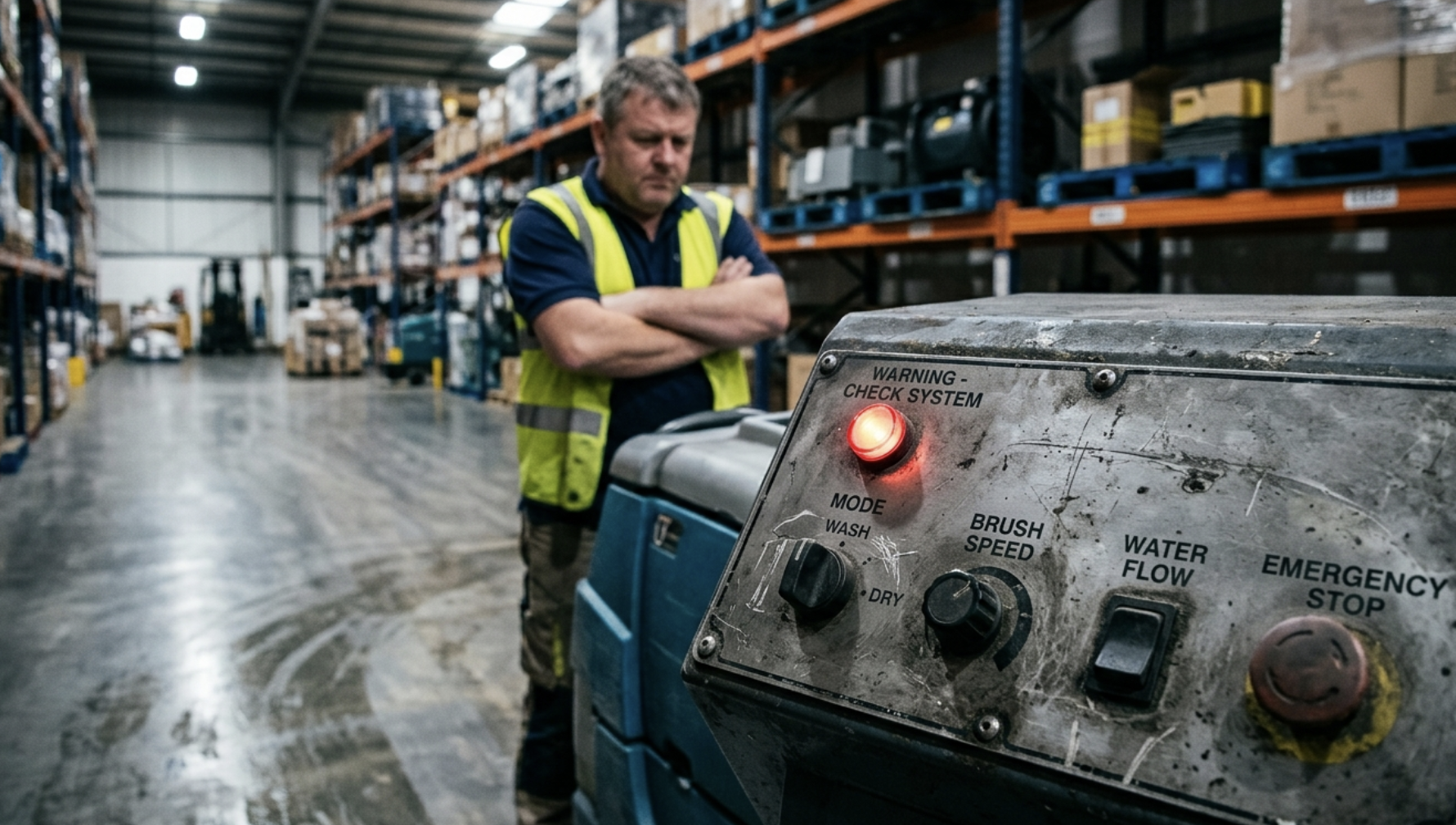
Most facility managers hold onto their floor scrubbers longer than they should. It is understandable. These machines represent a serious investment, and committing to another one feels unnecessary until the equipment completely stops working. But waiting for a full failure is often one of the most expensive decisions you can make.
The signs it is time to replace your floor scrubber rarely show up all at once. They build gradually, quietly driving up your repair bills, undermining your cleaning performance, and putting your facility's professional image at risk. Knowing what to watch for puts you in control of the timeline rather than scrambling to react when the machine finally gives out on you.
How Long Should a Floor Scrubber Last?
Before you can determine whether replacement makes sense, you need a realistic baseline. A quality floor scrubber from a reputable brand, with proper care and consistent servicing, will typically deliver between 5 and 10 years of reliable operation. That range is not fixed. Usage frequency plays a significant role. A machine running two shifts a day in a demanding industrial environment is going to wear faster than the same model used a few times a week in a smaller retail space.
Key factors like floor type, operator training, the cleaning chemicals you run through it, and how consistently you follow a maintenance schedule all influence the life of your machine. If your scrubber has been running hard for seven or eight years and upkeep has been sporadic, you are likely closer to the end than you think.
The average lifespan gives you a benchmark. What actually determines whether to replace is how your machine is performing right now.
Sign 1: Repair Bills Are Compounding
One of the clearest signs that you are past the repair-and-move-on threshold is when maintenance costs start stacking on top of each other. A new set of batteries one quarter, a brush motor the next, a squeegee assembly a few months later. Each repair looks manageable on its own. Together they tell a different story.
A useful rule of thumb: when your cumulative repair costs are approaching 40% of what a comparable new or refurbished machine would cost, replacement is almost always the more cost effective path. The core issue is that aging floor scrubbers do not fail in isolation. When one component reaches the end of its wear cycle, the parts surrounding it are usually at a similar stage. Fixing the vacuum motor today does not protect you from a brush motor failure next month.
Start keeping a repair log if you have not already. If you are calling for service multiple times a year and the invoices are growing, that data alone can determine whether continued repairs still make financial sense.
Sign 2: The Battery Cannot Handle a Full Cleaning Session
Battery degradation is often the first signal that your floor scrubber is aging out. Lead-acid batteries, the most common type found in commercial machines, have a lifespan of roughly 2 to 5 years depending on usage and battery care. As they age, capacity drops. A machine that once handled your entire facility on a single charge may now require a mid-shift stop before finishing the job.
If you have already replaced the battery set and runtime still has not recovered, the problem likely goes deeper. Corroded connections, worn wiring, and degraded components can drain power even when the batteries themselves are new. At that point, batteries are not the fix. The old scrubber is.
Consistent cleaning performance depends on a machine that can complete each cleaning session without interruption. When that is no longer possible regardless of what you do to the batteries, it is worth having an honest conversation about what comes next.
Sign 3: You Cannot Find Parts for It Anymore
Parts availability is a key consideration that often gets overlooked until a machine goes down and you need a component quickly. Manufacturers discontinue older models, and when they do, brushes, filters, squeegee assemblies, floor pad drivers, and other components become increasingly difficult to source. Lead times stretch out, prices increase, and in some cases the parts simply stop being available.
When your technician is struggling to locate a specific brush deck component, or a part your machine needs has a six-week wait, your scrubber has become a liability. Every breakdown now carries a risk of extended downtime that is outside your control.
This is where the advantages of a current machine become concrete. Models from established brands have accessible supply chains, and working with a supplier like PS Janitorial means you can inspect parts availability and get what you need quickly when repairs are warranted.
Sign 4: Your Floors Are Not Coming Clean the Way They Used To
There is an important distinction between a worn squeegee blade leaving streaks and a machine that has genuinely lost its ability to deliver the same results it once did. A squeegee replacement is routine. A broad decline in cleaning performance that persists regardless of what you try is a different problem. If you are troubleshooting the same issues repeatedly, our guide on common issues with floor scrubbers is worth reviewing before assuming the machine is beyond saving.
If your floors are consistently coming out dirty no matter which cleaning chemicals you use, how long you spend scrubbing, or how recently you swapped the pads, the issue is almost certainly structural. Brush decks lose their geometry over time. Suction power from the vacuum motor degrades with wear. Solution flow through filters and internal lines becomes inconsistent as buildup accumulates in areas that are difficult to rinse and inspect properly.
Machines used on rough surfaces tend to show this kind of deterioration faster than those operating on smooth, maintained flooring. If your scrubber is visibly struggling to do the job it once handled easily, that gap is only going to widen.
Sign 5: Downtime Is Disrupting Your Facility
A floor scrubber that spends more time being repaired than it spends cleaning has stopped being an asset. Calculate what that downtime actually costs. Your cleaning crew still shows up. Labor hours continue whether the machine is running or not. If your scrubber is out of commission for a day or two after each breakdown, those hours add up significantly across a year.
Your floors go uncleaned. Your facility's professional image takes a visible hit. And the security of a properly maintained space is compromised in ways that go beyond appearance, particularly in high-traffic commercial and industrial environments where floor conditions directly affect safety.
Frequent breakdowns also affect your team. Staff that regularly encounters a machine in poor condition develops workarounds rather than proper technique. Reliable equipment verifies itself every time a shift runs without incident. An unreliable machine does the opposite, and no level of operator training will fully compensate for equipment that cannot be counted on.
Sign 6: The Machine No Longer Fits Your Operation
Sometimes the signs have nothing to do with mechanical failure. Your facility has grown, and the equipment has not kept up.
A walk behind scrubber that was well matched to a 6,000 square foot space becomes a real bottleneck when that space doubles. A machine spec'd for light commercial use is not built for the debris loads, chemical exposure, and usage demands of a larger industrial operation. If your operators are making two passes because the tank capacity is too small to finish in one, or navigating tight spaces with a machine built for open floors, the mismatch is costing you efficiency on every cleaning session.
Walk behind scrubbers come in a wide range of configurations precisely because no two facilities have the same needs. If your current machine no longer fits the spaces and demands of your operation, that is as legitimate a reason to replace as any mechanical failure.
Repair or Replace: How to Make the Call
When you are on the fence, a few straightforward questions help cut through it. How old is the machine? If it is past the seven to ten year mark and performance has declined, peak condition is difficult to sustain and parts availability only becomes a larger concern over time. What have repairs cost you in the past twelve months relative to what a replacement would cost? Are the components your machine needs still being manufactured? Is your cleaning performance meeting the standard your facility requires? Has your operation changed in ways that the current machine was never built to handle?
If most of your answers point toward no, the case for replacement is strong. The goal is not to replace a scrubber before its time, but to recognize when continuing to repair is simply delaying an inevitable decision at a higher total cost.
New vs Refurbished: What Makes Sense
Once you have decided to move on, the next question is whether to buy new or refurbished. A professionally refurbished floor scrubber from a trusted source is a cost effective path that a lot of buyers overlook, and one of the primary benefits is that you know exactly what you are getting.
At PS Janitorial, refurbished machines are fully inspected, reconditioned, and fitted with quality components before they go out. Batteries are replaced, brushes are checked, and each machine is tested to confirm it performs the way it should. You get the durability and materials quality of an established brand at a fraction of new pricing, without the risk of buying used equipment from an unknown source.
New technology in current models also brings real, measurable advantages. Improved water efficiency, longer battery life, better ergonomics, and advances in scrubbing performance mean a new scrubber often delivers cleaner floors with less chemical use and less operator fatigue than the machine it replaces. Whatever direction you go, stick with brands that have strong parts networks and a track record across real commercial and industrial applications.
Do Not Wait for a Complete Breakdown
The worst time to start shopping for a replacement is the day your current machine stops working. You end up under pressure, without time to evaluate your options carefully, and your facility goes without proper cleaning in the meantime.
If several of the signs covered in this guide apply to what you are dealing with right now, start the conversation. At PS Janitorial we can help you assess what you have, what your facility actually needs, and what makes sense given your floor type, square footage, and budget. Browse our inventory of new and refurbished floor scrubbers, or reach out directly and we will help you find the right fit.